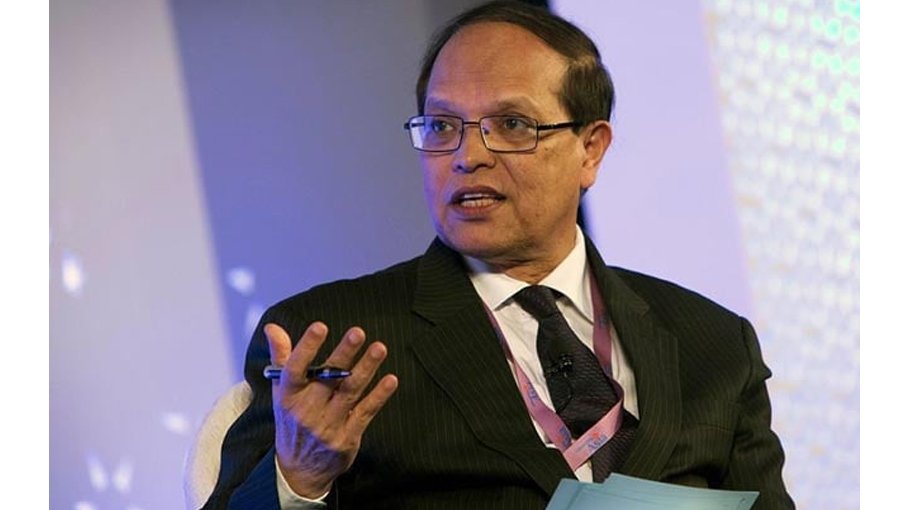
A solid foundation has been laid for women empowerment in the country in the past one and half decades and it is high time to move it forward and it's a big challenge in the coming days, said Bangladesh Bank (BB) former governor and economist Dr Atiur Rahman.
"Women's progress has been noted as the major footing of women empowerment in all development indicators in the country," Dr Atiur told BSS in an interview.
In 1972, he said, Father of the Nation Bangabandhu Sheikh Mujibur Rahman established the Bangladesh Women's Rehabilitation Board to rehabilitate women who were oppressed and affected during the Liberation War in 1971.
This was a cornerstone or the first step taken by the state for the welfare of women in Bangladesh, he mentioned.
Prime Minister Sheikh Hasina formulated the National Women Development Policy for the first time in 1997, he recalled.
Later, the National Women's Development Policy, 2011 was formulated by further polishing the women's development policy under her guidance, said Dr Atiur.
According to the Global Gender Gap Report-2022 prepared by the World Economic Forum (WEF), Bangladesh has topped all South Asian countries in terms of reducing gender inequality and is ranked 71st out of 146 countries in the world, he mentioned.
A milestone for women's development has been created by including 'gender budget' in the national budget for fiscal year (FY) 2009-10, he noted.
Former Finance Minister Abul Maal Abdul Muhith presented the first gender budget report in the 2009-10 financial year including 4 ministries that have important activities related to women's development, he added.
By gradually increasing the number of ministries, 40 from 2013-14 financial year, 43 from 2017-18 financial year and 44 ministries or departments from 2022-23 financial year were included in the gender budget report, he further said.
The 8th Five Year Plan laid greater emphasis on eradicating extreme poverty of women and ensuring social protection and social justice, he said.
It sets out five strategic objectives for gender equality in women's empowerment; - enhancing women's empowerment, increasing economic support for women, strengthening women's voices and organizations, creating an enabling environment for women's advancement and expanding support and programs for mothers and children, Dr Atiur said.
Empowering women is one of the priority initiatives of Prime Minister Sheikh Hasina's ten special initiatives so that women can move forward more smoothly along the path of women's empowerment that has been created through these initiatives, he continued.
Besides, Amar Bari Amar Khamar, Ashrayan Project, Digital Bangladesh, Investment Development, Education Assistance Programme, Social Security Programme and all others have a long term plan for women empowerment, he mentioned.
One of the major goals of the Amar Bari Amar Khamar project was to increase savings of women, he said, adding that women have a natural tendency to save money as they keep some money even in small amounts so that they can spend it for their children's school expenses, doctor's expenses and others.
But when it got an institutional shape, Amar Bari Amar Khamar formerly Ektee Bari Ektee Khamar has been moved to a banking system, which brought a broader opportunity for the country's womenfolk to work on a bigger scale.
Palli Sanchay Bank general manager Dipankar Roy said at the beginning of Amar Bari Amar Khamar project, it was mandatory to have at least 40 women members out of 60 members in each "Gram Unnayan Samity".
As a result, it was seen that 60 percent of those who have become independent through this association using their own resources were women, he said.
If there are 60 lakh members in Palli Sanchay Bank now, 40 lakh of them are women members, he noted.
Dr. Atiur pointed out that the project stakeholders need to have a plan to ensure its proper utilization by determining the loan investment sector against the savings of the members.
He said for the empowerment of women, they need to be more in number as well as the president of Gram Unnayan Samity should be elected from the women and technology should be given to them.
If their president is a woman, if she can be given a smart phone, if she can do the calculations on a smart phone - then she will be properly empowered, he opined.
To ensure the empowerment of women under the Ashrayan Project, land and house ownership rights are provided in the joint names of husband and wife of landless, homeless, distressed and marginal families.
So that the resettled families do not get into any complications related to ownership in the future, the upazila administration hands over the ownership of the land along with the registered deed or acknowledgment of land ownership, mutation (Namjari Khatian) and Dakhila.
One of the most important projects of Digital Bangladesh is Tathya Apa which is adopted as women empowerment project (2nd phase) through information communication technology in order to build a Digital Bangladesh.
Under the initiative of the Ministry of Women and Children Affairs, Jatiya Mohila Sangstha has been implementing this programme since April 2017.
The total workforce of this project is 2484 people as 24 people in head office and 2460 people in 492 information centers. Estimated cost is around Taka 585. 76 crore.
The head office of the project is in the capital Dhaka. Project activities are being conducted in 492 upazilas belonging to 64 districts of eight divisions.
The aim of this project is to empower rural underprivileged women with access to information technology and through providing information technology based services.
The a2i project director Dr Dewan Muhammad Humayun Kabir said that as part of efforts to empower women and to ensure women's right to information, initiatives have been taken to set up visitor centers in every union, municipality, city corporation to facilitate mainstreaming their initiatives, where half of staff are women.
This initiative has been taken so that women can easily speak openly with other women, he said adding there are 8,500 visitor centers, of which 16,000 are entrepreneurs, half of whom are women.
The main goal of these programmes is to maintain the continuity of the long-term plan adopted to engage women in the mainstream of national development, he added.