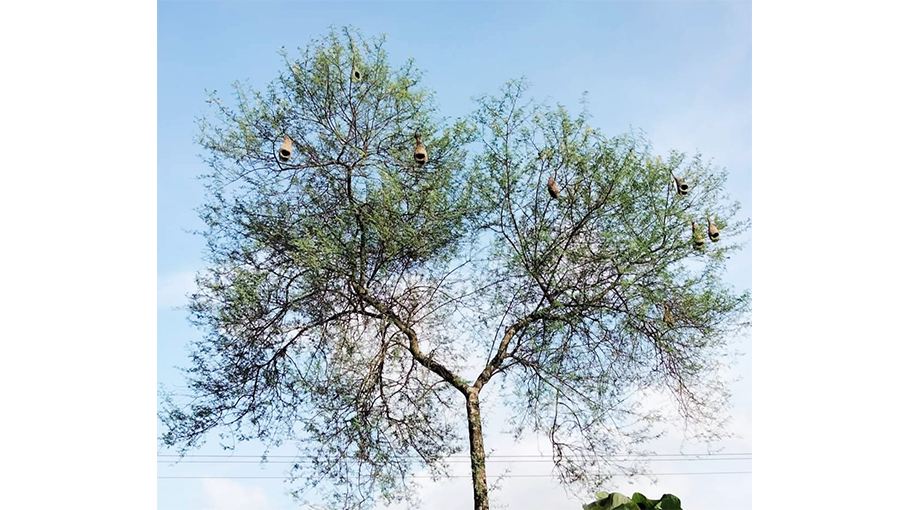
Weaverbirds (Babui Pakhi), known for their intricate nests, are on the verge of extinction due to the lack of Palmyra palms trees and natural disasters. Their chirpings can hardly be heard in the rural areas of country.
Once, renowned poet Rajanikanta Sen composed poem about the art of making nests of the weaverbirds. However, along with weaverbirds, their art is disappearing as well.
Even a few years ago, nests of weaverbirds could be seen hanging from Palmyra palms trees in the rural roads or in a corner of the houses. However, the weaverbirds are rare even in the rural areas now. They cannot be seen even after going miles through a village road.
Similar to the other regions of the country, weaverbirds have almost become extinct in Jabannagar Upazila as well. The nests of the master craftsman weaverbirds cannot be seen hanging from the Palmyra palms for a long time now. The new generation may have heard the name of the weaverbirds, but they have never seen it with their own eyes. Even 12 to 14 years ago, the beautiful nests of the weaverbirds could be seen in the Palmyra palms and Date palms trees in the yards of every house or on the side of the roads of this region.
The experts think that crisis of suitable habitat of weaverbirds due to the thoughtless destruction of Palmyra palms, excessive use of pesticides in crop lands, increasing aggression of bird hunters and the adverse effects of climate change are the reasons behind the extinction of weaverbirds in this region.
Usually, after making half of the nest, weaverbirds take permission of their female partner and complete the whole nest by working tirelessly for 4 to 5 days. Two holes are created under the nest at the very beginning. When the nest is complete, they close the hole on the one side and make the nest suitable for keeping eggs. They use the hole on the other side to enter, as well as to go out of the nest. However, if the female partner does not like the nest, weaverbirds abandons the half completed nest and build a new one. One of their major characteristics is, they catch fireflies and keep them in their nest to keep the nest illuminated at night. When it’s morning, they let the fireflies go.
A male weaverbird can build a maximum of six nests in one season. They use straw, tamarisk, Palmyra palm leaves and foliage for this work. The season of paddy harvesting is the breading season of the weaverbirds. The eggs are hatched within two weeks after the female weaverbirds start incubating. However, at the end of the third week, the chicks of weaverbirds leave the nest and fly away. Although there are 117 species of weaverbirds in the world, only three species among them, local, Dagi and Bangla species, can be seen in our country. Moreover, Dagi and Bangla species of weaverbirds are already extinct. However, local species of weaverbirds can still be seen in some regions of the country.
The locals think it is the need of the hour to take measures in order to save the existence of the artistic symbol of weaverbirds, the bearer of rural Bengali tradition in the upazila. Along with taking measures to save the weaverbirds, they also demanded exemplary punishment of all the bird hunters by bringing them under the law.
Jibannagar Upazila Nirbahi Officer (UNO) Hasina Momotaj said it is not possible to save wild animals without awareness. So, she sought everyone’s assistance to create a suitable habitat for the birds by collectively raising awareness in their respective areas.