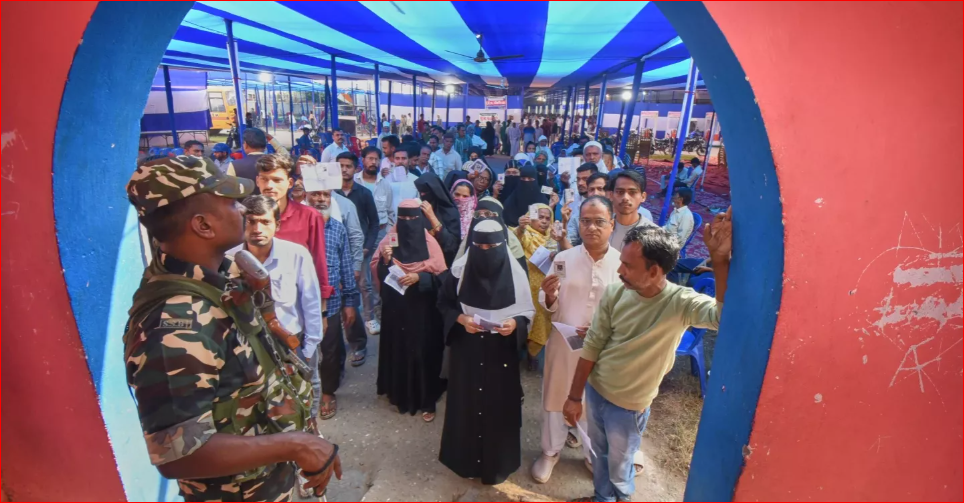
Voters in India’s eastern state of Bihar went to the polls Thursday in a high-stakes local election widely viewed as a crucial test of Prime Minister Narendra Modi’s popularity and the strength of his coalition in one of the country’s most politically influential states.
Millions of residents lined up at polling stations across Bihar for the two-phase vote to elect members of its 243-seat legislature. The election comes amid public concerns over unemployment, law and order, and alleged irregularities in the recent revision of electoral rolls. Results are expected on November 14 and are seen as a barometer of whether Modi’s Bharatiya Janata Party (BJP)-led National Democratic Alliance (NDA) can maintain its dominance or face growing dissatisfaction over economic and governance issues.
Bihar’s political significance
Long regarded as a bellwether state, Bihar carries added weight for Modi as he looks to build momentum ahead of the 2029 national elections and key state polls in Uttar Pradesh, West Bengal, and Assam over the next two years. The state sends 40 members to India’s lower house of parliament, and a victory for Modi’s alliance would strengthen his coalition, while setbacks could embolden the opposition.
“Bihar’s election is not just about alliances but arithmetic,” said New Delhi-based analyst Sidharth Mishra. “If the NDA falters here, it could unsettle the central coalition.”
Modi’s party fell short of a majority in last year’s federal vote and has relied on allies such as Janata Dal (United) and Lok Janshakti Party (Ramvilas) to form the government. These alliances are also central to the NDA’s prospects in Bihar.
Opposition challenges
The BJP leads the ruling alliance in Bihar, with Chief Minister Nitish Kumar of Janata Dal (United) at the helm. Kumar, 74, has governed the state for nearly two decades, overseeing infrastructure improvements and enhanced law and order. Once an opponent of Modi, he later rejoined the NDA.
Analysts warn that a defeat could fracture Kumar’s party and threaten the federal coalition, which depends on 12 of his lawmakers. “This election could affect not just Bihar’s leadership but the stability of Modi’s government,” said political science professor Ravi Ranjan.
The NDA faces the opposition Rashtriya Janata Dal, allied with Congress, and a new party, Jan Suraaj, formed by Modi’s former poll strategist Prashant Kishor. Congress leader Rahul Gandhi criticized the Election Commission’s recent revision of Bihar’s electoral rolls as politically motivated, noting that nearly 10% of the state’s 74 million voters were removed. Opposition parties argue this disenfranchised poor and minority voters, though the commission cited labor migration, newly eligible voters, and unreported deaths as reasons for the changes.
Economic concerns
Bihar, one of India’s poorest states with an agrarian economy and a population of about 130 million, faces pressing economic challenges. Both the ruling alliance and opposition have promised to create millions of government jobs, though economists question the feasibility given the state’s fragile economy.
In September, Modi sought to appeal to women voters by providing cash transfers of 10,000 rupees ($113) each to 7.5 million women under an employment program. Women form a key voting bloc, as many men migrate to metropolitan areas for work.
“Bihar’s election highlights the state’s paradox,” said socio-economist Pushpendra Kumar. “While the government claims to have set Bihar on a path to development, the majority of people continue to live in poverty. Welfare measures exist, but the underlying issues—landlessness, low wages, and limited employment—remain largely unaddressed.”