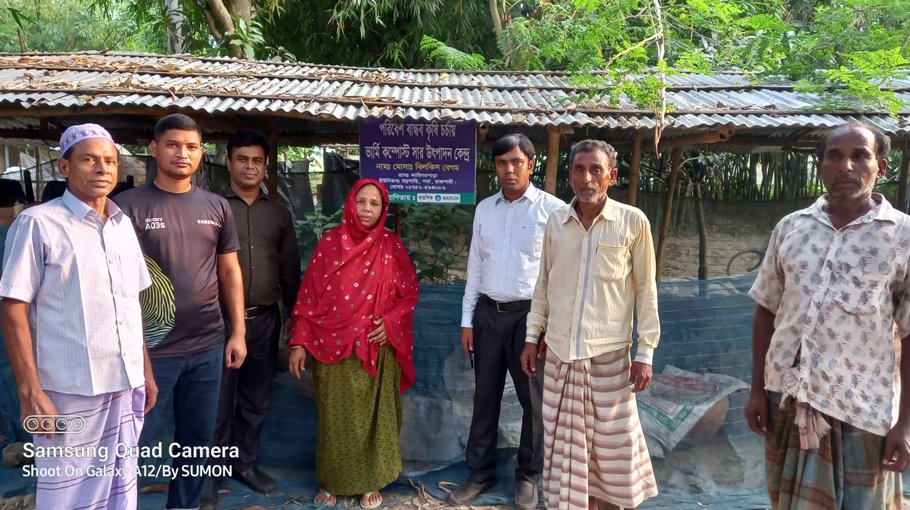
Many farmers are seen building their fortunes through making and selling vermicompost as its use is rising for crop and vegetable production gradually for the last couple of years. The venture is contributing a lot towards lessening the gradually mounting pressure on chemical fertilizer in the region, including its vast Barind tract.
On June 5, the World Environment Day-2022, Karigorpara under Paba Upazila in the district, has been declared as a village of vermicompost production and use hundred percent. No more chemical fertilizer will be used in farming fields in the village and vermicompost will be used hundred percent through production in the village.
On the occasion, a view-exchange meeting titled "Sustainable Eco-friendly Agriculture System" was organized in the village on the day largely attended by farmers both male and female.
Bangladesh Resource Centre for Indigenous Knowledge (BARCIK) and Paba Upazila Agriculture Extension Office jointly organized the farmers meeting discussing and devising ways and means on how to retain the eco-friendly agriculture system.
The meeting was told that around 40 male and female farmers are engaged in production of vermicompost and all the farming families are using the organic fertilizer in cropping fields in the village for the last seven years.
In the meeting, Jabbar Ali, a farmer of the village, said he has been engaged in production and marketing of vermicompost since 2017. He earns Taka 12,000 per month after selling the organic fertilizer on average.
Some other farmers, including Momena Begum, Sultan Ahmed and Amrita Sarker, also shared their respective experience related to the vermicompost production and selling.
Upazila Agriculture Officer Shafiqul Islam and BARCIK Regional Coordinator Shahidul Islam urged the attending farmers to use organic fertilizer in farming fields through disseminated their expertise on the issue.
Agriculturist Islam said only earthworm and cow-dung are used in producing vermicompost fertilizer which helps to protect environment, fertility of the land, increase resistance power of crops against diseases and escalate crops production.
Apart from the Karigorpara village, vermicomposting has started gaining popularity in many other villages as many farmers are showing interest towards setting up vermicompost hatchery and farms due to its lucrative outputs.
Raihan Kabir, a farmer of Kharibona village under Nachole upazila, has set an example of becoming self-reliant through a vermicomposting farm in his dwelling house.
Raihan started his venture with 2,000 earthworms in five earthen pots in 2017. So far, he has sold 2,100 kilograms of vermicompost worth around Tk 27,300 to the local farmers. Another 600 kilograms remains stockpiled for selling. In the last one year, he has enhanced the number of earthen pots to 63 from the initial stage of only five.
Jahangir Alam, 35, of Shinghamara village under Mohanpur upazila in the district has become almost self-reliant through manufacturing vermicompost. With his wife Sahar Banu's close collaboration, he established a household factory for manufacturing organic fertilizer.
Vermicompost fertiliser, one kind of organic fertiliser made from earthworm, has started becoming popular in the region.
The Jahangir Alam couple is now an ideal figure in their village as they spread the light of knowledge of becoming self-reliant by teaching the production methods of vermicompost fertilizer to put an end to their hardship.
They have a plan to give training free of cost to 10 women in each of the villages under their upazila and help them to set up firms for producing vermicompost fertilizer.
The couple urged the government to give them financial support to expand their firms as they have planned to produce 400 maunds vermicompost fertilizer per day.
The knowledge of vermin composting started a brighter life for Shah Alam and his wife Momtaz of Mohishkundi village under the same upazila ending their dark times of miseries, hunger and uncertainty.