BP Desk
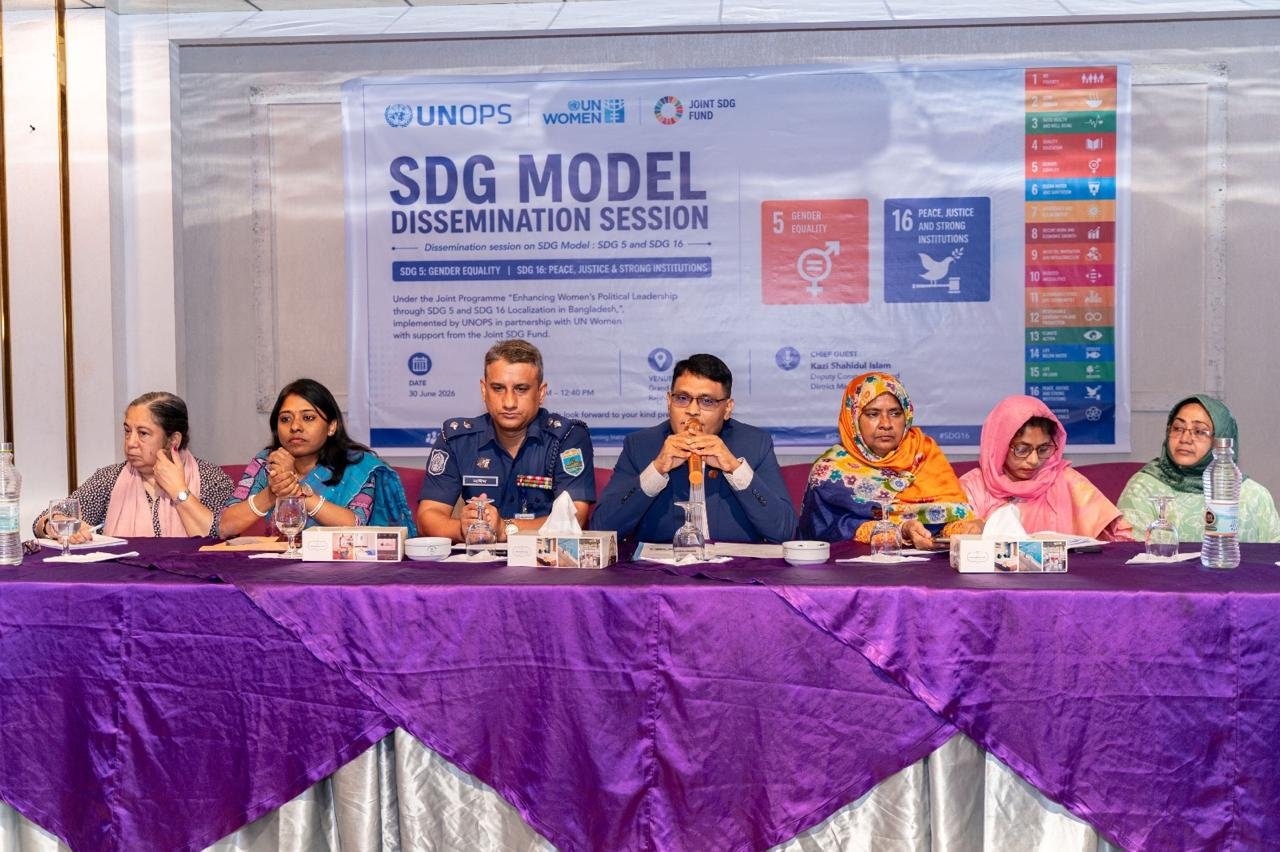
UNOPS Bangladesh on Tuesday convened the SDG Model Dissemination Session on SDG 5 and SDG 16 at Grand River View Hotel, Rajshahi, bringing together government officials, development partners, youth leaders, civil society representatives, educators, and local stakeholders to showcase a localized approach to advancing gender equality and inclusive governance.
The dissemination session is part of the Joint Programme, "Enhancing Women's Political Leadership through SDG 5 and SDG 16 Localization in Bangladesh," implemented by UNOPS in partnership with UN Women with support from the Joint SDG Fund.
The initiative aims to strengthen sub-national institutional capacities by empowering young women and schoolgirls through localized think tanks, mentorship networks, and leadership development initiatives. Rajshahi has emerged as an important regional hub for promoting inclusive leadership and advancing locally driven solutions for sustainable development.
The event highlighted findings and lessons learned from the implementation of the SDG localization model, showcased inspiring leadership stories from local young women, and explored pathways for integrating gender-responsive approaches into local governance systems.
Speaking at the event, Kazi Shahidul Islam, Deputy Commissioner and District Magistrate, Rajshahi, and Chief Guest, emphasized the importance of empowering local communities to achieve the Sustainable Development Goals.
"The Sustainable Development Goals can only be achieved when local institutions and communities actively participate in the development process. Empowering women and young people to become leaders in their communities is fundamental to building inclusive, accountable and resilient local governance."
Delivering special remarks, Mr. Md. Naimul Hasan, Superintendent of Police, Rajshahi, highlighted the importance of collaboration in creating safer and more inclusive communities.
"Women's leadership and meaningful civic participation are essential for building peaceful and resilient societies. Strong collaboration between public institutions, communities, and development partners will help create an enabling environment where women and girls can actively contribute to local development and decision-making."
Speaking on behalf of UNOPS Bangladesh, Shirin Sultana, Project Manager, highlighted the importance of translating global commitments into locally driven action.
"Through this initiative, UNOPS is supporting locally led solutions that strengthen women's leadership and institutional capacity at the sub-national level. By connecting young women with mentorship opportunities and fostering inclusive dialogue, we are helping create sustainable pathways toward achieving SDG 5 and SDG 16."
The dissemination session reaffirmed the commitment of UNOPS Bangladesh and its partners to advancing SDG localization through evidence-based models, cross-sector collaboration, and community-driven solutions that ensure no one is left behind.
By fostering stronger partnerships among government institutions, development partners, and local communities, the initiative continues to support inclusive governance and women's leadership as key drivers of sustainable development across Bangladesh.