The head of the UN’s climate body has warned that treating global warming as a partisan issue is dangerously out of step with reality, describing climate change as a growing economic and security threat to Europe.
Simon Stiell, Executive Secretary of the UN Framework Convention on Climate Change (UNFCCC), told the European Parliament’s environment committee in Brussels on Thursday that climate change had become a “continent-wide economic security emergency.”
He pointed to a summer of extreme heat that has killed tens of thousands of people and caused widespread damage to infrastructure, businesses and economies across Europe.
Climate ‘culture war’
“Climate is sometimes seen as a partisan issue: as territory in culture wars. That is palpably false,” Stiell said.
He said extreme heat had forced mass evacuations, shut down power stations, disrupted trade routes and reduced crop yields, which could further drive up food prices.
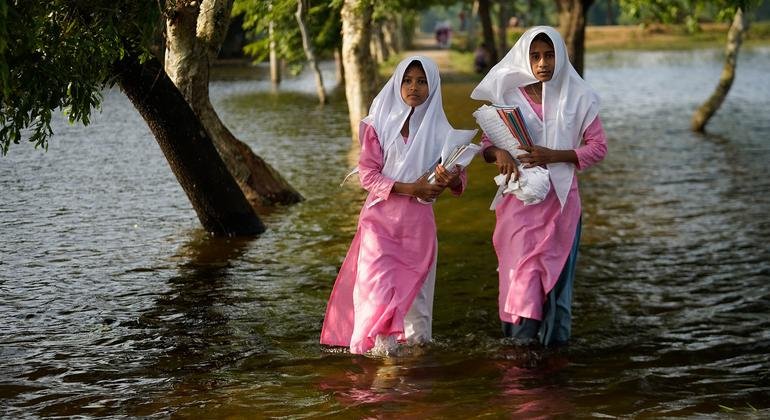
Elsewhere, he highlighted devastating floods in the Himalayas, along with heat-driven power outages and water shortages in North Africa. He warned that climate impacts were increasingly fuelling forced migration both within and across borders.
One study, he said, estimated that this summer’s extreme weather had cost Europe €180 billion through lost productivity and disruptions to food, energy and transport. That is equivalent to about one percentage point of GDP, roughly the amount the EU economy is forecast to grow this year.
Stiell linked these costs directly to dependence on fossil fuels, warning of another potential winter fuel crisis for European households and businesses.
Climate action and economic security
“To be soft on climate action is to be soft on inflation and the cost of living, soft on sovereignty and security, and soft on economic growth and jobs,” he said.
He argued that the transition to clean energy offered Europe a way forward. Renewables now provide around half of the continent’s electricity, he said, while solar power alone saved Europe more than €30 billion in avoided gas imports during the first six months of the Middle East conflict.
Worldwide, clean-energy investment exceeded $2 trillion last year, more than twice the amount invested in fossil fuels, he added.
Global warming risks
Without international cooperation on climate change, Stiell warned, the world could face global warming of more than 4°C. With current climate policies, temperatures are projected to rise by about 2.6°C, still well above the 1.5°C limit agreed by countries in 2015.
He said a recent UN Environment Programme report found that the 1.5°C threshold would be temporarily breached even if the world takes concerted action to bring temperatures back down.
Stiell called on the European Union to help deliver progress at the COP31 climate conference later this year in Türkiye, saying the priority should be implementation rather than reopening previous agreements.
He identified methane reduction, food security and urban resilience as areas requiring urgent action.
“We live in a polarized age,” he said. “But inflation is a common enemy, security is a common cause. Health, jobs, community and prosperity matter to us all. And every one of them demands action on climate.”