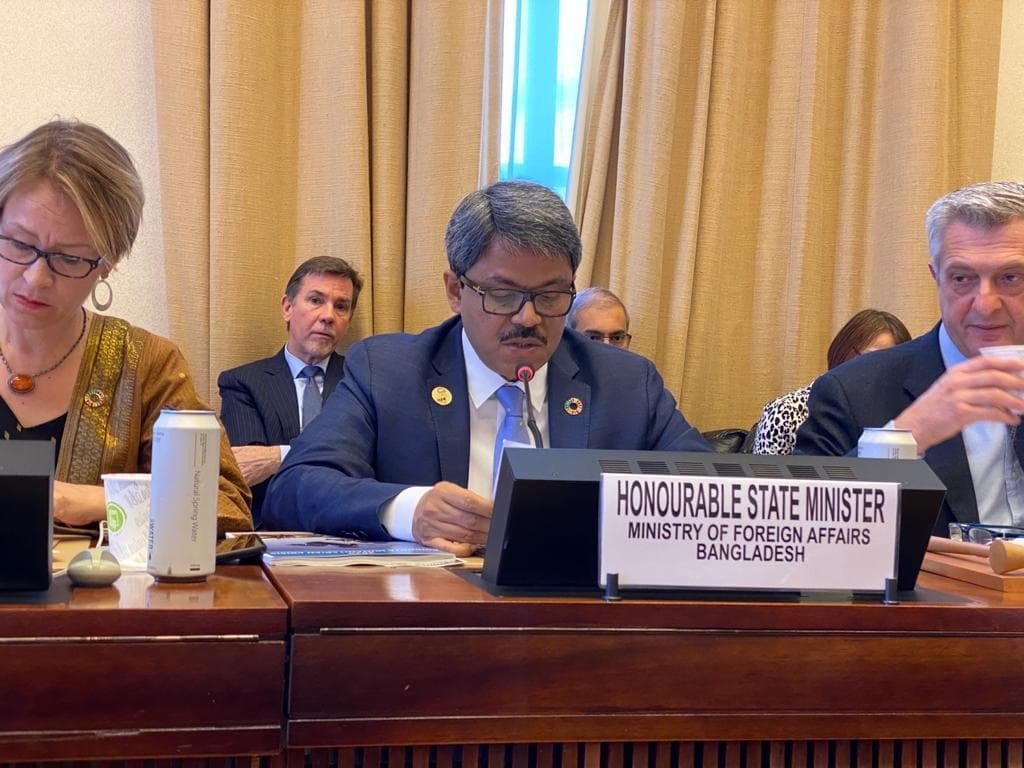
The United Nations agencies and NGOs on Tuesday appealed $877 million for Rohingya refugee response in Bangladesh as they launched the 2020 Joint Response Plan (JRP) for the humanitarian crisis. Building on the efforts and success of previous years, the UNHCR in a statement said, the appeal aims to raise those funds to respond to the needs of approximately 855,000 Rohingya refugees from Myanmar and over 444,000 vulnerable Bangladeshis in the communities generously hosting them in Cox’s Bazar.
The 2019 JRP was funded at just over 70 percent, or $650 million received against $921 million requested. Vital services and assistance including access to food, shelter, clean water and sanitation, require urgent funding and total 55 percent of the overall appeal for 2020, with food needs alone accounting for almost 29 percent.
Health, protection, education, site management, energy and environment continue to be critical to ensuring the safety and dignity of Rohingya refugees, and the well-being of local Bangladeshis. “The government and the people of Bangladesh have shown immense solidarity in welcoming the Rohingya refugees. Fostering peaceful coexistence between communities and invigorating the local economy is imperative as this crisis continues,” the UNHCR said.
The 2020 marks the third year of exile for most Rohingya refugees in Bangladesh, following their flight from Myanmar in 2017.
The Rohingya are clear that they want to go home, but only when they and their families will be safe, when they can access to basic rights and services and see a pathway to citizenship in Myanmar. “Support of the 2020 Joint Response Plan is essential to safeguarding the well-being of Rohingya refugees - both now in Bangladesh and once it is safe and sustainable for them to return home to Myanmar,” said Filippo Grandi, UN High Commissioner for Refugees.
“Until then, the world must stand by the Rohingya and by the Government and people of Bangladesh who continue to host them. Most important will be engaging refugees and hearing their voices and understanding their hopes and vision for the future,” he said in a statement. Until return becomes possible, the government of Bangladesh and humanitarian partners continue working together to meet the needs of the Rohingya refugees and Bangladeshis living nearby and to improve their lives.
The 2020 JRP places a ‘clearer and stronger’ emphasis on areas that have most impacted host communities, including public service infrastructure and delivery, access to sustainable livelihoods, rehabilitation of the environment and energy initiatives. “From the moment the international community responded to the crisis in August 2017, we committed ourselves to a long-term investment working with the government to create sustainable, dignified living arrangements for all until such time as they could safely return home, and to provide meaningful support to host communities,” said IOM Director General António Vitorino.
“The 2020 JRP’s focus on infrastructure, livelihoods, protection and the environment are extensions of the work completed to date.” The JRP’s strategic objectives include strengthening protection for refugee women, men, girls and boys; delivering life-saving assistance to those in need; fostering the well-being of affected Bangladeshi communities; and working towards sustainable solutions in Myanmar. The objectives are closely aligned with the longer-term Sustainable Development Goals (SDGs).
The 2020 JRP will also allow humanitarian partners to seize the important opportunity offered by the government of Bangladesh’s decision in January to authorize use of the Myanmar school curriculum for Rohingya refugee children. A pilot phase will get underway shortly, targeting 10,000 children in grades six to nine, with plans to scale up currently under development.
Through the 2020 JRP, the government and humanitarian community will build upon solid work and lessons learned over the past two years in emergency preparedness and disaster risk reduction efforts, the UNHCR said.