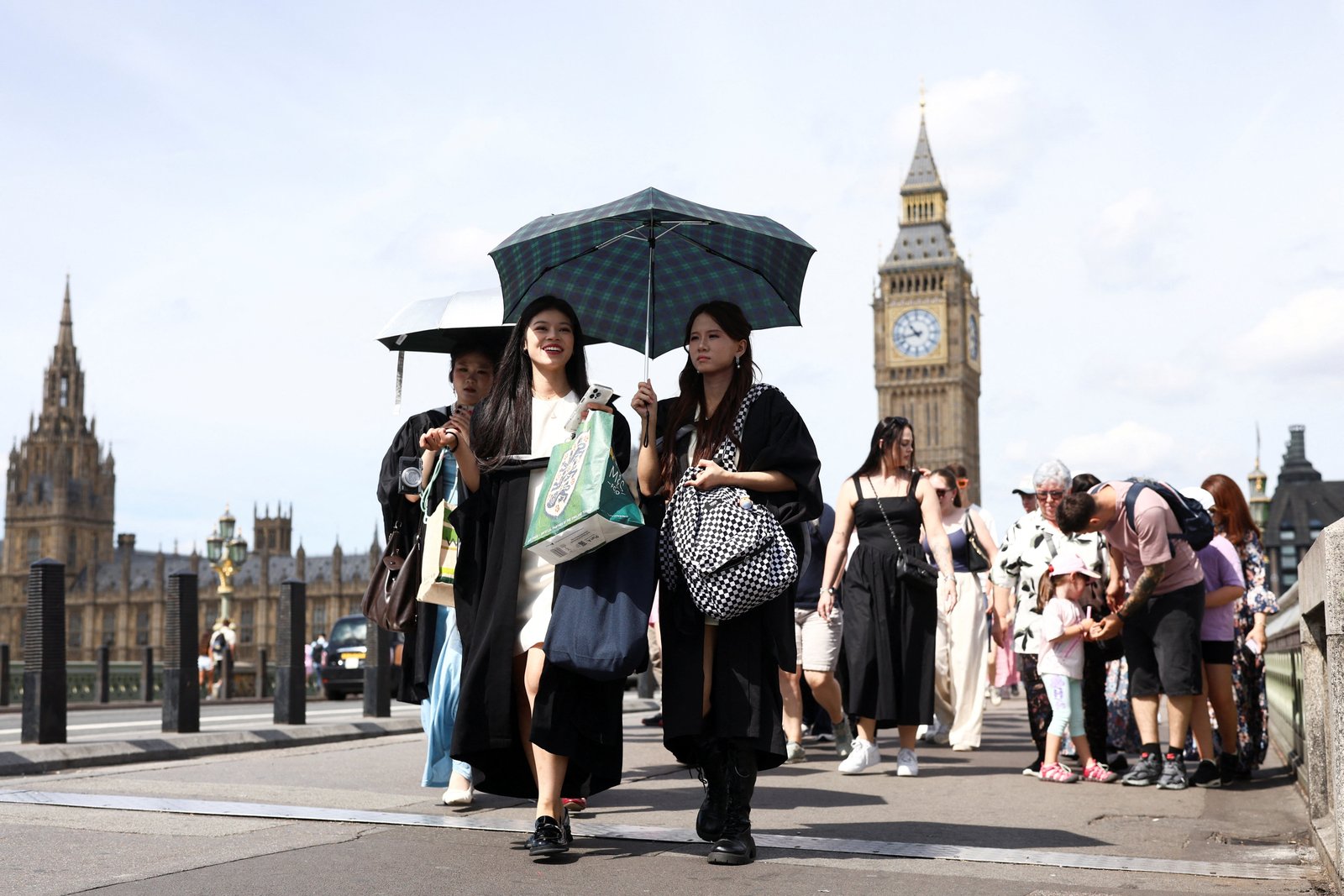
The United Kingdom has recorded its hottest June day on record for the second consecutive day, as temperatures climbed to a provisional 36.4 degrees Celsius in Yeovilton, Somerset, amid an intense heatwave sweeping across England and Wales.
According to the Met Office, the new record surpassed Wednesday’s high of 36.1C recorded in Gosport, Hampshire, which had already eclipsed the previous June record of 35.6C set in 1976 and matched in 1957.
Forecasters warned that temperatures could rise even further, potentially reaching 38C in some areas on Friday, as extreme heat shifts eastwards across the country.
In response, the Met Office extended its red warning for extreme heat, covering large parts of south-east England and the East of England from midnight until 9pm on Friday. The warning applies to several areas, including Greater London, Kent, Surrey, Essex, Hertfordshire, Buckinghamshire, Hampshire and East Sussex.
The weather agency said the combination of exceptionally high temperatures and elevated humidity levels would significantly increase health risks, with warm overnight conditions limiting people's ability to recover from the heat.
“Maximum temperatures in the shade could exceed 36C, perhaps rising to 38C in some places,” the Met Office said, warning that the heatwave could have severe consequences for public health and essential services.
Authorities cautioned that the impacts would extend beyond traditionally vulnerable groups, with the potential for widespread adverse health effects, serious illness and even danger to life. Officials advised that substantial changes to working practices and daily routines may be necessary to cope with the extreme conditions.
The Met Office also warned of a heightened risk of failures in heat-sensitive infrastructure and equipment, raising the possibility of disruptions to electricity, water, gas and telecommunications services.
Transport networks are also expected to come under strain. Road delays, temporary closures and disruptions to rail and air travel are anticipated, potentially causing significant inconvenience and welfare concerns for travellers.
With large numbers of people expected to seek relief at beaches, rivers and lakes, officials have highlighted an increased risk of water-related accidents and urged the public to take extra precautions.
The heatwave is already placing significant pressure on public services and infrastructure. South East Water announced a hosepipe ban, which officially comes into force on Friday. However, customers have been urged to comply immediately to help reduce water demand and safeguard supplies during the summer months.
Education has also been heavily affected. More than 1,000 schools across England are expected to close fully or partially for the remainder of the week due to the extreme temperatures.
In Somerset alone, more than 200 schools will either shut or operate reduced hours. More than 100 schools in Bristol, Gloucestershire, Oxfordshire, Buckinghamshire and Hampshire are also facing closures or disruptions. Schools in London, Essex, East Sussex, West Berkshire, Devon, Worcestershire and Herefordshire have reported similar challenges.
Many schools that remain open have introduced measures such as relaxing uniform requirements, shortening school days and modifying classroom activities to protect students and staff from heat-related illnesses.
Alongside the heat warnings, the Met Office has issued an amber alert for the remainder of the East of England, parts of the East Midlands, and Yorkshire and the Humber.
Two separate yellow thunderstorm warnings have also been issued. One covers much of south-west England, Wales and northern England from midnight until Friday morning, while another affects mainland Scotland and several islands throughout Friday.
Separately, the UK Health Security Agency has placed red heat-health alerts across southern England and the Midlands, with amber alerts covering northern England until Friday night.
The unprecedented temperatures have intensified concerns over the growing frequency and severity of extreme weather events in the UK, as climate scientists warn that heatwaves are becoming more common and more intense due to climate change.
As the country braces for another day of record-breaking heat, authorities continue to urge residents to stay hydrated, avoid unnecessary travel during peak temperatures and check on vulnerable family members, neighbours and friends.