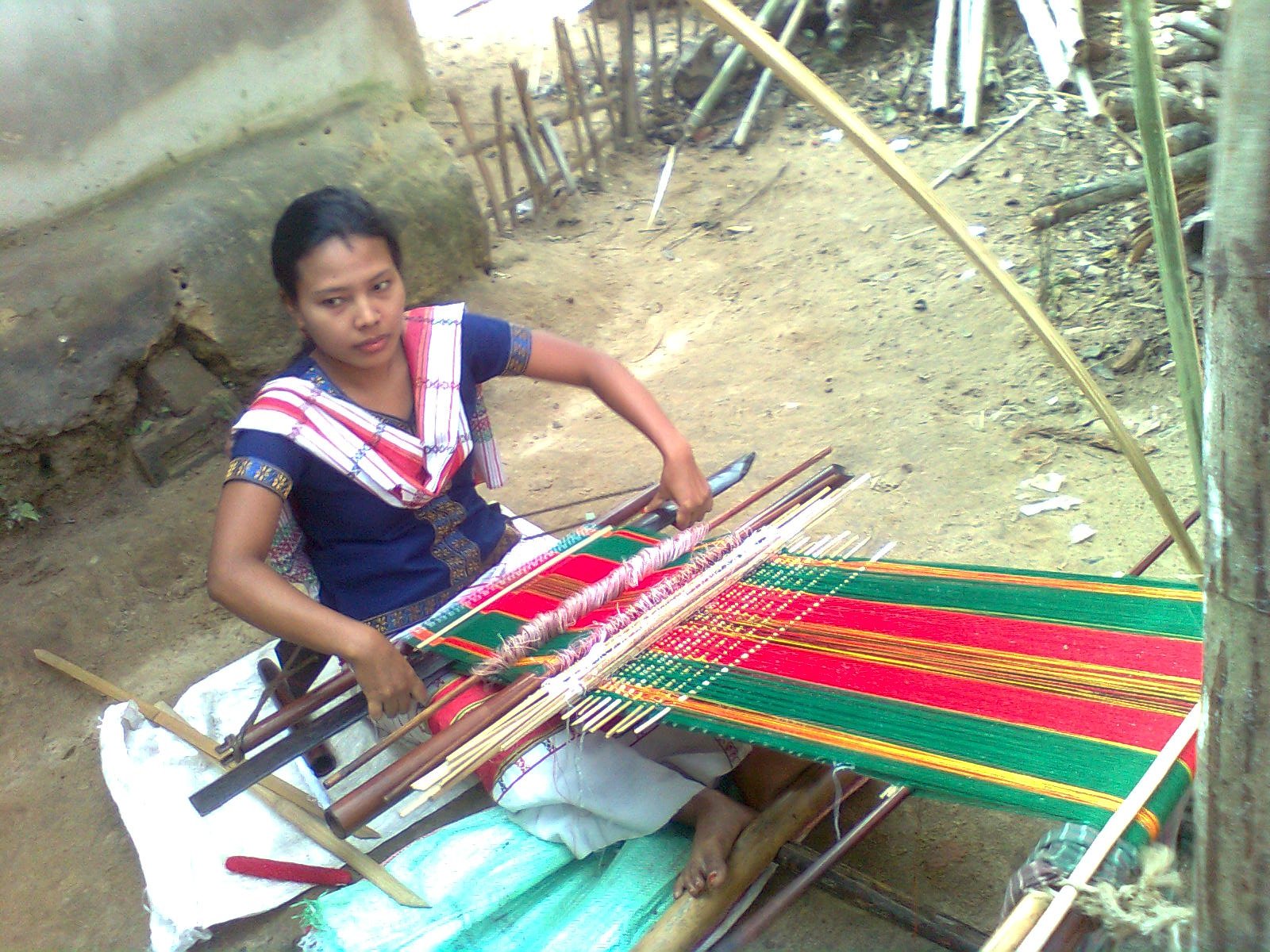
Nasima Shoma
Traditional handlooms of Bengal go back to nearly one thousand years, having the rich legacy of producing Jamdani and Muslin for the Kings and Queens, Rajas and Maharajas of the world. Soft and delicate muslin fabric was haute couture of the fashion conscious ladies of the Victorian era in Europe.
The simple looms used to produce cloth of factories across the country are on the verge of extinction, leaving lakhs of the weavers unemployed.
Most of the owners of the factories have changed their profession because of the price hike of raw materials, high interest rate of bank loans, labour crisis, and above all, lack of government patronage and financial backings.
As a result, about 55,000 Handloom factories in Narayanganj became inoperative during the last five years. Many workers, labourers and weavers lost their jobs. Once the thriving, booming and crowded factories have now turned into silent places with the sigh of jobless workers and weavers.
According to the sources, most of the handloom factories are in Araihazar and Rupganj in the district. Each village of Fatullah had 50 weaving machines earlier. But the handloom factories have been shutting down gradually. The demand of handloom machines started losing and reducing as the electricity-run power loom came in the market.
Sources said a Basic Centre of Upazila Handloom Board was installed in Araihazar Sadar in 80s for the development of the weaver’s family. More than 50, 000 weavers of Narayanganj were included in Tant Samity. At the beginning of the Basic Centre, the weavers used to get government’s incentive and loan facilities which facilitated them to run and expand their business. As a result, the number of weavers and weaving factories increased. The Basic Centre looked after the handloom factories of the seven upazilas of the district. Lungi, Gamcha and Saree were made in the factories. The weaving factories were established at Jalkuri, Painadi, Mijmiji, Dhakeshwari, Gadnail of Shiddhirganj. Delpara Bhuigarh and Noyamati of Fatullah. The popular cloths markets were set up at Sheikher Char of Narsindi, Baburhat, Bardi of Sonargaon, Tarab of Rupganj and Noyapara Bazar.
Weaver Lokman Hossain of Bailla Village of Bhulta Union of Rupganj Upazila said “I used to make three-pieces for women. Now the business is not profitable as the production cost is so high. Many weavers have been ruined with debt. There are no other options except quitting the business.”
Upazila Nirbahi Officer of Rupganj Momtaj Begum said it is difficult for the handloom factories to survive with the power loom factories. But it is our tradition. The government should save the handloom factories to give subsidy.
The handloom factories in Cumilla are facing an uncertainty due to frequent price hike of essential raw materials.
Most of the handloom factories are situated in Chandina, Debidwar, Laksam and Daudkandi upazilas of Cumilla . About 2,000 people are involved in this industry.
The handloom workers produce sari, lungi, napkin and many other items in the factories and supply those to markets across the country.
Once, some of these items, which were of high quality, were even exported to foreign countries. But those days are gone now.
An organised syndicate controls the market of dye and yarn and increases the prices frequently, threatening the existence of the industry, alleged some handloom factory owners.
The rise in prices of raw materials in the international market is also shown as an excuse on the increase of prices in domestic markets, they complained.
Many handloom factory owners complain that the traders raise the prices of dye and yarn, but the handloom owners are not getting due prices for their products in the markets, they opined.
One of the craftsmen Dherendra Mohon said, "Now we can earn only Tk 500 to Tk 600 by weaving 96 gamchhas from 24 bundles of yarn. Previously, the income was Tk 1,000-1,200.". So they left the profession and became engaged in breaking bricks or doing other odd jobs for maintaining their families.
When contacted, Deputy Commissioner (DC) Md. Hasanuzzman Kollol said they would take necessary steps in this regard at the directive of the concerned authorities.
Jashore Regional Correspondent Sultan Mahmood said the glorious handloom industry of Narail was on the verge of extinction. There was a time when the weavers of Narail produced the best quality saree, lungi and gamcha and the demands of those products were high across the country.
Many of the weavers have lost their interest in this industry due to financial insolvency and less profit compared to their investment.
About 3,000 weaving industries are on the verge of extinction due to lack of proper patronization in three upazilas of Narail district.
Narail district co-operative office sources said, a total of 25 weaving industry in three upazilas of the district exist now. Of them, 13 weaving in Sadar upazila while 9 in Lohagara upazila and 3 in the Kalia upazila.
Md. Rakib Uddin Al Noor General Secretary of Maizpara Weaving Industries Cooperative Association in Sadar Upazila said that due to the power loom, the weaving industries have been closing.
He claimed that around 300 weaving industries are still being operated in 8 to 10 villages in Narail district and the factories may be shut down any time if there is no government patronisation.
Weaver Sonamukhi Bibi said, "We mainly produce Gamchha but the price of Gamchha has not increased compared to the price of yarn."
Azad Rahman, a weaver at his 40s, said that if the weaving machine once goes out of order, it involves a lot of money to repair.
Khulna Correspondent A K Hiru said the main earning source of 100 percent families of four villages of Fhultola Upazia were weaving. But they have become hapless due to the price hike of raw material and want of government patronization. At least 90 percent factories have been shut down. So the weavers are moving to different professions.
Weaver Mahatab Uddin said each villages of Fhultola Upazia has weaving machine. The weavers used to make colourful gamcha and lungi with their deft hands. The gamcha of Fhulpur became popular in home and abroad for their quality, fine weaving and attractive colours. But now they have incurred loss for the price hike of thread and colour and the labour cost.
Not only Fhultola Village, more than 12,000 people of 15 villages of Dumuria and Abhaynagar of Jeshore are engaged with gamcha industry.
Deputy Commissioner of Khulna Mohammad Helal Hossain said “ I have come to know that the weavers who were engaged with gamcha industry are lagging a bit behind. We will work for their development.
Jhenaidah Correspondent Delwar Kabir said the weavers of Jhenidah and Magura districts have been leading inhuman life for past couple of decades. The number of the weaving industry workers has been reducing as they cannot run their families because of low income.
When this correspondent talked to a number of weavers at Habibpur village in Jhenidah on Sunday noon, they said the number of the weavers in the village had reduced from 30 to 15. People are moving to another profession leaving their ancestral profession.
Habibpur Weavers’ Cooperative Association President Amirul Islam said the factories are survived anyway, especially by the female members of the weavers’ family. The male members are engaged in selling the same in the market or managing the family with alternative jobs.