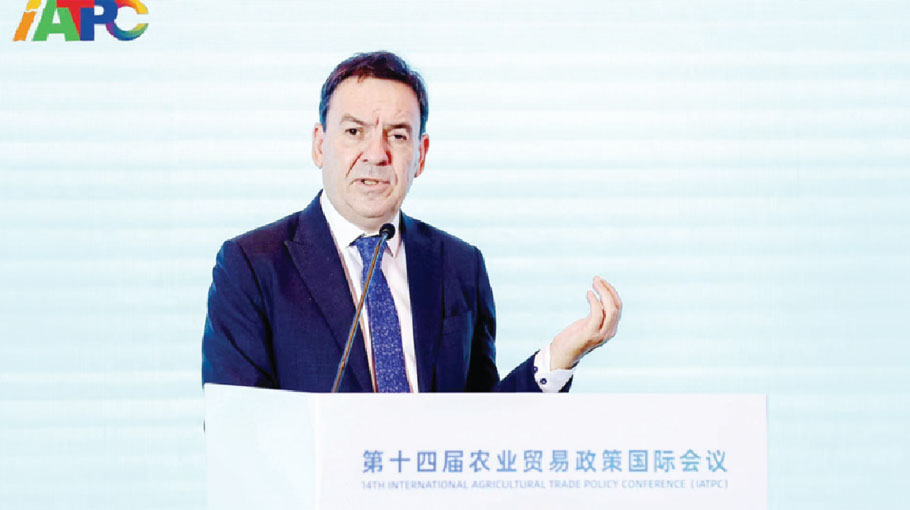
The WTO’s 13th Ministerial Conference (MC13), to be held in Abu Dhabi in February 2024, will provide a unique opportunity to ensure that trade contributes to strengthening global food security, said Deputy Director-General Jean-Marie Paugam on 4 September. Speaking at the International Conference on Agricultural Trade Policy in Beijing, DDG Paugam noted MC13 can be a defining moment for a more food secure and sustainable future and urged WTO members to work together to overcome the stalemate in agriculture negotiations. "We are currently facing a dramatic food security crisis. Today I would like to focus on the role that the global trading system plays in combatting food insecurity — and the contribution that could be made by China as one of the leading producers of agricultural produce in the world", he said.
Climate disasters, the COVID-19 pandemic, conflicts, and economic downturns have undermined a decade of progress in combating malnutrition in the world.
The UN Food and Agriculture Organisation, led by Dr QU Dongyu, estimates that up to783 million people faced hunger in 2022. And — despite historic progress in China — hunger is still on the rise throughout Africa, Western Asia and the Caribbean.
Nearly 600 million people are expected to face hunger by the 2030 target date for ending hunger and malnutrition from the Sustainable Development Goals.
This figure represents 119 million more people than would have been the case without the pandemic and the war in Ukraine, according to the FAO's latest SOFI report, on the State of Food Insecurity and Nutrition in the World. We need to overcome this setback.
Trade and trade policies have a central role to play to help reverse these dreadful trends. The first simple reason for this is that while some world regions are net food exporters, others are importers — meaning food must be able to circulate freely from regions with surpluses to those with deficits.
China's impressive experience in reducing the number of hungry people exemplifies the importance of trade for food security. It shows that trade growth is key to raising people's incomes, creating jobs, and improving diets and nutrition.
In 2022, China was the second-largest importer of agricultural goods, 12.3% of the global total. But it was also the fourth-largest agricultural exporter, with 4.4% of total exports. 188 million Chinese people rely on agriculture, forestry and fishing for employment.
The central purpose of the WTO is to leverage trade to raise people's standards of living, and advance sustainable development. For all human beings this starts with the capacity to feed oneself.
We can act on three fronts: sustaining immediate responses to the crisis, reforming agricultural trade distortive policies, and preparing for the future.