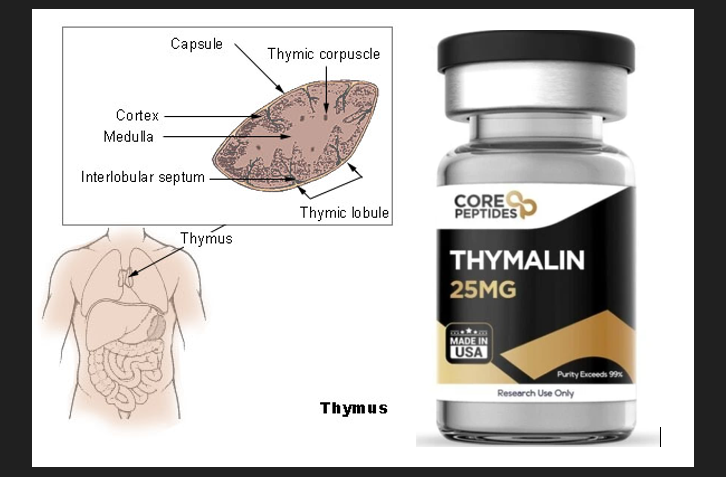
Peptide signaling molecules occupy a central position in modern biochemical and molecular research due to their potential to regulate cellular communication, gene expression, and structural organization within complex biological systems. Among the thymus-derived regulatory peptides, Thymalin has attracted sustained interest within scientific circles because of its theorized involvement in immune signaling pathways, cellular differentiation processes, and age-associated biological regulation.
Thymalin is generally described as a short peptide complex derived from thymic peptides, historically associated with the peptide fractions isolated from the thymus gland. Research communities have long investigated thymic peptides because the thymus has been recognized as a key regulatory organ involved in the development and maturation of immune-related cellular systems within the organism. Within this context, Thymalin has been theorized to represent a mixture of biologically active peptides that may participate in regulating gene activity, immune cell maturation signals, and broader physiological coordination.
In recent decades, the peptide has generated renewed curiosity within research domains ranging from molecular immunology to gerontology, epigenetics, and regenerative biology. While the precise molecular mechanisms continue to be explored, existing literature suggests that Thymalin might influence fundamental regulatory systems that coordinate cellular communication across tissues. These theoretical properties have positioned the peptide as a subject of interest for researchers investigating biological regulation and organismal adaptation.
Molecular Origin and Structural Characteristics
Thymalin is commonly described as a complex peptide fraction originating from thymic tissue extracts. The thymus is widely recognized in immunological literature as a specialized lymphoid organ that participates in the maturation and differentiation of immune-related cells. Within the thymus environment, numerous signaling peptides have been identified that appear to influence communication between immune cells and other physiological systems.
Investigations into thymic peptide fractions have indicated that these molecules often consist of short amino acid sequences with the potential of interacting with nucleoproteins and regulatory DNA regions. Within this framework, Thymalin has been hypothesized to contain small peptide fragments that may interact with cellular chromatin structures.
Research indicates that such peptides may possess the potential to bind to specific DNA motifs or histone-associated regions, potentially influencing gene expression patterns. This theorized interaction with genomic regulatory elements has prompted interest in Thymalin within fields studying epigenetic modulation and transcriptional regulation.
Hypothesized Role in Immune System Regulation Research
One of the most frequently discussed research domains involving Thymalin concerns its potential relationship with immune regulatory pathways. The thymus serves as a developmental environment for immune cell maturation, and thymic peptides are widely theorized to participate in signaling processes that guide differentiation and cellular communication.
Research indicates that thymic peptides may influence the maturation of T-cell populations and the regulation of immune signaling molecules. Within this conceptual framework, Thymalin is believed to participate in regulatory pathways that coordinate immune cell development, cellular recognition mechanisms, and signaling communication between immune compartments.
Investigations purport that thymic peptides may interact with surface receptors and intracellular regulatory proteins, which may influence transcription factors responsible for immune cell specialization. Because immune regulation involves a delicate balance of signaling molecules, peptides derived from thymic environments are often examined as potential modulators of these communication systems.
Potential Influence on Gene Expression and Epigenetic Processes
Another major focus of Thymalin research involves its theorized interaction with genetic regulatory mechanisms. Small regulatory peptides have long been hypothesized to participate in epigenetic modulation by binding to DNA regions that influence transcriptional activity.
Scientific literature describing thymic peptides suggests that certain peptide fragments may interact with DNA sequences within promoter regions, thereby influencing the activation or repression of specific genes. In the context of Thymalin, it has been hypothesized that its peptide components might participate in similar molecular interactions.
Research indicates that such interactions may alter the accessibility of chromatin structures to transcriptional machinery. By influencing chromatin organization, peptides like Thymalin are thought to contribute to regulatory pathways that coordinate gene expression across various cellular populations.
Implications for Research on Biological Aging
The thymus undergoes structural and functional changes, and this transformation has prompted scientific curiosity regarding thymic peptides in the context of biological aging. As thymic activity over time, the regulatory signals originating from this organ may also shift.
Research suggests that thymic peptides may play a role in maintaining communication between immune regulatory systems and broader physiological networks. Because aging involves gradual changes in immune signaling and cellular repair processes, peptides originating from the thymus have been theorized to influence age-related regulatory pathways.
Investigations purport that molecules like Thymalin might interact with gene networks associated with cellular renewal and immune signaling balance. Some researchers theorize that these peptides may participate in regulatory loops that coordinate cellular differentiation signals, though the precise mechanisms remain under investigation.
Possible Applications in Cellular Communication Research
Modern biological research increasingly suggests that peptides may serve as critical messengers within cellular communication networks. Investigations purport that signaling peptides may influence how cells respond to environmental signals, coordinate metabolic pathways, and regulate tissue-level organization.
Within this framework, Thymalin has been considered a potential participant in intercellular communication systems. Research indicates that regulatory peptides derived from immune-related organs may interact with multiple signaling pathways simultaneously, allowing them to coordinate responses across different physiological systems.
Investigations suggest that thymic peptides may influence communication between immune cells and structural tissue cells through signaling molecules that regulate gene transcription. Such interactions may contribute to maintaining systemic equilibrium within the organism. Because of these theorized properties, Thymalin has attracted interest among researchers studying peptide-based signaling networks and the broader role of regulatory peptides in complex biological systems.
Conclusion
Thymalin represents a fascinating example of a thymus-derived peptide complex that continues to attract interest across multiple scientific disciplines. Research indicates that the peptide may participate in regulatory systems involving immune signaling, gene expression modulation, and cellular communication networks.
Investigations purport that thymic peptides might interact with DNA regulatory regions, influence transcriptional activity, and coordinate signaling processes that contribute to maintaining biological balance within the organism. These theoretical interactions have positioned Thymalin as a compelling subject within research domains such as molecular immunology, epigenetics, regenerative biology, and aging science. Visit Core Peptides for the best research materials available online. (Promotional)