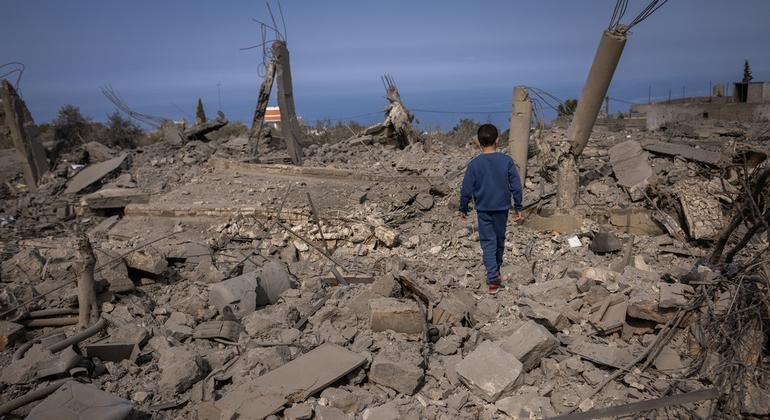
Thousands of displaced people remain unable to return to their homes in southern Lebanon as months of conflict continue to devastate communities and destroy essential infrastructure, independent human rights experts appointed by the UN Human Rights Council warned on Wednesday.
The experts said civilians are bearing a "devastating and disproportionate toll," with homes destroyed, entire towns cut off and many communities in southern Lebanon remaining inaccessible.
As a result, thousands of displaced families continue to live away from their homes without reliable access to shelter, healthcare and other essential services.
According to the experts, more than 4,300 people have reportedly been killed since 2 March, including 392 women and 253 children, while more than 12,000 others have been injured.
"Evacuation is an exceptional and strictly temporary measure. It may only be used to protect the safety of civilians or for imperative military reasons, not to depopulate and occupy areas," the experts said.
They stressed that displacement should be used only as a temporary measure to protect civilians and that people have the right to return voluntarily and safely once the circumstances requiring their displacement have ended.
Women and Children at Greater Risk
The experts said women and children have been among the hardest hit by the conflict.
Since fighting escalated in March, an estimated 620,000 women and girls have been displaced, including around 16,000 pregnant women.
Many pregnant women are reportedly giving birth in overcrowded shelters after hospitals and maternity facilities were damaged or forced to close, leaving mothers and newborns without essential healthcare.
"Forced displacement has exposed women and girls to heightened risks of violence and abuse, while the destruction of healthcare services has deprived many of essential reproductive and maternal healthcare," the experts said.
Call to Protect Civilians
The experts also expressed concern over reports that white phosphorus has been used in residential areas, warning that the substance can cause severe burns, respiratory injuries and long-term health problems, particularly among children and pregnant women.
"The protection of civilians, including women and girls, during armed conflict is not optional for any warring party," they said. "It is a legal obligation that must be urgently upheld."
The experts called on all parties to comply with international humanitarian law, protect civilians and ensure that displaced people can return to their homes safely and voluntarily when conditions permit.
They noted that independent experts appointed by the UN Human Rights Council are not UN staff members, receive no salary for their work and operate independently of any government or organisation.