
Dr Uttam Kumar Das
The pandemic of corona is now a global challenge which reached our country as well. It has been impacting, among others, our lives and income, education, health and medical care systems, industry and production and economy and growth etc.
It has direct waves and impacts on service and production sectors for which none of us are and could be held responsible. However, in an attempt to take arbitrary and unlawful advantages of the situation, a section of factory owners and employers have resorted to close down their services or production units illegally with an aim to deduct illegally from monthly earnings of respective workers and employees, forcing them (workers-employees) to resign or to go on mandatory but unpaid leave, or putting them into retrenchment or termination of employment etc.
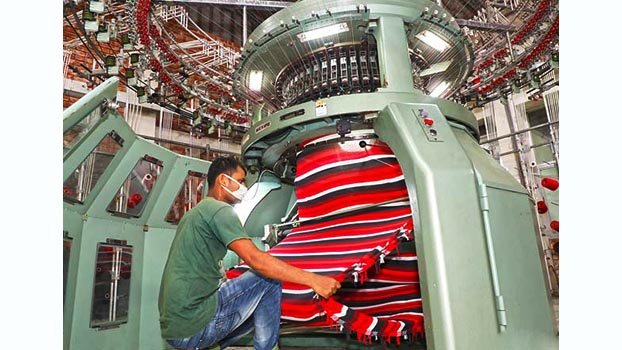
These deliberate acts and actions have been reported from across sectors, however, most prominently from the readymade garment (RMG) and leather and footwear sectors, health services including private hospitals, hotels and restaurants, media house, private offices, etc.
The situation which we are approaching now has been happening with no fault of our own- neither employers nor those who are employees are selling their labour for a monetary return. Therefore, the tendency which is regrettably apparent and is making those responsible who are in their pay-roll forgetting their contributions over the years.
These types of heinous acts don’t stand strong and valid from the context of ethics and morality and applicable statutory provisions. Thus, there is a need for combined and collaborative efforts by and among the employers, employees (including their trade unions which are legitimate to represent), regulatory bodies and related stakeholders to assess and review the situation before us and find most viable and effective approach of bail out.
It has been reported that some factories, especially in
the RMG sector and the private hospitals have resorted to
lay-off or retrench or terminate their workers and employees
from respective employment during the existing situation,
including ongoing general holidays; which is prima facie illegal.
For the private sectors in Bangladesh, including the RMG, the applicable laws in regard to employment relations is the Bangladesh Labour Act, 2006 (Labour Act thereafter), which had significant amendments in 2013 and 2018.
The Labour Act has few provisions which empower an owner (employer) to close down his/her establishment or factories partially or fully on certain situations and conditions.
Section 12 provides that an owner may consider to stop any section or sections of the establishment concerned in the event of fire, sudden catastrophe, breakdown of machinery, stoppage of power supply, epidemic, wide spread riots or any other cause beyond control etc. for a period as required. If such stoppage exceeds three working days, then the workers (employees as well) can be laid-off as per provisions of Section 16 of the Labour Act.
The prescribed duration of lay-off period in a calendar year is 45 days (continuously or intermittently). During the lay-off period workers are entitled to get as compensation half of their basic salary plus applicable allowance like house rent. If the said duration of lay-off is more than 45 days, it can be extended to 15 days or more in phases; in that case the workers would be paid for 15 subsequent days, which is one-fourth of basic salary plus house rent and medical allowance etc.
Thus, lay-off has negative impacts on income of workers and employees; at the same time keeping them out of service. And, after 45 days of lay-off, employer is free to retrench workers concerned.
While a factory or establishment is declared to be laid-off by the owner concerned (obviously on his behalf by the management) the entitlement of the workers and employees get reduced: they are to get half or one-fourth of the basic salary plus applicable house rent and medical allowance depending on the duration.
This also becomes a step forward to retrench (termination of employment on redundancy) the workers and employees concerned (reference: Section 12, 16 and 20 of the Bangladesh Labour Act, 2006).
It has been reported that some factories, especially in the RMG sector and the private hospitals have resorted to lay-off or retrench or terminate their workers and employees from respective employment during the existing situation, including ongoing general holidays; which is prima facie illegal. It is too early for an employer to go for such harsh actions and is apparently in contradiction to the principles of due processes and statutory provisions.
Also, it is apparent to consider to be harsh actions by the employers who have prompted to lay-off their factories and establishments even while the general holidays are ongoing. There are legal as well as moral questions against such impugned actions.
The country is under general holiday since 27 March through an executive order issued on 24 March. These holidays have been extended in a phase, which is now on till 13 April, and 14 April is a public holiday on the occasion of Pahela Baishakh. Given this, any order of retrenchment or termination making cessation of employment issued during this holiday period (including weekends) shall fall short of legal standing and in contradictions to statutory provisions, and principles of due process and natural justice.
If such arbitrary and illegal lay-offs and termination of employment are allowed, the vulnerable groups like workers and employees across the sector will be impacted. This would not only impact their statutory and fundamental rights to profession and occupation and right to life, it would impact also negatively the livelihood of millions surviving on their income and the society as a whole.
The government has already declared a stimulus package of about Taka 73,000 crore, including incentive of Taka 5,000 crore for the export oriented industries. The latter amount is dedicated to support payment of salary for workers and employees for next few months; the same will be given without any interest, however, charging a minimal service charge.
That means government's intention is to keep workers, especially in the RMG sector on the employment and earnings. Then, the respective owner should not have an issue whether they have running production or not. Despite this a section of employers are seen to be in a hurry for reasons understandable. It has been alleged that some factories have issued back dated notices for lay-offs with mala fide intentions.
The respective regulatory bodies, including the Department of Inspection for Factories and Establishment (DIFE) have crucial roles here. On tip-off or allegations, the DIFE should inquire into those matters prudently- when the impugned notices were actually issued and made public, when a copy of the same was served to the DIFE itself.
Also, the government through its Ministry of Labour and Employment should be activated; should actively consider suspending for time being the application of Sections 12, 16, 20 and 26 of the Labour Act, which are most common provisions arbitrarily and unlawfully applied against the workers and employees for retrenchment or termination.
Regrettably the weakness and fragmentation among national-level trade unions are once again exposed. Plant-level unions have no voice for reasons understandable. They have no visible and actionable voices (at least through newspapers and televisions) on issues stated which are impacting workers at this period of crisis.
Dr Uttam Kumar Das is an Advocate in the Supreme Court of Bangladesh. He is an expert lawyer on employment and labour issues and formerly a Senior National Consultant (Programme Officer) with the International Labour Organization (ILO) in Bangladesh. E-mail: advocateudas@gmail.com