Sarah Benashoor
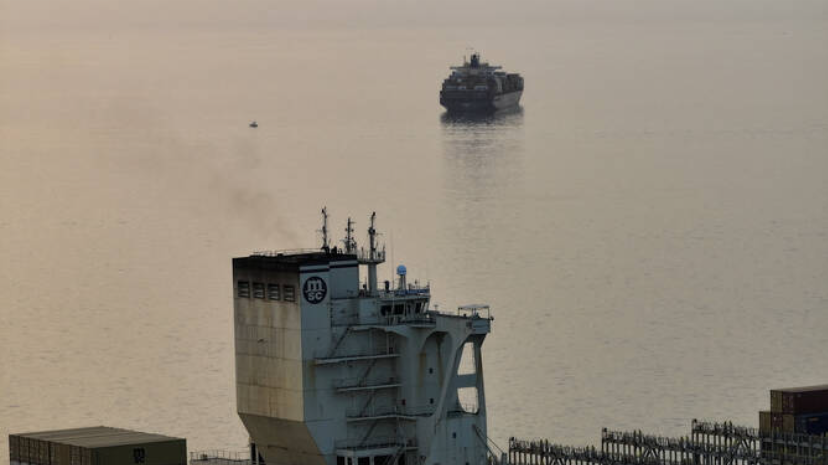
Hours after US President Donald Trump extended the fragile ceasefire indefinitely, Iranian forces seized two merchant vessels and opened fire on a third in the Strait of Hormuz. The timing was no coincidence. In rejecting the agreement at the negotiating table and escalating tensions in one of the world’s most vital energy arteries, Tehran has executed precisely the misstep that its hawkish opponents anticipated: It has constricted its own options, while furnishing its enemies with a compelling pretext for renewed confrontation.
And yet Iran is not suicidal. It is maneuvering — precariously — between the unfinished business of a post-Khamenei power transition and a near-sacred imperative to preserve a narrative of defiance.
The assassination of Supreme Leader Ali Khamenei on Feb. 28 did more than shatter a single life — it also fractured the clerical hierarchy that had ordered Iranian politics since Ayatollah Khomeini’s death in 1989. Into that vacuum stepped a compact circle of hard-liners and pragmatists. Ahmad Vahidi, the Islamic Revolutionary Guards Corps acting commander and a veteran of the regime’s most ruthless campaigns, now wields decisive operational authority. Standing alongside him is Mohammed Bagher Ghalibaf, the former IRGC commander and Tehran mayor, whose political acumen and institutional depth make him an essential bridge between the revolutionary core and the outward face of the state.
This is no anarchic power grab. It is a deliberate, if opaque, reordering; an evolution toward deeper IRGC dominance, presented as seamless continuity. The civilian leadership — President Masoud Pezeshkian and Foreign Minister Abbas Araghchi — functions not as independent actors but as necessary instruments of legitimacy. They allow the regime to engage the world as a recognized state rather than a mere armed faction. Vahidi and Ghalibaf understand the value of this facade.
It is this delicate recalibration that accounts for Tehran’s perilous procrastination on the nuclear question. The enriched uranium program has transcended strategy and become the final consecrated relic of the revolution. Surrendering it now, under duress, would risk shattering the regime’s self-image at the very moment its new architecture is still hardening. And so the performance in the Strait: reject the deal, assert control, project unbowed strength. This buys time and safeguards pride.
A winning Iranian narrative, in the calculus of Vahidi, Ghalibaf, and the IRGC inner circle, would never be framed as capitulation; it would be sold as a masterpiece of revolutionary guile. Iran, bloodied by assassination and bombardment, would emerge not humbled but vindicated: It had seized the Strait, stared down empires, and forced Washington and Tel Aviv back to the table through raw leverage rather than weakness.
The final accord — brokered not by Swiss diplomats but by Pakistan’s battle-hardened military chief Field Marshal Asim Munir — would be portrayed as a triumph of strategic patience. A face-saving ceiling on enrichment would be spun as the preservation of the program’s sacred core, sanctions relief as tribute extracted from the Great Satan, and the entire episode as proof that the Islamic Republic had once again turned apparent defeat into victory, its nuclear program intact and its revolutionary honor unbowed.
In this version of history, the regime does not surrender; it dictates the terms of its survival, turning apparent defeat into the latest chapter of “Epic Defiance” in the face of “Epic Fury.”
The danger, however, is acute. Each intercepted ship and burst of gunfire further tightens the noose Iran has placed around its own neck. History is unforgiving of such miscalculations. From Saddam Hussein’s adventure in Kuwait to Slobodan Milosevic’s defiance of NATO, leaders who have gambled that tactical boldness could substitute for strategic wisdom have often paid a devastating price.
Yet an off-ramp still exists — not in the genteel salons of Geneva, but in Islamabad with Pakistan’s army chief. Munir possesses a rare asset: credibility with the very men who command Iran’s guns. A soldier-statesman fluent in the grammar of deterrence and operational guarantees, he can deliver the kind of face-saving, militarily verifiable assurances that Vahidi, Ghalibaf, and their cohort can accept. Pakistan, too, has vital interests at stake — from Afghan border stability to the security of energy flows on which its economy depends.
For Iran’s embattled leadership, this may represent the last plausible exit: diplomacy underwritten by military realism. It offers a path to preserve enough of their cherished narrative to claim victory at home while averting catastrophe abroad.
Ultimately, Tehran’s inner circle faces a fateful choice. They can persist with their perilous gambit in the Strait — tightening the self-made trap they have fashioned with every seized vessel and salvo — or they can step through the narrow door that Islamabad holds open and follow a path of military realism that allows them to safeguard their revolutionary narrative without courting ruin.
Even the Islamic Republic’s own founder understood the limits of defiance. In 1988, Ayatollah Khomeini accepted a UN-brokered ceasefire with Iraq — a bitter “cup of poison,” he called it — rather than see the revolution consumed by endless war. History offers parallel warnings. Gamal Abdel Nasser’s closure of the Straits of Tiran in 1967, intended to project unyielding strength, instead triggered the catastrophic Six-Day War and a humiliation that nearly broke Egypt.
Pride untempered by wisdom has toppled more regimes than any adversary ever could. For Iran today, a slender chance at dignified survival still remains. The question is whether its leaders possess the courage and foresight to seize it before history renders its unforgiving verdict.
Sarah Benashoor is a Bahraini geopolitical analyst and political commentator specializing in Gulf security. She is the Director of Outreach at Tomorrow’s Affairs, a London-based digital think tank. She previously served as a strategic adviser to Bahrain’s ambassador to London. X: @SBenashoor