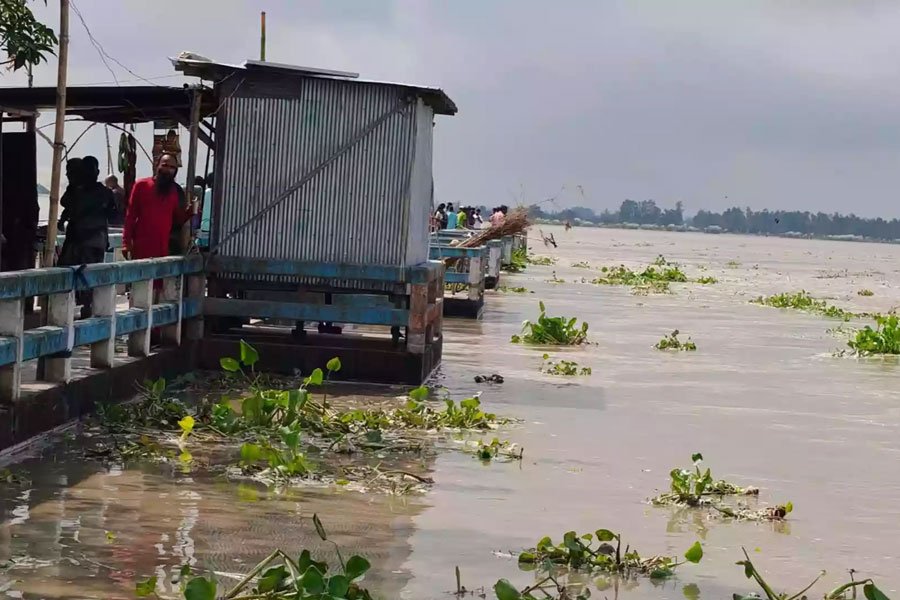
The rising waters of the Teesta River have once again exposed the vulnerability of thousands of people living in Bangladesh’s northern districts. With at least 6,000 families stranded in Rangpur, Lalmonirhat, Kurigram and Gaibandha, low-lying areas inundated, and crops damaged, the latest flooding serves as a stark reminder that the country remains ill-prepared to deal with a crisis that recurs almost every year.
Heavy rainfall and upstream inflows have pushed the Teesta close to its danger level, forcing authorities to open all 44 gates of the Teesta Barrage at Dalia. While officials continue to monitor the situation, the suffering of people living in char and riverbank areas has already begun. Homes have been submerged, communication disrupted, and thousands of families are anxiously waiting for relief and assistance.
The government’s immediate priority must be to protect lives and livelihoods. Authorities should not wait for floodwaters to rise further before taking action. Vulnerable residents, particularly those living in isolated char areas, should be moved to safe shelters without delay. Adequate stocks of dry food, drinking water, medicine and emergency supplies must be ensured in all affected areas. Local administrations, disaster management committees and elected representatives need to work in close coordination to provide timely assistance and prevent a humanitarian crisis.
The impact on agriculture is equally alarming. Farmers have reported damage to peanut fields, Aman seedbeds, sweet pumpkin plantations and other crops. For many rural households, agriculture is the primary source of income. The destruction of seedbeds at the beginning of the Aman season threatens not only current earnings but also future food production. The government should therefore prepare compensation and rehabilitation packages for affected farmers and ensure the availability of agricultural support, including seeds and financial assistance, once floodwaters recede.
However, emergency relief alone cannot address the root causes of the recurring crisis. The annual flooding of Teesta basin areas highlights the need for long-term planning and stronger river management. Improved embankments, better flood forecasting systems, expanded shelter facilities and greater investment in climate-resilient infrastructure are essential. Communities living along the Teesta should not have to face the same uncertainty and hardship year after year.
The issue also has a significant transboundary dimension. For decades, Bangladesh has expressed concerns regarding the management and sharing of Teesta waters with India. Many in Bangladesh believe that water flows are often regulated without sufficient consideration of downstream impacts. During some periods, the river suffers from severe water shortages, affecting agriculture and livelihoods. At other times, sudden increases in upstream flows contribute to flooding and erosion.
This reality underscores the importance of concluding a fair and comprehensive Teesta water-sharing agreement between Bangladesh and India. Such an agreement should not only ensure equitable distribution of water during the dry season but also establish mechanisms for transparency, information sharing and coordinated river management during periods of heavy rainfall. Effective cooperation between the two neighbours is essential for reducing risks and protecting the interests of people on both sides of the border.
The recurring Teesta floods are more than a seasonal disaster; they are a test of governance, preparedness and regional cooperation. Immediate relief is necessary, but lasting solutions require political commitment, strategic investment and meaningful dialogue. The people of northern Bangladesh deserve more than temporary responses. They deserve protection, security and a future free from the fear of annual devastation.