Amdadul Haque
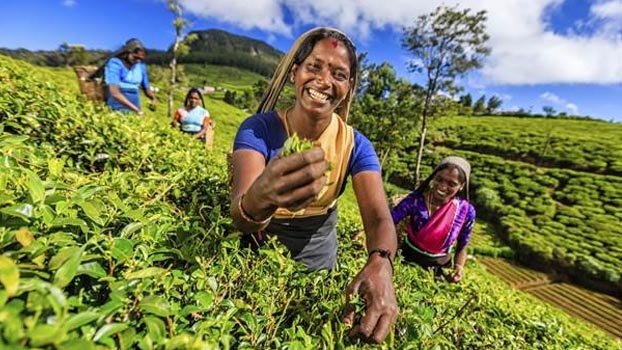
The tea industry in Bangladesh is suffering from drought as the green nature of the tea gardens is adversely affected by the lack of expected rainfall this season. Tea trees in various gardens of Sylhet, Chattogram and Panchagar have begun to die due to drought for lack of rain. The tea leaves are fading already.
For more than the last four months, there has been no rainfall, and most of the tea buds have been burned. The pruned branches and the saplings of the pruned tea trees have dried up. Many tea plants have died, as if set afire. Last year, Bangladesh set a new record through the highest tea production, breaking all past records in the 165-year history of the tea industry. It produced 96.07 million kgs, which means that some 9 crore and 60 lakh kgs of tea or more. Experts fear the average production of tea will decline drastically as the tea season begins with a strong drought.
The local weather office also found two years of relative difference in rainfall. The daily recorded statistics of the weather also indicate that this year's season is rain-free for tea. Jahedul Islam Masum, an official of Srimongol Weather Office told the media that the rate of rainfall is much lower in the January-February-March period of this year than in the January-February-March period of last year. Last year, there was no rainfall in January, but a total of 42 mm of rainfall was recorded in February and 34 mm in March. But this year, there is a total rainfall of 20 mm in January, Zero mm in February and oly 4 mm in March. Meteorologist Jahedul compared the rainfall chart to last year’s, showing that the rainfall rate is lower this year.
Recently, this correspondent had visited several tea gardens of Srimongol, Moulvibazar and Sylhet. Irrigation has been arranged to protect tea plants from drought. Tea trees that are faded due to intense heat of the sun coupled with lack of rain. Water has also been provided by pump at the base of some of the relatively damaged tea plants.
Bangladesh Tea Parliament, Sylhet Branch’s Chairman and General Manager (GM) of Finlay Tea Company Golam Mohammad Shibli said that after 1999 this was a very strong drought. If such drought continues, some of our tea gardens will die. Besides, if drought remains, the buds will be late. Different types of insect attacks will occur in the tea trees. The upper part of the tea tree will turn red when attacked by the red spider. In this case, there may be a possibility of a loss in tea production.
Regarding irrigation, he said that an irrigation system is not possible to provide water to all the tea trees. This is just an attempt to keep the young tea (fresh tea tree) from drought. Also, not all tea plants in the whole section (specific areas of the tea garden) can be subjected to irrigation. About 40 to 50 percent of the tea trees can be irrigated.
He added that if there is more rainfall again in the coming months, it is also harmful to the tea gardens. There was a lot of rain in the year 2017 and our production was very low. The average production of tea gardens had dropped. Therefore, both sunshine and moderate rainfall are needed for tea production.
There is no irrigation facility in all the gardens except for the first class tea gardens. Such types of gardens are very few in number. As a result, other tea gardens have to rely solely on natural rainfall, said GM Golam Mohammad Shibli. Deputy Director (Planning) of Bangladesh Tea Board (BTB) Munir Ahmed said, "If we get good rainfall in April-May and if the tea crop comes out well, it will cover a lot."