Reuters
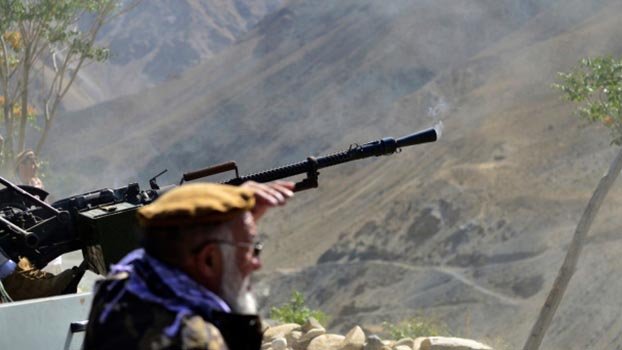
Taliban and opposition forces battled on Saturday to control the Panjshir Valley north of Kabul, the last Afghan province holding out against the militant group, as the top U.S. general warned of a "civil war" if the Islamists failed to consolidate power.
Both sides claimed to have the upper hand in Panjshir but neither could produce conclusive evidence to prove it. The Taliban, which swept through the country ahead of the final withdrawal of U.S.-led forces this week, were unable to control the valley when they ruled Afghanistan from 1996 to 2001.
Taliban spokesman Bilal Karimi said the districts of Khinj and Unabah had been taken, giving Taliban forces control of four of the province's seven districts.
"The Mujahideen (Taliban fighters) are advancing toward the centre (of the province)," he said on Twitter.
But the National Resistance Front of Afghanistan, grouping forces loyal to local leader Ahmad Massoud, said it surrounded "thousands of terrorists" in Khawak pass and the Taliban had abandoned vehicles and equipment in the Dashte Rewak area.
Front spokesman Fahim Dashti added "heavy clashes" were going on. In a Facebook post, Massoud insisted Panjshir "continues to stand strongly." Praising "our honourable sisters", he said demonstrations by women in the western city of Herat calling for their rights showed Afghans had not given up demands for justice and "they fear no threats."
U.S. General Mark Milley, chairman of the Joint Chiefs of Staff, underscored the tenuous situation.
"My military estimate is, is that the conditions are likely to develop of a civil war. I don't know if the Taliban is going to be able to consolidate power and establish governance," Milley said.
Speaking to Fox News from Ramstein Air Base in Germany, Milley said if they cannot that will "in turn lead to a reconstitution of Al Qaeda or a growth of ISIS or other myriad of terrorist groups" over the next three years.
Emergency, an Italian medical aid organisation, said Taliban forces had pushed further into the Panjshir Valley on Friday night, reaching the village of Anabah where the group has medical facilities.
"We have received a small number of wounded people at the Anabah Surgical Centre," Emergency said in a statement, adding that many people fled in recent days.
It was not immediately possible to get further independent confirmation of events in Panjshir, which is walled off by mountains except for a narrow entrance.
A Taliban source said the announcement of a new government would be pushed back to next week.
Taliban co-founder Mullah Abdul Ghani Baradar, reported by some Taliban sources to be in line to lead the new government, said in remarks on Qatar's Al Jazeera channel that the new administration will include all factions of Afghans.
"We are doing our utmost efforts to improve their living conditions. The government will provide security, because it is necessary for economic development," he said.
Some signs of normality returned to Kabul.
Qatar's ambassador to Afghanistan said a technical team was able to reopen Kabul airport to receive aid, according to Al Jazeera, which also cited its correspondent as saying domestic flights had restarted.
The airport has been closed since the United States on Aug. 30 completed U.S-led evacuations of more than 120,000 U.S. citizens, other foreigners and Afghans deemed at risk from the Taliban, and withdrew the last of its troops.
The Taliban's main spokesman, Zabihullah Mujahid, also said one of the main foreign exchange dealers in Kabul had reopened.
Afghanistan's economy has been thrown into disarray by the Taliban's takeover. Many banks are closed and cash is scarce.
The United Nations said it will convene an international aid conference on Sept. 13 to help avert what U.N. Secretary General Antonio Guterres called a looming humanitarian catastrophe.
Western powers say they are prepared to engage with the Taliban and send humanitarian aid, but that formal recognition of the government and broader economic assistance will depend on action - not just promises - to safeguard human rights.
Reporting by Reuters bureaus Writing by Raju Gopalakrishnan, William Maclean and Richard Cowan Editing by Angus MacSwan, Frances Kerry and Sonya Hepinstall
Our Standards: The Thomson Reuters Trust Principles.