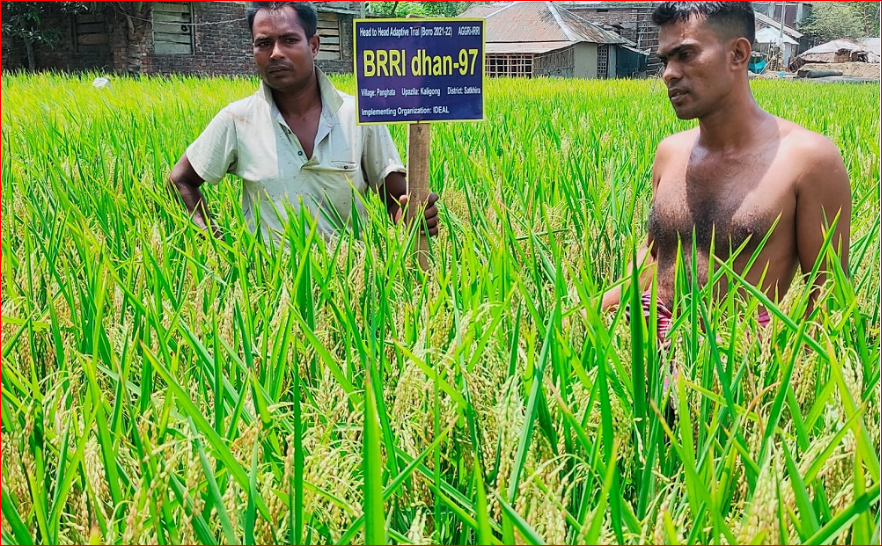
Food autarky is impossible without crop cornucopia, which in our country is mostly dependent on favourable climate condition. Crop yield cannot snowball and food security is bound to flag in the hostile climate. Changing climate conditions have already disrupted seasonal patterns of rainfall in the country, planting and harvesting, leaving no alternative but to adapting continuous research and the innovation of stress-tolerant crop varieties as well.
In order to sustain food security in the face of climate change, agricultural experts have very reasonably underscored the need for innovation, mechanization and expansive farming of stress-tolerant and disease resistant crops. They have put maximum emphasis on innovation, popularisation and cultivation of stress-tolerant crops for increasing food production.
The changing climate is fraught with a grim picture of mothballed crop production with population growth and ever-decreasing arable land. The climate change is continuously affecting agriculture, irrigation, ecosystem, biodiversity, groundwater levels, and what not in the country impacting food production. The adverse effects of climate change are perceptible very much in the altered timing of the arrival of different seasons, crop cultivation and harvesting periods and this leaves no alternative to developing stress-tolerant crop varieties. Overall climate change has greatly altered seasonal rainfall, floods, dry seasons, sowing or planting periods and harvesting times in the country. So, it is crucial to innovate and cultivate more and more stress-tolerant and disease resistant crops to increase agricultural production amid floods and droughts, cold and hot periods and declining groundwater levels.
We appreciate the steps taken by the authorities concerned to adapt to climate change issues aiming to boost food production ultimately to ensure food security and to tackle natural calamities. What is to worry about is that the country, particularly the northern region, has started experiencing abnormal change in the climate patterns causing concern about irrigation, farming, ecology, biodiversity. Environmental experts warn that the adverse impacts of climate change might be even worse than those experienced so far.
Besides, the declining groundwater level has further worsened the climate situation in the northern and south-western regions which is fast affecting agriculture. To make the matter worse, most of the rivers in the south-western region are either in death throes or dying due to start of desertification process causing crisis of irrigation water.
As we cannot afford to see any downturn in our food production under any circumstances, our efforts must continue to evolve more stress-tolerant and disease resistant varieties of crops and popularize those among farmers for expanded cultivation to keep food production increasing even under unfavorable ecological situation. We cannot but remodel our farming adjusting with adverse climate change.
For increasing food security we must make our optimum efforts to innovate new technologies and mechanization of agriculture to expand the cultivation of stress-tolerant crops in all seasons to keep agricultural production increasing.
And finally, all kudos to our farmers for the success, although limited, they have achieved already in cultivating flood-tolerant, draught-tolerant, and disease-resistant paddy, wheat, maize and other crops to increase food production. But we cannot stop there as we have a very tough task ahead to feed the growing population.