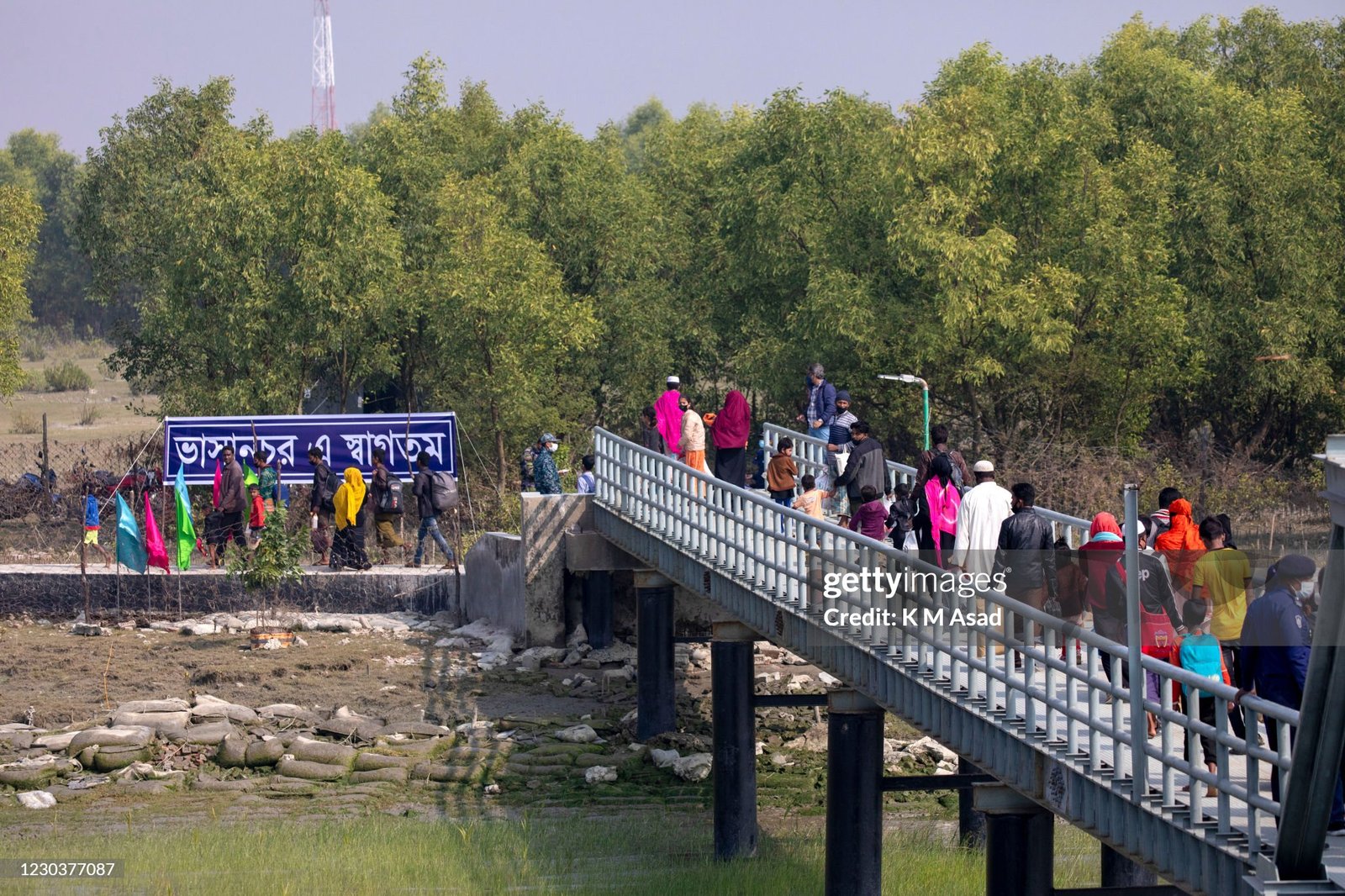
Across Bhasan Char island under Noakhali’s Hatiya upazila, members of around 8,000 Rohingya families every day enter the forest in small groups to collect firewood, carrying axes, sacks and ropes.For more than 34,000 Rohingya refugees on the 40 –square kilometer island, collection of firewood has become essential for cooking. But for the island, this poses serious environmental risks exposing it to the dangers of storm surges and severe erosion which may jeopardize the very existence of the island.
The forest coverage we have in the country is much too inadequate. Any damage or sabotage done to the existing small ratio of forest coverage is tantamount to inviting wrath and fury of nature. And particularly for an island, the denudation of forests forebodes ill omen for natural bulwark against disasters and cataclysm. Article 5 of the Paris Agreement made by 2015 UN Climate Change Conference placed forest conservation, expansion and sustainable management in the forefront of climate mitigation policy. But the protection, preservation and expansion of forests have become an uphill task because of chronic indifference of the authorities as well as nonchalance and ignorance of people.
Rohingyas at Bhasan Char previously received Liquefied petroleum Gas (LPG) cylinders for cooking through aid distribution. But the LPG supply began to decline in August last year. About three months ago, the supply ground to an abrupt halt. Since then an indiscriminate felling of trees is going on for collecting firewood and this may well be called the extreme vengeance on vegetation of the island.
Although the LPG crisis was anticipated months earlier, the Office of the Refugee Relief and Repatriation commissioner could not make any alternative arrangements.
Before the relocation of the Rohingyas to Bhasan Char, the government carried out afforestation drives on around 15,000 acres of the island between 2010 and 2014. Dense plantations, including coastal species like Kewra, later spread across parts of the island, then known as Thengarchar. These trees provide more than just shade, they serve as primary natural defence against cyclones and storm surges.
They stabilize soil and protect erosion. About 22.35 lakh trees were planted on the island over six years after Rohingyas arrived there. According to official source, 2.55 lakh trees have been cut down since the LPG crisis began in September last year. According to the Forest Act of 1927, tree felling in the island’s forest is prohibited.
There is actually no government fund for providing LPG cylinders to Rohingyas. Funds came from NGOs.
Much earlier NGO Affairs Bureau was informed that firewood collection from forest areas to such an extent that the island’s limited coastal vegetation could be depleted rapidly, but to no avail. The official source said the risks from deforestation now goes beyond ecology. If tree felling continues. The island’s inhabitants may be exposed to storm surges, erosion and inundation. The problem must be addressed sooner than later.