AP, KRANJ
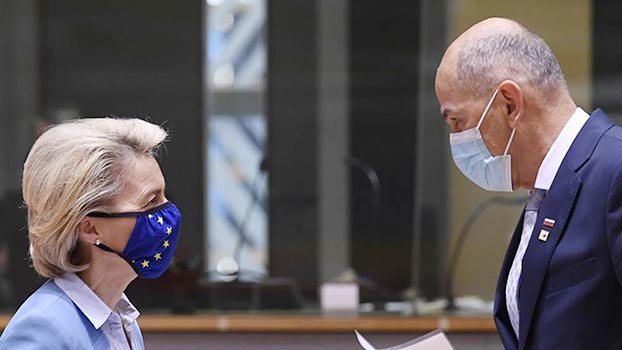
Tiny Slovenia took charge of the world’s largest trading bloc this week, and immediately shone a harsh spotlight on one of the European Union’s most vexing problems: How to accommodate increasingly vocal member countries with very different visions of Europe’s future.
Already, nationalist governments in Hungary and Poland are worrying their more politically mainstream partners in the 27-nation EU. Some fear that new legislation introduced by the two countries could undermine democratic standards and the independence of the judiciary.
Then on Thursday, Slovenia’s return to the European stage — it took over the EU’s rotating presidency for six months — was marked by concerns about the right-wing government’s record on media freedoms and its failure to nominate legal experts to the fraud-busting European Public Prosecutor’s Office.
For Prime Minister Janez Jansa — who leads the Alpine nation of just 2 million people nestled between Austria, Croatia, Hungary and Italy — Slovenia is a misunderstood victim of “double standards,” sometimes at the hands of the EU’s increasingly powerful executive branch, the European Commission.
“We are not a colony. We are not a second-class member of the European Union,” Jansa told foreign reporters on Friday. His remarks highlighted the growing tensions between newer EU members from central and Eastern Europe and the founding states from the continent’s west.
“The EU brings together countries with different traditions, with different cultures. There are differences that need to be taken into account and respected,” he said, during an exchange that lasted well over an hour.
Pressure mounted on Jansa’s government recently as it prepared for its EU presidency, which is largely about acting as an “honest broker” to find consensus among the 27 nations and ensure the smooth adoption of policies ranging from the environment to migration.
Protests in the capital, Ljubljana, have become routine. In late May, around 20,000 people gathered in a central square to demand that the government step down.
Jansa is accused of becoming increasingly authoritarian in ways similar to those of his ally, hard-line Hungarian Prime Minister Viktor Orban. Critics say Jansa’s government has pressured Slovenian media, spurred hate speech and mismanaged the coronavirus pandemic.
Asked about his attitude toward “illiberal democracies” like those in Hungary and Poland, the 62-year-old former journalist replied: “For me, all of these mainstream political orientations are equal, and equally legitimate.”
“I cannot agree to the division between liberal and illiberal democracy. Democracy is democracy,” Jansa said, before going on to give a favorable account of Orban and what he has done for Hungary. “If I fight for the affection of my voters, in a free world, everyone is equal.”
The Slovenian premier has come under particular scrutiny for keeping a stranglehold on funds for Slovenia’s only news agency, the STA. He says he expects the issue to be resolved this fall, but exactly how is unclear.
On Friday, he showed reporters a video that he said depicted the media pressure applied by more left-leaning politicians. It listed a number of journalists, including well-known TV news personalities, who have switched to jobs in government or parliament.