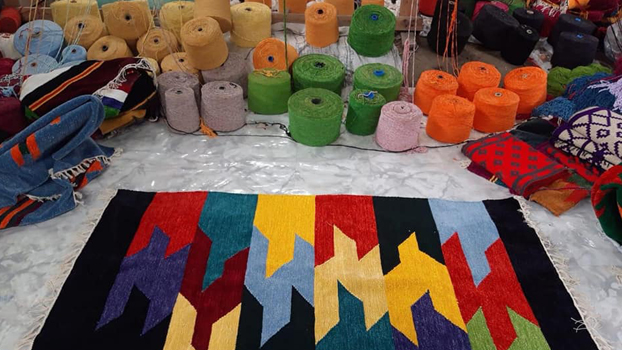
The Geographical Indication (GI) recognition of Shataranji, a traditional fabric product and a heritage of Rangpur, will benefit weavers and traders of the industry in branding the product at home and abroad.
With its magnificent and captivating design , the Shataranji has been recognised as a GI product of Bangladesh after the Jamdani and Hilsha fish. This recognition came at a time when the traditional industry in Rangpur is struggling to survive amid the Covid-19 situation. Around 50,000 people of whom 95 per cent are women of Rangpur are involved in the industry.
Weavers and traders are happy following the GI recognition of their product. They said that the recognition of Shatranji would play a vital role to boost the product at home and abroad.
Shatranji is a kind of carpet which is woven by hand on the ground with bamboo and rope. Shataranji has been recognised as the GI product by the Department of Patents, Designs and Trademarks (DPDT), an organisation under the Ministry of Industries.
Industries Minister Nurul Majid Mahmud Humayun handed over the certificate of GI recognition of Shataranji to Chairman of the Bangladesh Small and Cottage Industries Corporation (BSCIC) Mostak Hasan at a function in the capital on Thursday. State Minister for Industries Kamal Ahmed Majumder was present at the function as special guest with Industries Secretary Zakia Sultana in the chair.
On July 11 in 2019, the BSCIC applied to the DPDT for registration of Rangpur’s Shataranji as a GI product.
According to World Intellectual Property Organisation (WIPO), the GI is a sign used on products that have a specific geographical origin.
Zakia Sultana said the Shataranji of Rangpur now can be presented as the unique identity of the fabric before the world and the GI recognition would strengthen the Shataranji-based economy in Rangpur region.
In his reaction, BSCIC Chairman Mostak Hasan expressed his happiness over the GI recognition of Shataranji and said this product will now represent us in the world.
The Shataranji has long been crafted in Rangpur region since the Mughal era. However, the fabric became popular and flourished during the British era and its trade expanded to India, Sri Lanka, Indonesia, Thailand, Malaysia and some other countries.
Before 1830, Shataranji was weaved in a village named Pirpur in Rangpur sadar upazila. Later, the village was renamed Nisbetganj in 1880 to commemorate the contribution of Nisbet who patronised the local Shaatranji weavers, according to the Bengal District Gazetteer published in 1912.