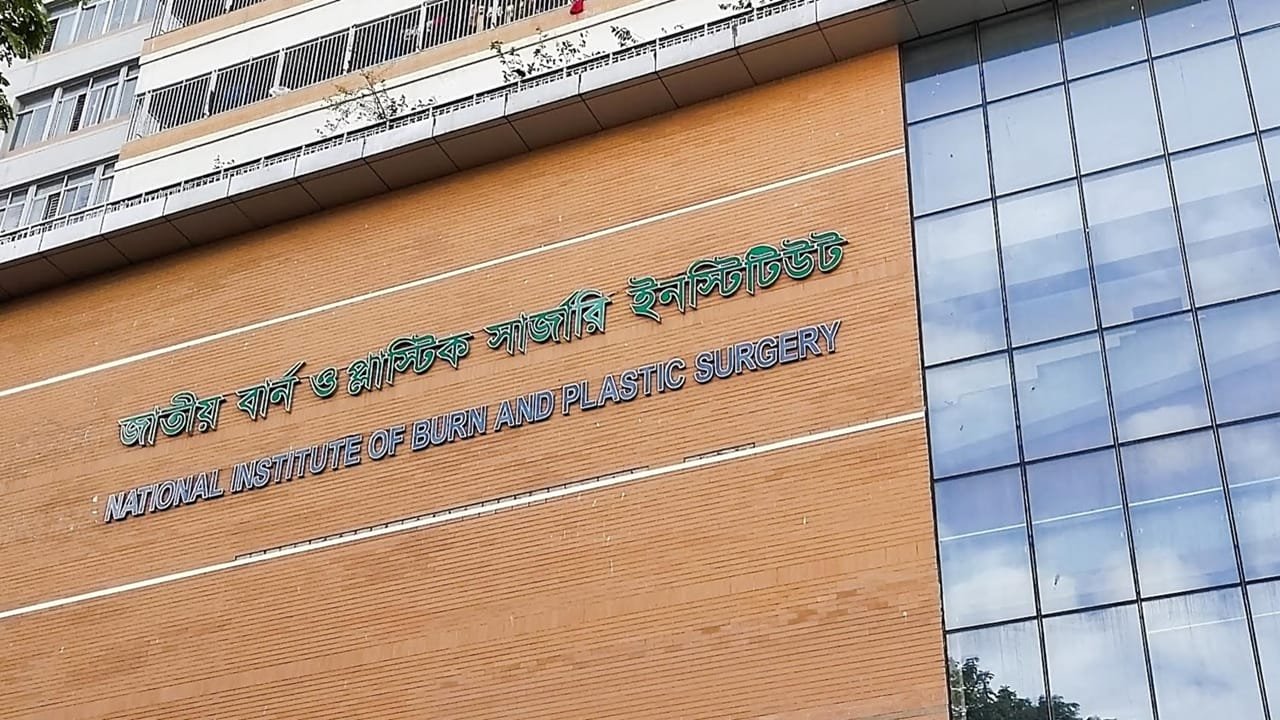
As an intense cold wave sweeps across the country, the number of burn victims seeking treatment at the National Institute of Burn and Plastic Surgery in Dhaka has risen sharply, hospital officials said, warning that winter-related accidents are placing growing pressure on emergency services.
Seventy-year-old Sakina was rushed to a local hospital by neighbours after she screamed in pain around 11:00am on Tuesday (January 6) following a burn accident. After receiving initial treatment, she was referred to the capital’s burn institute, where she was admitted around 4:00pm the same day. Currently on oxygen support, her entire body remains covered in bandages as doctors closely monitor her condition.
A similar incident occurred in Chattogram involving 45-year-old Halima, who sustained severe burns while handling hot water for bathing on a cold January morning. Accustomed to bathing with heated water during winter, she was injured when boiling water spilled onto her body and limbs. Her family rushed her to a local hospital, but as her condition worsened, doctors advised immediate transfer to Dhaka. During the journey, fluid from her burn wounds soaked the bandages. She arrived at the burn institute around 11:00pm and was taken directly to the operating theatre. Following surgery, she was shifted to a ward, where she remains under treatment.
In another incident, eight-year-old Toha from Bhaluka suffered burns while warming himself by a fire with friends in front of his house. His back, waist and lower legs were badly burned. After receiving primary care locally, he was transferred to the burn institute. Recounting the incident, Toha said he did not realise how his clothes caught fire and began screaming when he felt extreme heat. His mother rushed in upon hearing his cries and managed to extinguish the flames.
Doctors at the National Institute of Burn and Plastic Surgery say such incidents become alarmingly common during winter.
Dr Shawon Bin Rahman, resident physician at the emergency department, said people of all ages are being injured while trying to keep warm.
Many patients are getting burned by hot water used for bathing. At the same time, a significant number are injured while warming themselves by open fires,” he said.
Dr Shawon added that burn injuries during winter are not limited to firewood or boiling water. “Tea, coffee, hot rice starch and kitchen stoves are also common causes. During winter, women and children are disproportionately affected by burn injuries,” he noted.
Hospital data show a clear seasonal trend. Outside the winter months, the burn institute typically treats around 40 to 45 patients daily. However, during winter, this figure rises to between 60 and 65 patients a day. Patients arrive not only from Dhaka but also from northern districts and other regions across the country, often in critical condition.
Between January 1 and January 6, 2026 alone, 324 patients sought emergency treatment at the institute, with 80 requiring hospital admission. In December 2025, around 1,200 patients received treatment, while November recorded 1,138 cases. Of these, 364 patients were admitted in December and 298 in November. In October, the institute treated 1,091 patients, admitting 269 of them.
The 500-bed National Institute of Burn and Plastic Surgery currently has 72 beds reserved for critically ill patients, including 20 ICU beds and 52 high-dependency unit (HDU) beds—22 for men and 30 for women.
Dr Shawon advised the public to take extra precautions during winter. He stressed that containers with hot liquids should be kept out of children’s reach and that heated water should be safely transferred from kitchens to bathrooms. In case of burns, he recommended pouring normal-temperature water on the affected area for at least 20 to 30 minutes.
“People should never apply toothpaste, eggs or ice to burn wounds. Immediate medical attention is essential,” he said.
Despite repeated initiatives, burn care facilities outside Dhaka remain limited. Plans were taken in 2022 to establish burn and plastic surgery units at medical colleges and hospitals in Sylhet, Barishal, Rangpur, Rajshahi and Faridpur. However, the project stalled due to the Covid-19 pandemic, funding constraints and delays linked to the Saudi Development Fund.
According to officials, design changes and the expiration of financing agreements further slowed progress. The revised project cost has since increased by nearly 79 percent to Tk 816.19 crore, with a proposal to extend the project deadline until June 2028. The updated plan has been sent to the Planning Commission for review.
Health experts warn that until regional burn units become operational, patients from outside Dhaka will continue to face delays in receiving specialised care—particularly during winter, when burn injuries spike across the country.