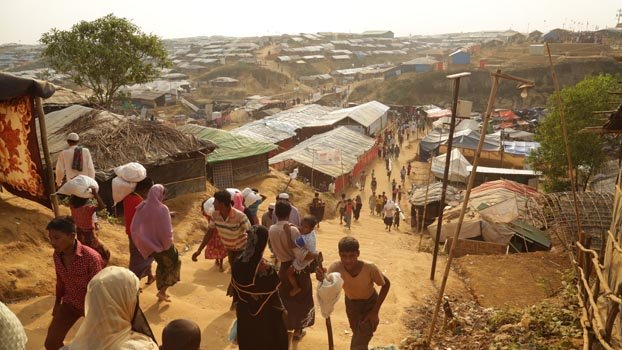
UK based human rights organisation ARTICLE 19 joined 49 other international human rights organisations in sending a letter to the Bangladesh Prime Minister Sheikh Hasina urging the Bangladesh government to take steps to protect the human rights of residents in Rohingya refugee camps during the COVID-19 pandemic, says a press release.
The signatories urged Bangladesh to lift ongoing mobile internet restrictions and halt the construction of barbed wire fencing around the Rohingya refugee camps in Cox’s Bazaar district. The letter expressed concerns for the safety and well-being of the refugees as well as Bangladesh host communities and aid workers, in light of the growing COVID-19 pandemic. It emphasised that unrestricted access to information via mobile and internet communications is crucial for slowing the transmission of the disease and saving the lives of refugees, humanitarian workers, and the general population of Bangladesh.
Faruq Faisel, Regional Director of ARTICLE 19, Bangladesh and South Asia said, “The Bangladesh government’s internet ban has made the situation worse. Internet access has been shut down since September 2019 for “security purposes.” But this ban has restricted refugees' ability to communicate and access information about the health situation.”
He added, “It is not possible to spread awareness thoroughly because of the restriction on the internet…who is there to listen to these miseries?”
Since September 2019, Bangladesh authorities have prevented Rohingya refugees from obtaining SIM Cards and directed telecommunications operators to restrict internet coverage in Rohingya refugee camps in Cox’s Bazaar district. According to Bangladesh’s Refugee Relief and Repatriation Commissioner Mahbub Alam Talukder in Cox’s Bazaar, authorities have confiscated more than 12,000 SIM Cards from refugees since September and refugees report that in some instances authorities have prohibited the use of mobile phones altogether.
These restrictions should be lifted in light of the government’s recommendation to those experiencing COVID-19 symptoms to contact the Institute of Epidemiology, Disease Control and Research, hotline. Without a phone or SIM Card, abiding by this instruction is impossible. Furthermore, without access to mobile and internet communications, aid workers and others will be forced to deliver critical health information in person, heightening their risk of exposure to COVID-19 and slowing the effectiveness of the response.
On March 19, experts from the United Nations, the Organization of American States, and the Organization for Security and Cooperation in Europe called on all governments to “ensure immediate access to the fastest and broadest possible internet service” in light of the COVID-19 pandemic, noting that, “[e]specially at a time of emergency, when access to information is of critical importance, broad restrictions on access to the internet cannot be justified on public order or national security grounds.”
The letter also expressed concern regarding the construction of barbwire fencing around refugee camps. In constructing barbwire fencing to confine Rohingya refugees, Bangladesh risks mirroring the behavior of Myanmar authorities, who presently confine more than 125,000 Rohingya to more than 20 internment camps in five townships of Rakhine State. Instead, Bangladesh should ensure proper access to health care with ease of mobility. This is particularly crucial for those most vulnerable in the refugee camps, including those living with disabilities, older people, and children.
During this time, the Government of Bangladesh should work in close collaboration with international humanitarian organizations and Rohingya-led groups to disseminate accurate and timely information on COVID-19 and mitigate the risk of the virus spreading into the camps and in adjacent host communities.
Rohingya refugees remain vulnerable as they depend on humanitarian assistance. It is critical to maintain humanitarian access to the camps at this time. It is equally important to prepare the Rohingya community—men, women, and youth—to be able to support their community at this time. Rohingya community volunteers will be the first responders in this crisis and must be equipped with personal protective equipment and trained accordingly on health and hygiene promotion.
The signatories urged government to uphold the rights of Rohingya refugees to health, freedom of expression and access to information, and freedom of movement. They also call on the Bangladesh Government to ensure nondiscrimination between refugees and citizens in accessing timely COVID-19 testing and treatment.