Nearly 77 percent of the international and internal migrants in the country were struggling to find jobs during April-November period last year due to Covid-19 pandemic. In 61 percent of the migrant households, at least one member lost their job or income due to the pandemic.
Three-quarters or 77 percent of the marriages held during that time, had brides under the age of 18, which is 26 percent higher than the national child marriage rate in 2018.
The data were released in a study conducted jointly by BRAC, UN Women Bangladesh and the Center on International Cooperation at New York University.
This study highlights the changes in the demographic, economic and social environment in the secondary towns, upazilas and rural areas of Bangladesh due to the impact of reverse migrations during the corona period.
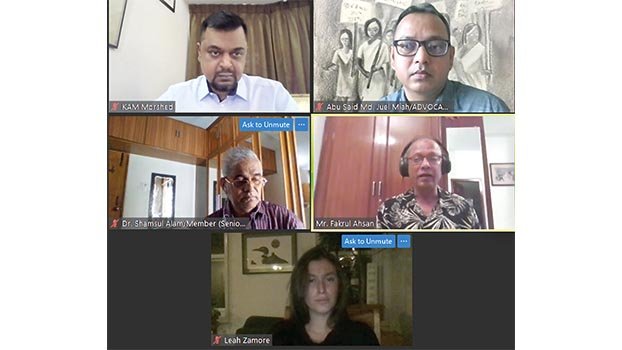
The findings of the research titled “Demographic and socio-economic changes induced by the Covid-19 pandemic: Challenges of new circumstances” were released through online policy dialogue on Saturday.
Senior Secretary Dr Shamsul Alam, who is also a member of the General Economics Division at the Planning Commission, was present during the event as the chief guest.
Representatives from the Ministry of Expatriate Welfare and Overseas Employment, the Ministry of Women and Children Affairs, South Asian Network on Economic Modelling (SANEM), Dhaka University, the Center on International Cooperation at New York University, UN Women Bangladesh Office, UNDP Bangladesh, and BRAC joined as discussants.
Analyzing the results of the study, it was found that about 25 per cent of the returnees in the households surveyed were concerned about the repayment of immigration loans, ranging from Tk 76,000 to a maximum of Tk 700,000.
About 44 percent said that that they could not find any income-generating work. Some of them are running their expenses by withdrawing from savings or renting or mortgaging various assets.
The study has shown that families returning to rural or secondary towns will put pressure on existing local inadequate resources, especially in the education and health sectors. Among the immigrants, 4.57 percent are school students aged 5 to 16 years.
The female returnee migrants, mainly internal migrants, have experienced a number of problems during coronation that have emerged in this study. For example, 74 percent could not engage in any productive or income-generating activities.
Around 34 percent of all surveyed households had at least one member who lost jobs or earning capacity and became economically inactive. In addition, three-quarters of the surveyed households had a decline in average monthly income due to corona.
During this period, the average monthly savings of households decreased by 62 percent and the amount of loans increased by 31 percent. On the other hand, the average monthly expenditure has decreased by only 8.6 percent.
Analyzing the results of the study, it could be seen that the expected crude birth rate in 2020 is 20.2 (per 1000 people) in the surveyed households which is higher than the national crude birth rate in 2018 (18.2).
Dr Shamsul Alam said, “Forced migration created frustration among people, particularly for women. We’ve to think over how to create economic opportunities for them. We need a recovery plan- budget is a kind of recovery plan.”
UN Women Bangladesh Country Representative Shoko Ishikawa said, “Even without data, child marriage has been a problem. Migrants are seeing stress in loss of income. Social safety nets need to look into how to support these migrant families such as creating more jobs, finding the right kind of skills training.”
The survey was conducted in 6,370 households from December 10-25, 2020 through quantitative and quantitative research strategies where the April-November period of last year was considered as the reference period.