Three pieces of research by from five countries, including Bangladesh, have revealed the often devastating impact of the COVID-19 pandemic on people with disabilities and organisations of persons with disabilities (OPDs). The research, conducted as part of the Inclusive Futures initiative of the Foreign, Commonwealth and Development Office (FCDO), has also provided learning papers for future government and humanitarian responses and planning. Five disability organisations were consulted in Bangladesh.
Today’s event is held by Sightsavers, the lead partner of the Disability Inclusive Development (DID) and Inclusive Futures consortiums, which both produced the learning papers. The event aims to share the results of the research with key stakeholders and to encourage dialogues to ensure people with disabilities are not left behind in development work.
Key findings of the research:
The research has stressed the need to consult with both organisations of people with disabilities and people with disabilities themselves, properly collect and use data on disability to ensure no one is left behind in disaster responses, and ensure information is available in accessible and relevant ways to the people it affects.
“The disability allowance we received was not enough to buy the daily necessary items of ours.” –a woman with multiple disabilities was quoted in the research.
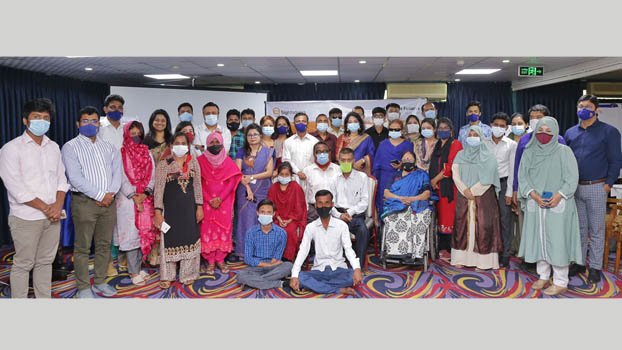
People with disabilities, representatives of the organisations of people with disabilities, and Md. Nazrul Islam, Deputy Director at National Foundation for the Development of the Disabled Persons, Amrita Rejina Rozario, Country Director at Sightsavers Bangladesh, spoke in the research dissemination event. And Lisa Morris and Ayon Debnath from Sightsavers made the key-note presentations.
About Inclusive Futures:
Inclusive Futures is a flagship disability development inclusion programme funded by multiple donors including UK aid and USAID. Global leaders and specialists from 23 organisations collaborate to improve access to work, education and healthcare, and tackle stigma and discrimination faced by people with disabilities. It reached over 60,000 people with aid during COVID-19 lockdowns in Bangladesh, Kenya, Nepal, Nigeria, and Tanzania. Research on the impact of COVID-19 was also conducted in Bangladesh, Nepal, Kenya, Uganda, Nigeria and Zimbabwe.
For more information please visit: www.inclusivefutures.org
About Sightsavers Bangladesh:
Sightsavers has been working in Bangladesh since the 1970s to end avoidable blindness, treat and eliminate neglected tropical diseases, and promote equality of opportunity for people with disabilities. Sightsavers vision is of a world where no one is blind from avoidable causes and where people with disabilities can participate equally in society.