Ahammad Parvej Khan
In a alarming revelation for public health and environmental safety, a groundbreaking scientific study has exposed the widespread presence of microplastics in commercially available toothpastes across Bangladesh.
The report underscores a critical regulatory void, revealing that the country currently lacks national standards, permissible safety limits, or mandatory disclosure requirements for synthetic polymers in oral care products.
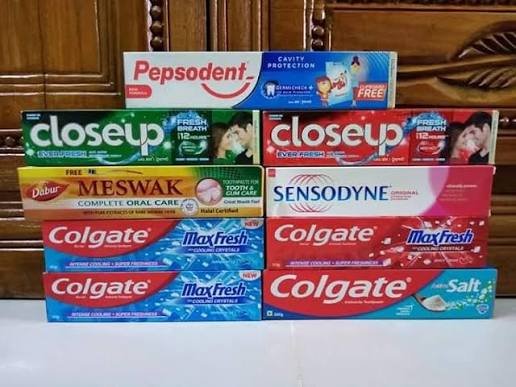
The baseline investigation, conducted by the Environment and Social Development Organization (ESDO) between July 2025 and June 2026, examined 34 toothpaste samples representing 19 local and imported brands.
Laboratory analysis—conducted using advanced stereomicroscopy and Fourier Transform Infrared Spectroscopy (FTIR) at the Laboratory of Environmental Health and Ecotoxicology (EHE) at Jahangirnagar University—revealed that 26 out of 34 tested products (76.5%) contained detectable microplastic particles.
The microplastic concentration ranged from 20 to 320 particles per 100 grams of toothpaste.
The research assessed products originating from Bangladesh, India, Thailand, and Vietnam, finding microplastic contamination across both domestic and imported items:
Local vs. Imported: Microplastics were identified in 22 out of 25 Bangladeshi samples, 1 of 5 Indian samples, 1 of 2 Thai samples, and both Vietnamese samples tested.
Children's Products at Risk: Among six toothpaste brands specifically formulated and marketed for children, four (66.7%) contained microplastics, with concentrations between 20 and 140 particles per 100g.
Labeling Discrepancies: None of the tested products declared the presence of microplastics or synthetic polymers on their packaging, leaving consumers entirely unaware of their exposure.
A parallel nationwide consumer survey of 2,760 individuals demonstrated a severe public knowledge deficit. While toothpaste usage is nearly universal, 41.9% of respondents had never heard of microplastics in oral care products, and only 26.9% were aware of potential risks.
Severe Health and Environmental Implications
Microplastics released down bathroom drains do not simply disappear; they contaminate terrestrial and aquatic ecosystems, bioaccumulate, and ultimately re-enter the human food chain. Furthermore, daily oral exposure poses direct human health risks as emerging medical evidence associates microplastics with multi-organ complications:
Respiratory & Digestive: Lung inflammation, exacerbated asthma/COPD, gut microbiome disruption, and heightened risk of Inflammatory Bowel Disease (IBD).
Cardiovascular & Neurological: Blood vessel damage, abnormal clotting mechanisms, neuroinflammation, and cognitive risks.
Endocrine & Systemic: Hormone disruption, compromised reproductive fertility, potential fetal development impacts, and chronic immune system strain through oxidative stress.
Because Bangladesh currently maintains no microplastic-specific guidelines, ESDO emphasized that the findings serve as a scientific baseline to spur regulatory frameworks rather than evaluate current manufacturer compliance.
"Good policy begins with good science. As Bangladesh's first baseline study on microplastics in toothpaste, this research provides the evidence needed to guide future standards, strengthen regulation, and better protect consumers and the environment."
Dr. Shahriar Hossain, Secretary General and Senior Technical Advisor, ESDO
Siddika Sultana, Executive Director of ESDO, echoed these sentiments, noting that the study successfully fills a vital scientific gap and provides actionable evidence for policymakers.
Key regulatory authorities have acknowledged the findings and expressed commitment toward policy adaptation:
"Based on our requirements for toothpaste manufacturing, 40 ingredients have been listed that should be added in the products. However, the list does not yet include microplastics. We acknowledge the discovery and will take necessary actions to amend the SRO and add microplastic standards to the list."
Md. Manjurul Karim, Deputy Director (Chemical Wing), Bangladesh Standards and Testing Institution (BSTI)
Adding to the call for cohesive governance, Mahmuda Tamanna Khan, Inspector at the Department of Environment, stressed the necessity of inter-agency cooperation: “We look forward to acting on the issue that has been unveiled today. There is a need to work unitedly and enhance coordination among organizations in Bangladesh.”
With scientific baseline data now established, environmental advocates and health experts are urging the government to act swiftly by setting permissible limits, mandating clear ingredient disclosure, and bringing Bangladesh's oral care standards in line with global safety protocols.