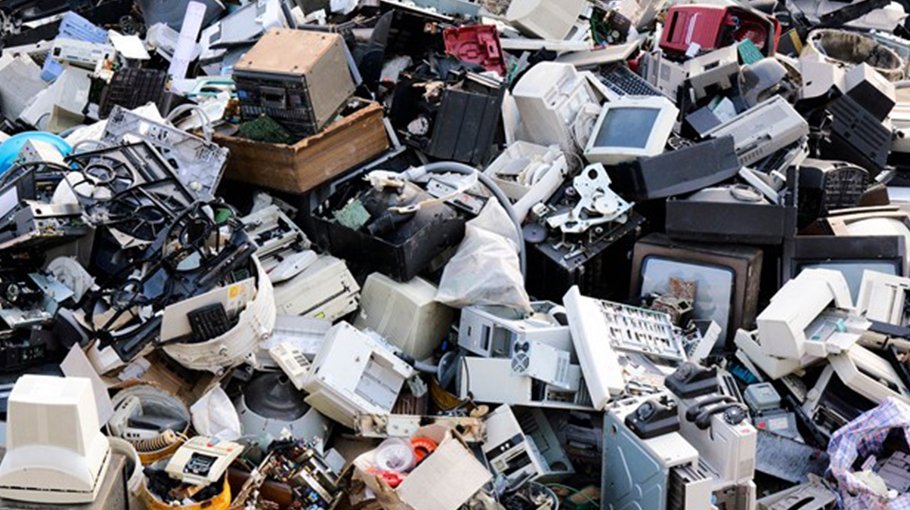
Due to rapid development of technology, there is availability of attractive electrical products every other week.
The tendency to throw away old electrical products due to temptation from the new ones has led to rapid e-waste in Bangladesh and around the world.
Speakers made the claim at a meeting held at the CIRDAP auditorium in Dhaka. The meeting was a joint venture between the Grambangla Development Committee and the Waste Pickers Union-Bangladesh with the support of Women in Informal Employment: Globalizing and Organizing (WIEGO) titled ‘Extended Producer Responsibility for Managing Plastic, Medical, E-wastes Including other Municipal & Industrial Wastes and Inhumane Life Conditions of Waste Pickers.’
“The rate of e-waste also increases as the country's economic growth increases. E-waste, such as discarded computers, laptops, mobile phones, photocopy machines, microwaves, batteries, etc., is on the rise,” said the speakers.
Lack of proper management of these wastes causes severe damage to the environment and public health. Therefore, it has become urgent to immediately implement the rules of e-waste management, they added.
The speakers also highlighted the health risks due to faulty medical waste management in the Covid-19 situation. They urged for proper implementation of the law on waste management.
Khandaker Reaz Hossain, Program Director of Grambangla Development Committee delivered the welcome speech at the meeting. AKM Maqsud, Executive Director of Grambangla then presented the keynote speech under the chairmanship of Imtiaz Rasul, Vice Chairperson of the organization.
The Vice Chairperson presented his main essay on various aspects of Bangladesh's plastics, medical, e-waste and other municipal and industrial waste management; People engaged in waste management and their difficult lives; The contribution of waste and the recycling industry to the national economy;.
He also highlighted that in recent times, plastic pollution has made it difficult for the world's aquatic life to survive. At present, the world produces 400 million tons of plastic every year, of which about 23 million tons are flowing into the sea through canals and rivers. Plastic pollution threatens not only the marine environment but also the survival of aquatic and marine life, human health and food security, tourism and climate.
The government's Department of Environment has already enacted the Solid Waste Management Rules, 2021 and the Hazardous Waste (E-Waste) Management Rules, 2021. The government is working to implement the Medical Waste (Management and Processing) Rules, 2008, he added.
“We hope that effective legal application and institutional structure of waste management, institutional capacity building, waste management planning, provision of necessary financial and technical assistance and effective participation of various stakeholders in waste management will enhance the environment of Bangladesh and ensure a healthy life for future citizens,” he said.
Members of Grambangla Development Committee,Waste Pickers Union-Bangladesh, WIEGO and media persons were present among others.