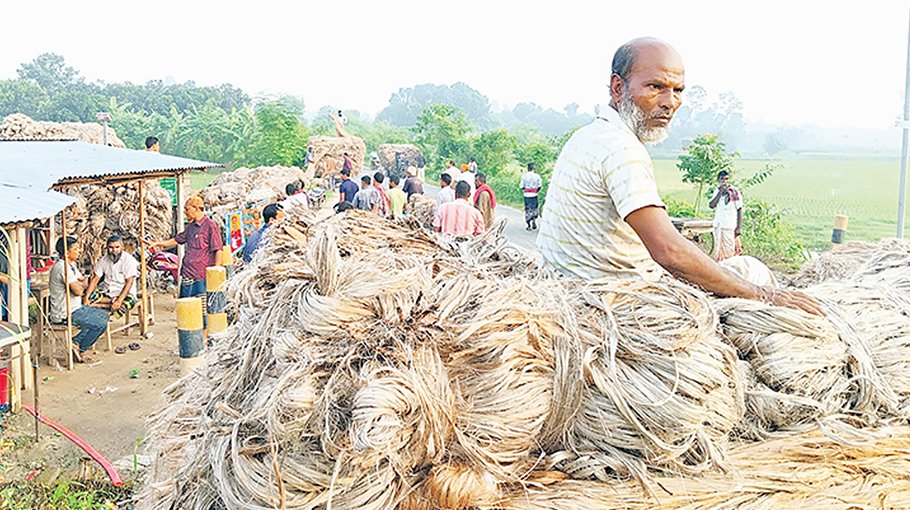
Jute farmers in the Rajshahi region of Bangladesh are facing severe difficulties due to the current state of the jute market.
They claim that a syndicate has taken control of the market, resulting in low prices for their jute. As a result, many farmers are choosing not to harvest their jute, and those who do are struggling to sell it.
According to Mozdar Hossain, Deputy Director of the Rajshahi Agricultural Extension Department, jute harvesting has already begun in the region this year. A total of 19,600 hectares have been cultivated with jute in Rajshahi district, which is 442 hectares more than the previous year. However, the price of jute has dropped by Tk 1,000 to Tk 1,200 compared to the previous year. This decline is attributed to global economic challenges, which have caused countries that usually buy raw jute from Bangladesh to halt their purchases. Local traders are now primarily procuring jute for domestic jute mills, leading to disappointment among farmers.
Hossain noted that farmers cultivate jute for various reasons, including generating cash income, producing jute or jute sacks for various uses, and even making vegetable mats from jute. Additionally, having jute in the land can eliminate the need for organic fertilizers. However, given the current low prices, many farmers are considering shifting to food crop cultivation, which can be more profitable.
Alam Hossain, a farmer from Sahibari village in Durgapur upazila, expressed his frustration with the situation. He emphasised that jute cannot be consumed, so it must be sold to generate income. He sold jute from a portion of his land but did not receive the desired price for it. Many other farmers in Durgapur are in a similar situation, either selling their jute or letting it sit in their fields.
Despite the challenges, jute harvesting activities continue in different upazilas of the Rajshahi region. However, farmers are finding it increasingly difficult to turn a profit from their jute. The price of jute in various markets ranges from Tk 1,900 to Tk 2,250 per maund, compared to last year's price of Tk 3,000 to Tk 3,200 for similar quality jute. This translates to a loss of Tk 1,000 per maund for jute farmers.
Belal Hossain, another farmer, highlighted the additional expenses incurred due to the lack of rain, which has necessitated irrigation and other costs. On average, it costs a farmer Tk 8,000 to Tk 9,000 to cultivate jute on one bigha of land. The expenses continue with the drying, bundling, and transportation of jute to the market. This year's low prices have left farmers with reduced profits.
Meher Ali, a trader who sells jute to jute mill owners, pointed out that the price of Pratiman jute has decreased by Tk 1,000 compared to the previous year. Local jute mill owners are currently buying jute at prices ranging from Tk 2,100 to Tk 2,300. However, they are unwilling to pay higher prices, causing frustration among traders and farmers alike. The cost of transporting a load of 50 kg of jute to the mill is an additional burden for traders. The jute market in the Rajshahi region is currently controlled by a syndicate, leading to low prices for jute and significant challenges for farmers. The decrease in demand from international buyers and increased production costs have added to their woes. As a result, many farmers are facing financial losses and considering alternative crops to sustain their livelihoods.