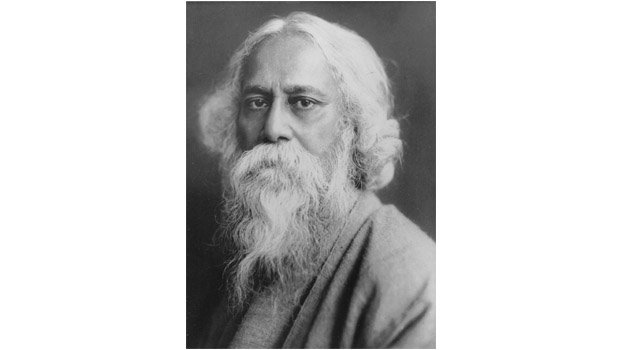
The 78th death anniversary of Rabindranath Tagore was observed on Tuesday with elaborate programmes recalling the great poet who did not leave any human emotion untouched in his works, especially poems and songs, reports BSS. Tagore died at the age of 80 on August 7 in 1941, according to the Gregorian calendar. But, his death anniversary is observed in Bangladesh on Sraban 22 of the Bangla calendar. Marking the day, Bangla Academy arranged a seminar at Shamsur Rahman Seminar Room on the academy premises. Bangla Academy Chairman Professor Emeritus Dr Anisuzzaman chaired the seminar while Professor Syed Azizul Haque presented the keynote paper. Besides, different government and non-government institutions and cultural organisations have drawn up various programmes marking the day.
Seminar, discussion and reminiscence was arranged at Patisar in Naogaon, where Tagore had long association and memories. Indian Assistant High Commissioner in Rajshahi Shri Sanjeev Kumar Bhati attended the seminar as the chief guest while Rabindra researcher and former governor of Bangladesh Bank Dr Atiur Rahman presented the keynote paper on the occasion. Local lawmaker Md Israfil Alam inaugurated the seminar with Rabindranath Institution President M Matiur Rahman Mamun chaired it. The youngest of thirteen surviving children, Tagore, nicknamed “Rabi”, was born on 25th of
Bengali month of Baishakh 1268 (May 7, 1861) in the Jorasanko mansion in Calcutta to Debendranath Tagore and Sarada
Devi. In his long seven decades of endeavors in different genres of Bangla literature, the great poet enriched the Bangla language and literature and elevated their positions in the global arena. His novels, short stories, songs, dance-dramas and essays spoke to political and personal topics. Gitanjali (Song Offerings), Gora (Fair-Faced) and Ghare-Baire (The Home and the World) are his bestknown works and his verse- short stories, and novels-were acclaimedor panned-for their lyricism, colloquialism, naturalism, and unnatural contemplation.
Author of Gitanjali and its “profoundly sensitive, fresh and beautiful verse”, Rabindranath became the first non-European to
win the Nobel Prize in Literature in 1913. Sometimes referred to as “the Bard of Bengal”, Tagore’s poetic songs were viewed as spiritual and mercurial. His compositions were chosen by two nations as national anthems: Bangladesh’s Amar Shonar Bangla and India’s Jana Gana Mana. The Sri Lankan national anthem was inspired by his work.