The Bangladesh Meteorological Department has forecast four days of rain in Bangladesh at the start of October.
“There will be continuous rain across the country from tomorrow, which will continue until Oct 4,” says a meteorologist on Monday.
Due to excessive rainfall this monsoon and further rain forecast, the flood-affected people of Rangpur, Lalmonirhat, Kurigram, Nilphamari, and Gaibandha are likely to face worsening conditions.
The ongoing floods, triggered by continuous downpours and water rushing in from India’s hilly regions, have already inundated vast areas, leaving thousands of families stranded and causing severe damage to infrastructure and agriculture.
As of Monday morning, the water levels in several rivers showed slight signs of receding.
However, the flow remains above the danger level in many areas, particularly in the Teesta Barrage region, with officials warning that the downstream area in Kaunia may experience further increases in water levels.
Meteorologists have noted that while July is typically the month with the highest rainfall, this year’s monsoon brought even heavier rain, leading to short- to medium-term floods in several regions.
Moreover, excessive rainfall in August and September has caused long-term flooding outside the regular monsoon period, raising concerns about the unpredictable nature of these weather events. Floods during non-monsoon times are particularly alarming.
In Rangpur’s Gangachara, Kaunia, and Pirgachha upazilas, approximately 4,000 families have been trapped by floodwaters, with char (riverine island) villages completely submerged. Many rural roads have been flooded, isolating these communities and disrupting communication.
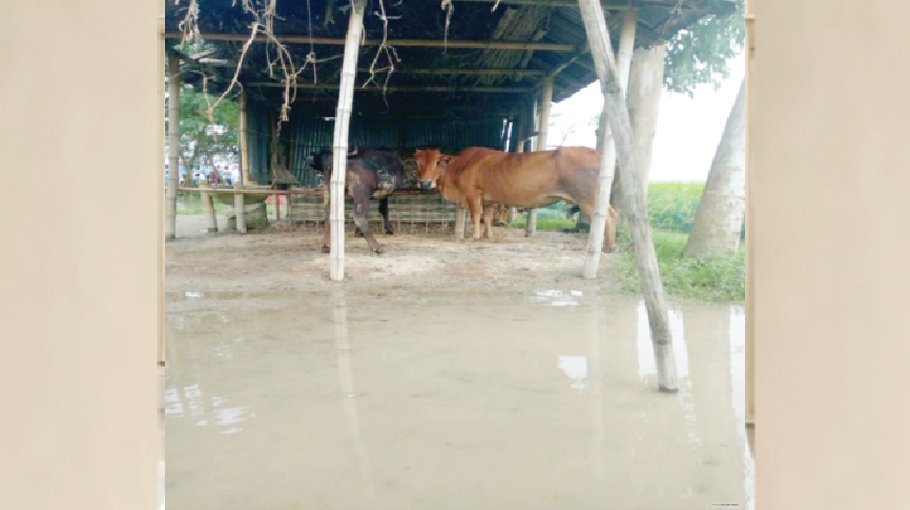
Riverbank erosion has also intensified in some regions. Residents, forced to abandon their homes, have taken shelter on embankments and roads, bringing along their livestock and essential belongings. Meanwhile, a growing shortage of clean drinking water and food has added to their plight.
The Flood Forecasting and Warning Centre has indicated that water levels in the Teesta, Dharla, and Dudhkumar rivers may decrease over the next three days, potentially improving the flood situation in the northern region. However, with more rain forecast, locals remain worried that conditions could deteriorate further.
In Lalmonirhat and Kurigram, more than 60,000 people across eight upazilas are currently stranded due to the flooding. Rail service between Lalmonirhat and Dhaka has been disrupted, with floodwaters submerging tracks near the Teesta railway station. Fields of aman rice and vegetables have been devastated, further worsening the situation for farmers. The pressure from India’s Gajaldoba Barrage has forced Bangladesh to open all 44 gates of the Teesta Barrage to manage the increased water flow.
Fields of aman rice and other crops, such as eggplant, have also been severely damaged. The flooding has led to the closure of eight educational institutions, including Govardhan Haidaria Dakhil Madrasa and several primary schools.
Sunil Kumar, Executive Engineer of the Water Development Board in Lalmonirhat, said that continuous rain and upstream water from India have caused the Teesta’s water level to rise, leading to the floods. If the rains cease and upstream water flow decreases, the situation could improve within 24 hours.
Lalmonirhat Deputy Commissioner HM Rakib Haider said that Tk 300,000 in cash and 90 tonnes of rice have been allocated for 10,000 flood-affected families. Additionally, Tk 500,000 each has been provided for children’s food and animal feed.
In Kurigram, the rivers Dharla, Dudhkumar, Teesta, and Brahmaputra have once again swelled, marking the fourth phase of flooding in the district this year. Meanwhile, in Gaibandha’s Sundarganj, severe riverbank erosion along the Teesta has resulted in significant damage to farmland and homes. In the past two months, more than 500 bighas of farmland and over 100 houses have been washed away, leaving the local population in distress.