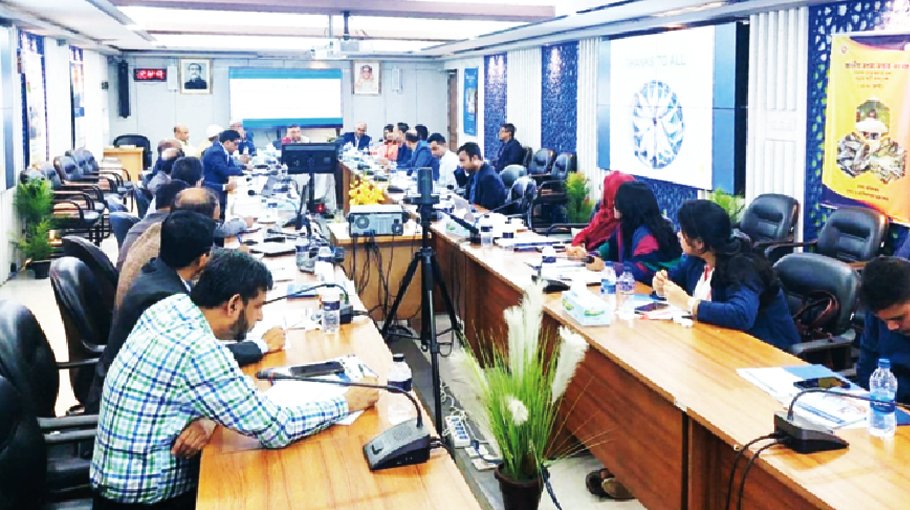
Speakers at a discussion have emphasised on the proper management of regional common Hilsa ban period in order to increase the production and improve fishers’ livelihoods.
They said that if a regional common Hilsa ban period management can be implemented involving Bangladesh, India and Myanmar, poaching of Hilsa during the ban period by other countries will be reduced substantially, while the production in all countries will be increased and fishers’ livelihoods will be improved in all the countries.
USAID’s Enhanced Coastal Fisheries in Bangladesh (ECOFISH II) of WorldFish Bangladesh arranged the discussion titled ‘Transboundary Hisha Management Framework Formulation and Hilsa Fisheries Management Action Plan(HFMAP) Revision’.
The discussion took place at the conference room of the Department of Fisheries in the capital.
Khondokar Mahbubul Haque, Director General of Department of Fisheries; spoke at the event as the chief guest, while Anisur Rahman Talukder, Additional Director General of the department attended as special guest.
Dr. Mohammad Mokarrom Hossain, Chief of Party at USAID’s ECOFISH II, WorldFish Bangladesh; presided over the event. A number of senior and mid-level officials of the Department of Fisheries were present at the event along with some scientists and programme manager from ECOFISH II.
During the discussion and presentations, Khondokar Mahbubul Haque said that in Hilsa fishery management, fisher’s livelihoods should come first in a sustainable way and alternative income generation should be in a transformative manner so that fishers’ profession can be shifted to other profession to ease the fishing pressure.
The participants discussed about the possibility of joint regional Hilsa management involving Bangladesh, India and Myanmar, focusing on common ban period management as Hilsa is a transboundary species that mainly shared by the three neighboring countries.