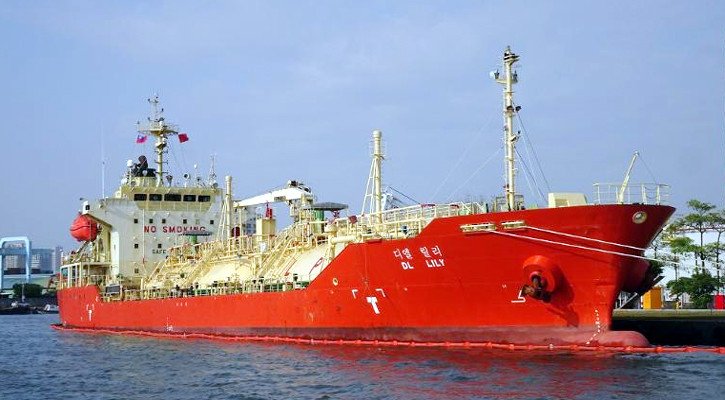
Pressure has increased at the fuel handling points of Chattogram Port due to the simultaneous presence and arrival of multiple fuel-carrying vessels.
According to the 12 April list of the port’s Marine Department, a total of eight vessels are currently either at different locations within the port or en route. These ships are carrying liquefied natural gas (LNG), liquefied petroleum gas (LPG), and mogas.
As per the port list, the vessel Central Star from Malaysia is currently at the port carrying mogas. The vessel EMEI from the United States, carrying LNG has already completed its operations and reached the Floating Storage and Regasification Unit (FSRU) at Maheshkhali.
Meanwhile, two LPG carriers—Gas Carriage (India) and DL Lily (Malaysia)—are currently anchored at the outer port area of Chattogram.
Port Secretary Syed Refaet Hossain said these vessels are awaiting clearance as per standard procedures.
On the other hand, four vessels- Kongtong, Paull, Maran Gas Hydra and Lobito are either in passage or heading towards Chattogram Port. Among them, Kongtong is carrying LNG from the United States and is expected to soon reach the FSRU terminal. Paull is likely to arrive at the outer anchorage on 13 April, while Maran Gas Hydra carrying LNG from Australia is scheduled to arrive on 15 April and Lobito on 18 April.
According to Marine Department records, of the eight vessels, four are carrying LNG, three LPG, and one mogas. The origin countries include Malaysia, the United States, India, Australia, and Angola.
Sources said the operations of Central Star and EMEI were expected to be completed by 12 April.
However, port authorities saud that fuel-carrying vessels are being given priority for quick clearance and terminal operations are continuing normally.
Bangladesh Petroleum Corporation (BPC) officials said that around 95 percent of the country’s petroleum fuel and about 70 percent of its gas demand are import-dependent, making the timely clearance of LNG and LPG vessels crucial for national energy security. Faster unloading is expected to ease pressure on gas supply, cooking fuel, and industrial energy demand.
Amid ongoing geopolitical instability in the Middle East and volatility in the global energy market, Bangladesh has increased fuel imports from various source countries, which is believed to be one of the reasons behind the rising vessel congestion.