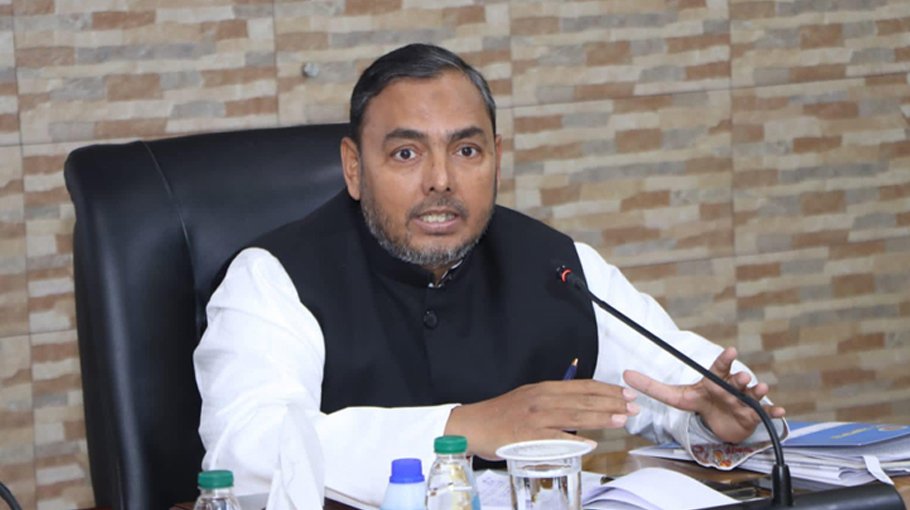
Newly-appointed state minister for commerce Ahsanul Islam Titu on Sunday said that no syndicate would be able to remain in the country.
“No syndicate will be able to exist in the country. Businessmen have to work with transparency and accountability. We will tell them that if they do business with transparency and accountability, we will support them. But if they try to embarrass the government by any kind of manipulation, we will take strong action,” he said while talking to reporters at the conference room of the ministry at Bangladesh Secretariat.
The junior minister came up with the remarks following a directive of Prime Minister Sheikh Hasina who asked her council of ministers for taking immediate measures to keep prices of essential commodities under control.
International community highly acclaimed Sheikh Hasina’s last three terms for boosting country’s economic growth despite the global recession and corona pandemic. But the AL led government has been under pressure because of the surging prices of essential commodities.
The commerce minister of the previous government, Tipu Munshi drew criticism after failing to curb the prices of essential commodities and break the so-called syndicate of different items.
Titu said that immediate action will be taken against any manipulation of consumer goods by large corporate importers.
“Commodity prices will be regulated through smart market management,” he said.
“I do not believe in syndicates. But a few big companies import consumer goods. These institutions must be brought on the right track,” he added.
The junior minister said from now on, if the owners of these institutions engage in any manipulation, they will be strictly prevented from doing the exploitation.
“This will not be done through coercion or oppression, but this can be done by ensuring the proper supply of goods from the production and import stages to the consumer level, and keeping commodity prices within the public's purchasing power,” he said.