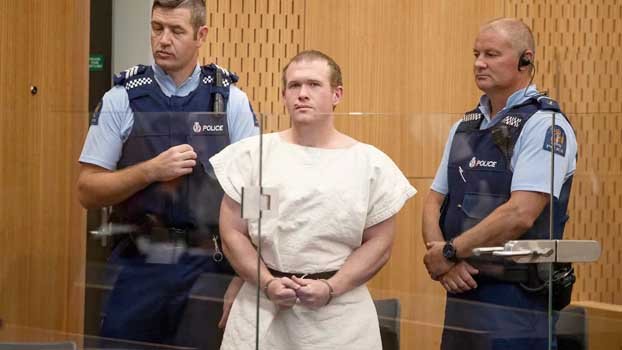
The Australian white supremacist who murdered 51 Muslim worshippers in last year’s New Zealand mosque shootings will face survivors of his rampage during a sentencing hearing next week that is likely to see him jailed for life, reports AFP.
Far-right extremist Brenton Tarrant was convicted in March of 51 murder charges, 40 of attempted murder and one of terrorism, after dropping his previous not guilty plea.
Tarrant is expected to be present at the Christchurch courthouse for the four-day sentencing hearing that begins Monday amid tight security and unprecedented reporting restrictions for media.
Some of the survivors and the families of his victims will be allowed in the courtroom for their first encounter with him since the shootings on March 15, 2019.
He has previously been screened into court via video link from a maximum security prison in Auckland, other than a brief appearance in the dock of a closed court the day after the shootings.
With wounds still raw from an atrocity that shocked New Zealand, presiding High Court judge Cameron Mander said the sentencing was an important milestone for victims.
“Finality and closure is considered by some as the best means of bringing relief to the Muslim community,” he said in the lead-up to the hearing.
Many of the 60-plus people who will give victim impact statements have travelled from overseas for the sentencing, undergoing two weeks of quarantine so they can participate.
Due to coronavirus-related restrictions, hundreds more will have to observe social distancing as they view via live feeds to seven courtrooms in Christchurch, while others have been granted permission to monitor it online. Prime Minister Jacinda Ardern said it would be a difficult week for many. “I don’t think there’s anything I can say that is going to ease how traumatic that period is going to be,” she told reporters Friday.
“The whole process is likely to take some time, that’s as it should be, people need to be heard.”
Police will step up patrols around the courthouse and victim support workers will be present, with local mental health specialists on standby for referrals.
It is part of a massive logistical exercise that includes live translation of proceedings into eight languages to accommodate New Zealand’s diverse Muslim community.