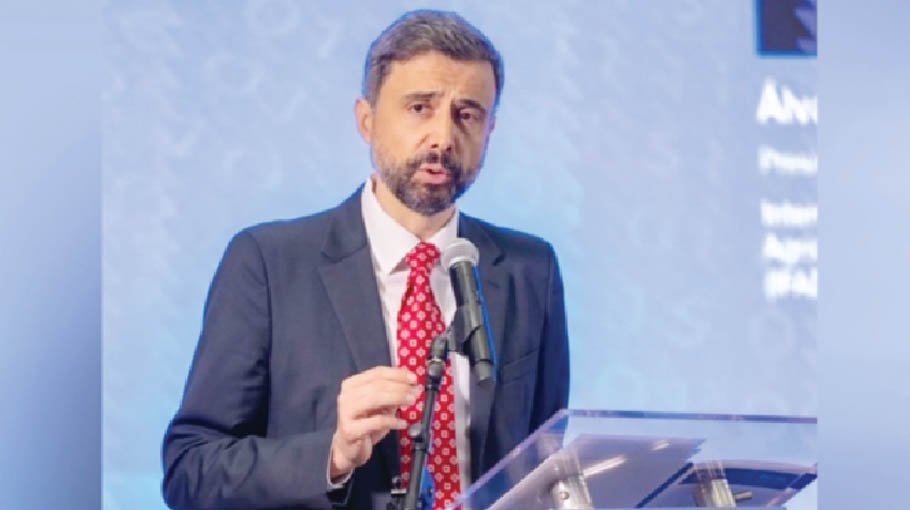
President of the United Nations International Fund for Agricultural Development (IFAD) Alvaro Lario has called on world leaders attending the New Global Financing Pact Summit to prioritize the needs of small-scale farmers, who play a crucial role in feeding the world while facing poverty.
The summit, taking place in Paris on June 22-23, aims to reshape the global financial architecture to ensure equitable access to financing for sustainable development, climate adaptation, and the transition to net-zero emissions in low- and middle-income countries, according to an IFAD press release. Lario emphasized the importance of building a more inclusive global financial order, as the current system often leaves the world’s poorest countries struggling to finance agricultural development and support small-scale farmers.
“This summit is an opportunity to build a consensus for a more inclusive global financial order which currently leaves the world’s poorest countries struggling to finance their own agricultural development and, most importantly, the small-scale farmers they depend on to feed local and national populations,” said Lario.
“Collectively, these farmers grow one third of the world’s food, making investments in their economic wellbeing and resilience to climate change, critical to global food security and stability,” he added. While Official Development Assistance (ODA) directed toward agriculture has remained stagnant at 4% to 6% for the past two decades, developing countries are facing increasing challenges in financing their agricultural sectors due to tighter credit conditions, rising costs, and global inflation. Presently, at least 54 developing economies are experiencing severe debt exposure.
Lario stressed the need for developing nations to have greater access to highly concessional financing. Multilateral organizations must optimize their balance sheets, offer more favorable financing terms, and possess suitable instruments to address emerging challenges.
“Developed countries must also ambitiously replenish multilaterals so that they can effectively deliver development results, reduce hunger and poverty and build resilience within country programmes,” he said.
“When fully replenished, institutions like IFAD can leverage significant additional financing to really make a difference in rural areas,” Lario added.
Since 1977, IFAD has transformed every donor dollar into six dollars of investment in rural areas, empowering millions of rural families through increased food production, climate resilience, and improved access to knowledge, markets, and technologies, reads a press release.
Between 2019 and 2021, IFAD investments positively impacted the incomes of 77.4 million rural people and enhanced food security for 57 million individuals.
Lario also emphasized the critical role of the private sector in development and climate action.
We need to develop the financial instruments and create the right regulatory and policy environment that reduce risks and incentivise the private sector to invest,” said the IFAD president.