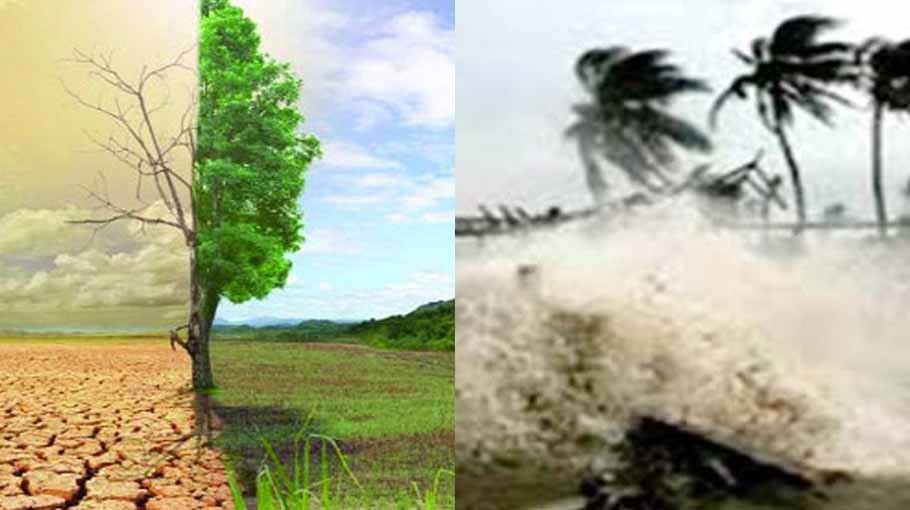
To move from climate risk to sustainable climate prosperity, the government is going to implement the ‘Mujib Climate Prosperity Plan’, which is essentially a strategic investment framework for climate financing.
Under this, US$ 80 billion is being planned for investment by 2030 to achieve climate resilience. The investment will be funded from both domestic and external sources.
While delivering the FY 2022-23 budget speech Thursday (9 June), Finance Minister AHM Mustafa Kamal said considering the immense importance of environmental protection, the government has made it mandatory to follow a pragmatic and inclusive environment-friendly plan in all development activities while addressing the risks of climate change.
Mustafa Kamal said as part of the implementation of the global carbon emissions reduction target, the country’s updated ‘Nationally Determined Contribution’ was finalised in August 2021. By 2030, the target of reducing carbon-dioxide emissions has been set at 6.73 percent with the country’s own financing and technological capabilities. Another 15.12 percent of this emission reduction has been provisioned subject to the availability of international funding and technical assistance. “On the other hand, the process of formulating a ‘National Adaptation Plan’ to determine the long-term integrated adaptation strategy together with an action plan to tackle the country’s climate change is at the final stage and the updating of ‘Bangladesh Climate Change Strategy and Action Plan’ formulated in 2009 is in progress. In addition, steps have been taken to make all existing industries and newly established industries environment-friendly,” he added.
The Minister said following this, new decisions have already been taken on installation of 10 coal-fired power plants worth 12 billion USD with the generation capacity of 8,600 MW. Of these plants 4 have been canceled and the remaining 6 will be renewable or gas-based, on the basis of a feasibility study. We are working on ensuring availability of 40 percent of our energy resources from renewable sources by 2041.
So far, 13 areas of the country have been declared as Environmentally Critical Areas on the basis of the finding of scientific studies aimed at conserving biodiversity and the natural environment. In the last 13 years, a total of 35 new protected areas have been created, including 9 National Parks, 18 Wildlife Sanctuaries, 3 Eco-parks, 1 Botanical Garden, 2 Marine Protected Areas, and 2 Special Biodiversity Conservation Areas, bringing the total number of protected areas in the country to 51.
During the same period, 95,265 hectares of blocks, 26,453 seedling km strips, and 68,113 hectares of mangrove orchards have been created in the country and 106 endangered forests and 240 medicinal tree species have been preserved. ETP installation activities in industrial plants have been intensified.
The ‘National Forest Inventory’ report has been prepared by collecting data using GIS technology. Government-funded SMART (Spatial Monitoring and Reporting Tools) Patrolling is underway throughout the Sundarbans. In addition, 49 ‘Village Tiger Response Teams’ have been formed with the help of the people of the Sundarbans to resolve the tiger-human conflict.