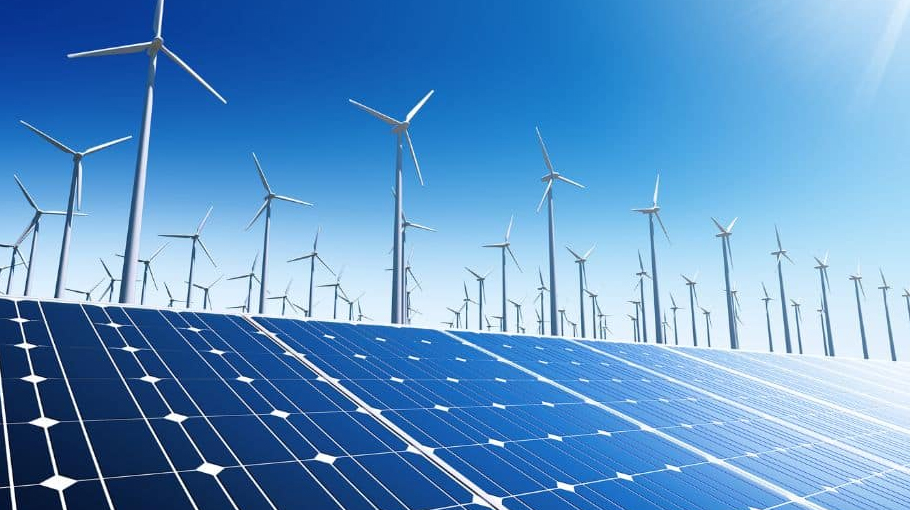
The United Nations climate conference or the COP28 wrapped up in Dubai of UAE on December 12 with an agreement on renewable energy in order to increase the world’s green energy capacity.
During the COP28, Bangladesh along with global leaders of 123 nations agreed on the goals of the Global Renewable and Energy Efficiency Pledge (GREEP) to triple the global renewable energy targets collectively and double the rate of energy efficiency improvements from about 2 per cent to 4 per cent by 2030.
The global leaders have also committed to prioritizing energy efficiency as the ‘first fuel’ in policy, planning, and major investment decisions.
Against this backdrop, steps must be taken to attract more investment in renewable energy sector in Bangladesh. Change Initiative, a
Dhaka-based research organisation, has released a report in this regard. The biannual report on the present status of renewable energy in Bangladesh titled, ‘Follow the Renewable Energy Finance in Bangladesh’ was released on Thursday (December 14, 2023).
The findings of the newly released report show that Bangladesh needs to present more competitiveness in power purchase and transparency in tariff determination to attract more investment in renewable energy.
The report highlights the key points on progress and challenges until 2023 of Renewable Energy adoption and practices.
Bangladesh has a target of generating 40 per cent of its electricity from renewable sources by 2041 as per the Mujib Climate Prosperity Plan. However, the country has already installed 461 MW of renewable energy capacity, mainly from solar power, and has planned installing another 4115 MW of electricity at various stages of development.
The Change Initiative’s study revealed the inconsistency in Renewable Energy targets, inequitable approval of Renewable Energy projects in terms of potential of solar radiation and exaggerated tariffs in Renewable Energy projects.
In Bangladesh, 44.34 per cent of total capacity (2020.30 MW) of solar projects is located in the Chittagong Hill Tracts (CHT) zone, which is considered as most solar radiated area of solar projects. On the other hand, 18 per cent (with combined capacity of 611.3 MW) is located in Rangpur and 13 per cent (with combined capacity of 551.7 MW) in Mymensingh.
One recent policy shift in Bangladesh promotes ‘Clean Energy’ instead of ‘Renewable Energy’. However, renewable energy, including solar, wind and biomass energy, is a safer and more reliable technology options within the current scope of this report.
In the context of Bangladesh, the additional ‘Clean Energy’ sources remain unproven, unreliable, and expensive supply driven. Prioritizing clean energy over proven renewable energy could create unprecedented burden in Bangladesh in terms of safety, security, affordability, access to resources, and energy scarcity. IEPMP 2023 has unnecessarily created scope for unexpected economic pressure as well as input dependent energy security.
The report analyses the ownership, finance, tariff, and implementation of renewable energy projects, highlighting the role of the private sector, the need for transparent and efficient procurement, and the variation in pricing strategies.
According to the report, the private sector plays a vital role in the renewable energy sector, owning 59 per cent of the planned projects and investing 62 per cent of the total fund. Public investment amounts to $312 million, representing 23 per cent of the total investment while joint venture investment of $212 million, makes up to 15 per cent of the overall identified investment for renewable energy generation in the country.
On the occasion of the report release, the Change Initiative arranged a press conference at its office at Mohakhali in the capital.
M Zakir Hossain Khan, a climate finance expert in Bangladesh and chief executive of the Change Initiative, presented keynote on ‘Follow the Renewable Energy Finance in Bangladesh’.
Shadman Sakib Khalil, manager (innovation, business development and oversight of the Change Initiative), Maisha Chowdhury deputy executive (business development and outreach), and Sabrin Sultana, a research assistant; were also present at the press conference.
In his presentation, Zakir Hossain Khan said that Bangladesh’s sustainable progress in dealing with the climate crisis depends on building a nature-based, cost-effective and sovereign renewable energy-based economy.
The potential of renewable energy should not be destroyed in the bud by undermining the jurisdiction of the Bangladesh Energy Regulatory Commission (BERC) and looting immoral benefits through unreasonable tariffs, he added.
This tendency will jeopardise the immense potential of expansion of renewable energy, he pointed.
There is a difference between public and private tariff rates. The private projects of renewable energy are charging a higher tariff for power purchase, specifically at a rate of $0.13 /KWh. In contrast, public projects are offering the lowest tariff rate ($0.10/KWh). However, joint venture projects are charging tariffs higher than those of public projects, indicating variation in pricing strategies across different owners.
There is an absence of clear trend in tariff rates in different capacity ranges, making it challenging to identify a consistent pattern in the pricing strategies of private power plants.
The majority of the renewable energy projects are unsolicited, meaning they are initiated by developers without a competitive bidding process. There are also higher tariffs for both unsolicited and large projects.
Another major point of the report is that the tariff rates for renewable energy vary across different owners and capacities, with private projects charging higher rates than public and joint venture projects.
In the neighbouring countries, regulatory authorities have predetermined tariff rates based on size and publicly disclose comprehensive detailed cost estimates and tariff rates of various projects. This level of transparency is lacking in Bangladesh, where regulatory bodies don’t provide such information.
“The government must ensure integrity and competition in the energy sector in order to turn the current energy and economic crisis in Bangladesh into a possibility. We must prioritize building a smart and green energy-dependent green future to build a smart Bangladesh,” said M Zakir Hossain Khan.
The Change Initiative study placed some recommendations for enhancing the renewable energy sector in Bangladesh.
The recommendations include maximizing the potential of renewable energy sources, especially in the regions with high solar radiation and wind speed; ensuring the best utilization of available finance for renewable energy expansion, by prioritizing solicited and competitive projects, reducing the reliance on loans and equity, and increasing the access to grants and concessional funds from national and international sources. Measures to address financing needs should include carbon tax and products designed to specifically address risks and credit.
The Change Initiative study says that one crucial focus should be assessing and mapping of renewable energy resources, and developing a comprehensive renewable energy finance strategy which should be obligatory to follow.
The tariff determination process for RE projects must be improved by adopting a transparent and consistent methodology, benchmarking with regional and global best practices, and avoiding exaggerated or inflated rates.
Bangladesh must also implement a strong monitoring system for renewable energy decisions, emphasizing environmental and social standards and ensure compliance and transparency in all stages of RE projects.
It is also important to focus on strengthening stakeholder collaboration on renewable energy promotion, by involving the civil society, private sector, academia, and media in the policy development, implementation, and oversight of the renewable energy sector.