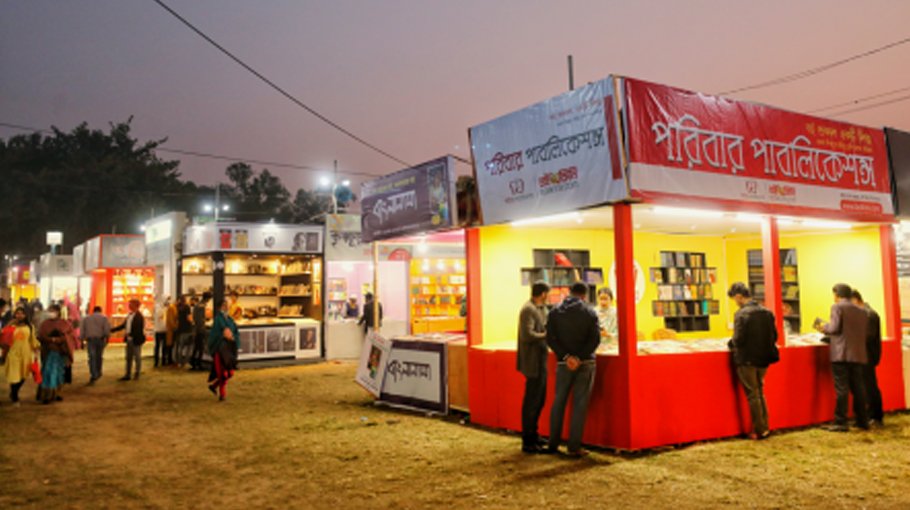
A nationwide project to gradually install micro libraries at bus and train stations, as well as amusement parks, has been approved by the Ministry of Culture and the National Book Center.
Motivating people to read books is the aim. In addition, on February 1st, the Amar Ekushey Book Fair is scheduled to begin.
In addition, libraries will be established in multi-story residential buildings, elderly homes, and the residential neighborhoods of public servants. The Ministry of Culture made this decision on December 31.
According to officials, establishing small libraries is a good way to foster a culture of book lovers. However, it matters what kind of books the library will have.
A reader will not be motivated to visit the library if their favorite books are the only ones available there, along with no other intriguing titles.
The National Book Center and Directorate of Public Libraries will only provide books, according to Ministry of Culture officials. Books will be awarded with a maximum value of 30,000 taka and a minimum value of 15,000 taka.
However, the relevant ministries and departments should receive small amenities and book racks for the reading room. Due to financial constraints, the Ministry of Culture is unable to construct as much.
The Ministry of Culture is preparing necessary arrangements to finalise with other relevant ministries regarding railway stations, bus stations, and amusement parks location. Concerned individuals, however, express uncertainty over whether or not the relevant ministries and departments will provide space for the library there.
Ministry officials said that the aim of this program is to foster a love of reading in individuals. In addition to creating mini libraries, nationwide quizzes will be held. They mentioned that the reading room would have a wide variety of books. Books on philosophy, politics, literature, history, and other subjects will all be available. In response to the trend of younger people reading fewer books, the Ministry of Culture is working to promote reading habits. Plans have been made to convert entertainment centers in several national districts, including Dhaka, into classrooms. Ramana Park is one of them.
However, the Ministry of Culture will consult with the Ministry of Local Government and the Park Authority prior to constructing the library in order to build a little structure inside the park.
Gradually, a meeting between the Ministry of Culture and the Ministry of Railways and Road Transport will also take place. The Kamalapur railway station is contemplating the addition of a small library. In addition, there are plans to distribute books to passengers within the train. For this purpose, one person will be appointed. The book will be given to the passengers through him at the start of the trip and returned to them at the finish.
Md Ataur Rahman, Joint Secretary of the Ministry of Culture told Bangladesh Post that several initiatives have been taken to uplift the trend of book reading, especially among the youths. Though many of them are still in a test basis initiative, after seeing success then the workflow will be increasing rapidly.
National Book Center officials reveal that the government secretary housing in Eskaton, Dhaka, already has a library. There are books available. Authority is compiling a list of additional government housing projects. The National Book Center will supply the books. But the interests of the parties involved are what matter most. It is necessary to start a project to deliver books to different locations, such as amusement parks, bus terminals, and train stations.
According to the source, the National Book Center has been donating books to a number of public and private institutions in 2023. Books have been donated to 110 institutions nationwide thus far. Books with a minimum price of 15,000 taka and a maximum price of 30,000 taka are donated in these locations. Aside from this, 130 salons in the northern area have each received 25 books.
Forty years ago, the adult literacy rate was much lower. Merely approximately 30.0% of the overall populace possessed literacy skills, meaning they could read and write a brief, basic statement about everyday life. Approximately 82.0 million people made up the small population. As a result, not many people used to read books.
Approximately 169.4 million people call the nation home, and its literacy rate has risen to roughly 74.66%. It indicates that a great deal of people can read books these days. However, compared to a large population, a number of proxy indicators indicate that fewer people are reading books.
Experts argue that, even though the nation's literacy rate has been steadily rising, there are still structural problems in the educational system that contribute to the lack of interest in reading books. Other than texts, notes, and guidebooks, reading is typically discouraged for students in schools and colleges. For most guardians and teachers, the so-called "out books," which include both fiction and non-fiction, are unacceptable. They believe that students who read these books will become disinterested in their studies and tests.
However, some individuals read on their smartphones or tablets as well. In the nation, e-books are gradually gaining traction. A growing number of people are gradually switching to e-books instead of printed hardcover or paperback books. As a result, slowly, the habit of reading books is also changing.