Bangladesh is going to launch a major vaccination campaign on March 18 to immunize 34 million children within the age group of nine months to under 10 years against measles and rubella. Both the vaccine preventable diseases remain as public health concerns. Measles can kill children while rubella infection in pregnant women can cause fetal death and birth defects.
“In the first week from March 18 to March 24, we will target educational institutes and, in the 2nd, and 3rd week in the communities with our routine outreach and additional sites,” Dr Mowla Baksh Chaudhury, Programme Manager of the government’s Expanded Programme on Immunisation (EPI) told journalists.
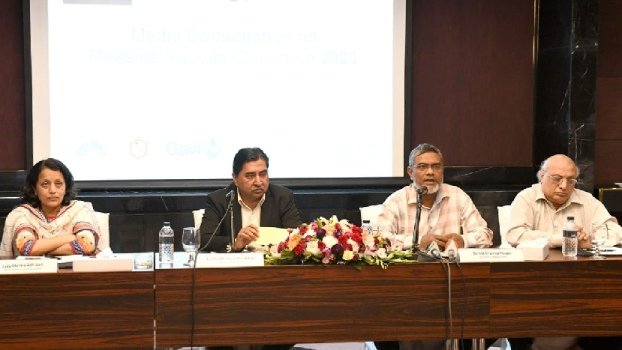
The Unicef Bangladesh organised a consultation meeting ahead of the campaign on Tuesday with the health journalists at a hotel. The UN agency is helping the government in carrying out the campaign which is going to be held after six years. The first MR campaign was held in 2014.
“Our target is to cover 95 percent children,” Dr Md Shamsul Haque, Line Director of the Maternal and Neonatal Maternal Neonatal Child and Adolescent Health (MNC&AH), said, adding that their plan is to eliminate the infection by 2023. Bangladesh is one of the most densely populated countries in the world with frequent internal migration. The transmission potential of an infectious disease such as measles is very high.
The government takes the additional measles and rubella campaign plan as the number of measles cases has increased over the last four years due to low routine coverage of the MR first dose and MR second dose. Once the incidence of measles was 1.6 per million in 2015. But it rose to 27.1 per million in 2019.
The current influx of Myanmar refugees and porous borders with India pose an additional threat of importations and subsequent outbreaks of measles in Bangladesh. The government expects increases in the numbers of cases, outbreaks and deaths in future years, as the number of susceptible children accumulates. So, to prevent the transmission and outbreaks of measles and rubella, it has become necessary to conduct MR vaccination, according to Unicef.
Out of total targeted number, 15.6 million are of nine months to less than 5 years age and the rest 18.2 million are of five years to less than 10 years age group. It’s a $42 million campaign including the cost of vaccines which are bought by the Unicef from the WHO pre-qualified company. The GAVI Alliance shares with the government half of the cost.
“One dose of MR vaccine will be administered to the targeted children irrespective of previous vaccination status and previous measles or rubella illness,” the programme manager said. Measles is transmitted via droplets from the nose, mouth or throat of infected persons. Initial symptoms, which usually appear 10–12 days after infection, include high fever, a runny nose, bloodshot eyes, and tiny white spots on the inside of the mouth.
Rubella virus infection usually causes a mild fever and rash in children and adults. Infection during pregnancy, especially during the first trimester, can result in miscarriage, fetal death, stillbirth, or infants with congenital malformations, known as congenital rubella syndrome (CRS).