Tanzinul Haque Khan, Tangail
There was a time when the shopkeepers used to decorate the toy stalls with small and big cows, elephants and horses made of clay in the villages. These toys were bought for children because of the culture of traditional Bengal.
In rural or urban fairs, there was a demand for earthen toys. But for the last few years, there has been no pressure from wholesalers on potters to make clay toys.
The potters of Tangail have blamed the plastic products as the reason for this. They claim that no one wants to buy earthenware anymore because of plastic products.
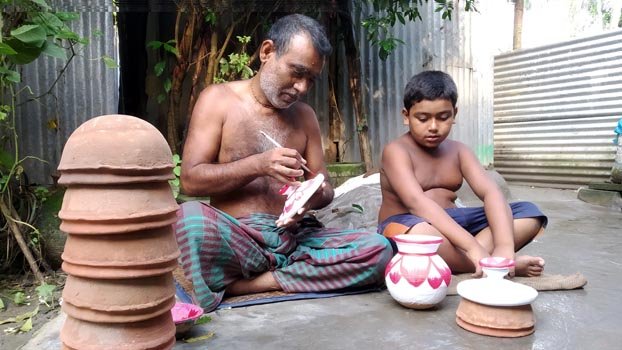
Potters from Tangail Sadar, Kalihati, Basail, Dhanbari and many other villages of the district depend on pottery for their livelihood. They make different materials with clay soil brought from different rivers and beels of the district. Their family lives go on by selling this earthenware.
However, the residents of Palpara in different areas are not doing well as the demand for pottery is declining. Their lives are just passing with miseries.
Many are now changing the profession of their predecessors. At present only a few families are holding on to this pottery. However, as there is no demand from wholesalers, none of them make clay toys anymore.
Man Mohan Pal, a potter, said with a look of frustration on his face, “I have been in this profession (pottery) of my ancestors since I was born. But now the value of earthenware is declining day by day due to plastic materials. Now I only make yoghurt pots and roundish earthen vessel and containers used chiefly for cooking and delivery to sweet shops.”
Housewife Chinu Rani Pal said, “I have been making pottery since my marriage. Now my husband had quitted this job and engaged in agriculture. At present, my mother-in-law and I make pottery together.
Earlier, wholesalers used to come from far and wide to place orders. Then I would work day and night to deliver orders to the wholesalers. But because of plastic toys, clay toys have no longer demand. After working part-time for a sweet shop, I have somehow survived.”
She also said that she used to make many toys including cows, elephants and horses, banks and dolls for the fair. But since there is no demand, we don't make these anymore. As the days go by, the value of earthen things also decreases.
“We are still surviving because there is demand in the sweet shops. I only make yoghurt glasses and pans for sweet shops. I sell one thousand yoghurt glasses made after working for three to four days for tk.4000 and a pot for tk.5000.
After meeting all the expenses including the wages of the laborers, there is very little amount left to afford the family. We are to lose our existence because of the plastic materials,” she added.
Somnath Laheri, a senior research officer in Tangail, said the industry would be ruined within short time if no effective steps are taken now to keep it alive.
He said that at once, a lot of things made of clay are available. Demand for this specialty has grown significantly as plastic goods are highly reported.
“If we do not nurture the pottery industry along with the government patronage, this industry will be destroyed permanently. We will lose our one tradition too,” he added.
He further said that Jamdani Sari and Shital Patti have been recognized by UNESCO as a heritage of Bangladesh. If we take care of the pottery, it will also bring respect to the country through UNESCO recognition.