Mentioning that significant reduction in Covid cases gradually making majority businesses hopeful about the recovery of the economy, the Metropolitan Chamber in its quarterly economic review refers that there are emerging challenges to be faced due to recent price rise of essential commodities, decreasing remittances, and slow vaccine rollout.
The review of Metropolitan Chamber of Commerce and Industries (MCCI), released on Thursday, also says the economy has been showing some signs of recovery in Q1 of FY22.The stimulus packages comfort the business groups, from large farms to petty micro-enterprises, which eventually helped the economy to boost again.
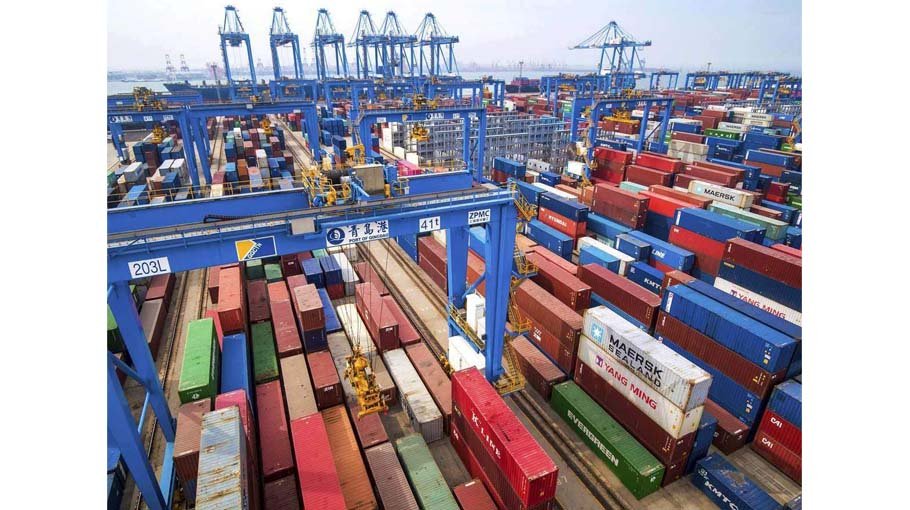
Exports and imports are two important drivers of the economy, and amid the COVID-19 pandemic, both the areas have done well.
It also said robust export earnings have facilitated economic recovery in the recent time. The rate of inflation is also increased in the quarter under review. The inward remittances however decreased, which has multiplier effects on other economic sectors, especially the small and medium industry. Foreign currency reserve is in a satisfactory position and the exchange rate has long been remained stable.
On the other side, some of the economic indicators appear to be less promising than projected earlier. The fiscal framework continues to be weak in view of poor achievements, more specifically, both in terms of revenue mobilization and public expenditure.
Export earnings (merchandise) in July-September of FY22 increased by 11.37 per cent to US$11.02 billion from US$9.90 billion in the corresponding months of the previous fiscal year, thanks to the highest ever single month export earnings of US$4.17 billion in the last month of the first quarter (September 2021).
Import payments (C&F) during July-September of FY22 stood at US$18.72 billion, which was 47.55 per cent higher than import payments during the corresponding three months of FY21 amid restoration of business and economic activities in the country’s major export destinations due to vaccination drives in those areas.
The inflow of remittances in July-September of FY22 decreased significantly by 19.45 per cent to US$5.41 billion from US$6.71 billion in the corresponding months of the previous fiscal year. This decline in remittances is a reflection of the second wave of COVID-19 pandemic situation when many Bangladeshi migrants lost their jobs, some migrants were laid off by their companies.
The net foreign direct investment (FDI) in July-September of FY22 increased by 49.34 per cent to US$339 million from US$227 million in the corresponding three months of the previous fiscal year (FY21), according to the BB’s balance of payments data.
The point-to-point inflation over the last couple of months increased as per the latest BBS data. The general point to point inflation rate rose by 0.05 percentage points to 5.59 per cent in September 2021 from 5.54 per cent in the immediate past month (August 2021) and the inflation in August also increased by 0.18 percentage points from July 2021. A year ago, in September 2020, the inflation rate was higher at 5.97 per cent.
Referring BB data, MCCI said the disbursement of industrial term loans during April-Juneof FY21 stood at Tk.19,431 crore, which was 11.81 per cent higher than the amount of Tk.17,379 crore disbursed during the immediate previous quarter (January-March) of FY21 (Table 4).
The disbursement of CMSME loans by all banks and non-bank financial institutions (NBFIs) increased by 48.91 per cent to Tk.41,788.73 crore during April-June of FY21 from Tk.28,063.71 crore in April-June of FY20. On the other hand, recovery of CMSME loans during April-June of FY21 increased, year-on-year, by 47.03 per cent to Tk.42,000.03 crore from Tk.28,565.96 crore.