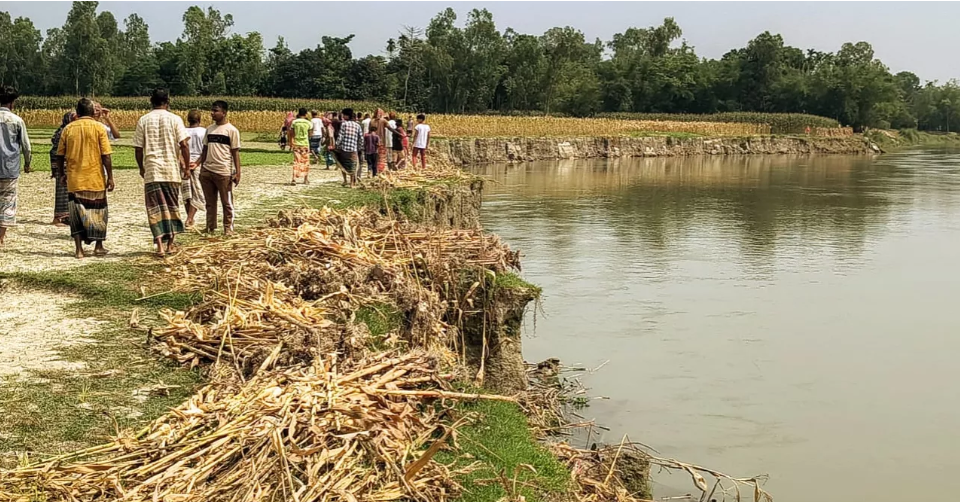
UNB:: Kurigram, a northern border district of Bangladesh, continues to struggle with extreme poverty, widespread landlessness and relentless river erosion, trapping millions of people in harsh living conditions despite its large geographic size.
Spanning around 2,255 square kilometres and home to over 23 lakh people, the district’s development has remained slow due to geographic isolation, weak infrastructure and decades of neglect.
According to the Bangladesh Bureau of Statistics (BBS), Kurigram’s poverty rate stands at 70.8 percent against 19 percent at the national level. The extreme poverty rate in the district is 53.2 percent.
In Char Rajibpur upazila alone, the poverty rate rises to 79.8 percent, highlighting the severity of deprivation in riverine areas.
Landlessness is also widespread, with around 35 percent to 50 percent of families without land. At the same time, about 57 percent of residents suffer from various illnesses, making poverty and poor health closely linked problems in the district.
River erosion remains one of the biggest threats. Sixteen rivers, including the Brahmaputra, Teesta and Dharla, flow through Kurigram. Out of 469 chars (river islands), 269 are inhabited, where around 550,000 people live. Every year, river erosion forces thousands of families to lose their homes and become landless.
Experts say urgent river management is needed along about 70 kilometres of the Brahmaputra, 45 kilometres of the Teesta and 60 kilometres of the Dharla river routes in the region.
The lack of industrial development has also created an acute employment crisis. The Kurigram Textile Mills, established in 1987, was closed in 2011, and no major industry has replaced it since.
To establish the proposed “Bhutanese Special Economic Zone” on the bank of the Dharla River, a memorandum of understanding (MoU) was signed between the governments of Bangladesh and Bhutan in 2024.
However, it will take time for the zone to come into operation.
The administrative approval has been granted to allocate or acquire 150.07 acres of khas land and 69.57 acres of privately owned land in favour of BEZA for the project.
So far, BEZA has acquired 133.92 acres of land in the area, while the process of acquiring an additional 61.87 acres is currently underway.
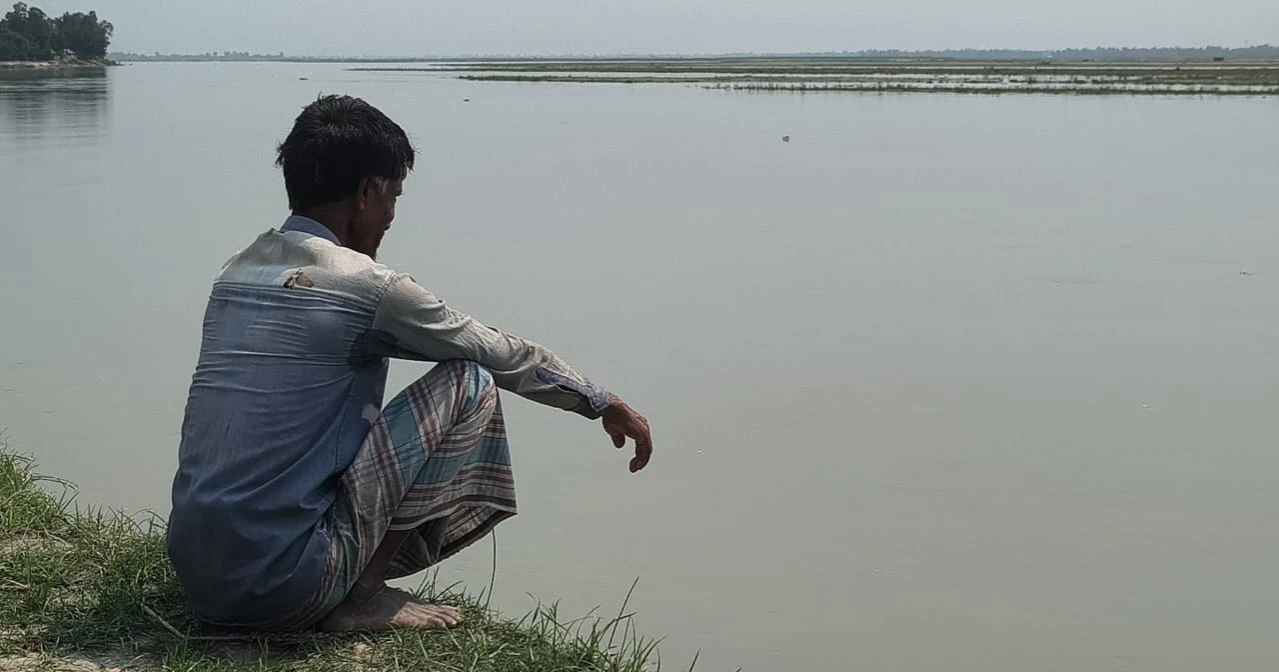
Photo: UNB
Jamal Uddin, a resident of Kalir Alga Char, said he has lost his home to river erosion several times. “There is still no permanent solution. Every year we live in fear,” he said.
Aklima Begum, another resident, said the char areas have resources but lack markets, healthcare and communication facilities. “That is why we are still behind,” she said.
Abdul Gafur, chairman of Jatrapur Union Parishad, said government projects exist, but long-term solutions require river management and infrastructure development.
Prof Shafiqul Islam Bebu, president of the Kurigram District Char Development and Implementation Council, said improved communication is key to development.
He suggested a railway bridge over the Dharla, better rail connectivity through Nageshwari and Bhurungamari, and a direct link to Dhaka via Gaibandha, Bogura and Sirajganj.
Bebu also called for flood shelters for livestock, improved local markets, government-operated river transport, toll-free crossings, and the creation of a dedicated ministry for char affairs.
Sayed Ahmed Babu, general secretary of the council, said a long-term and integrated plan is essential for the development of the district.
He said permanent river management, industrial growth, communication improvement and char development could help break the cycle of poverty.
Experts say Kurigram reflects wider development inequality in Bangladesh, but with proper planning and investment, the lives of thousands of people in the district could be transformed.
Kurigram Zila Parishad Administrator Sohel Hosnain Kaikobad said, “The government is implementing various initiatives for the development of Kurigram. We are working on preventing river erosion, improving infrastructure in char areas, expanding social safety net programmes, and creating employment opportunities.”
He further said, “A long-term plan is necessary for the sustainable development of this district. We are working towards that goal in coordination with all relevant stakeholders.”