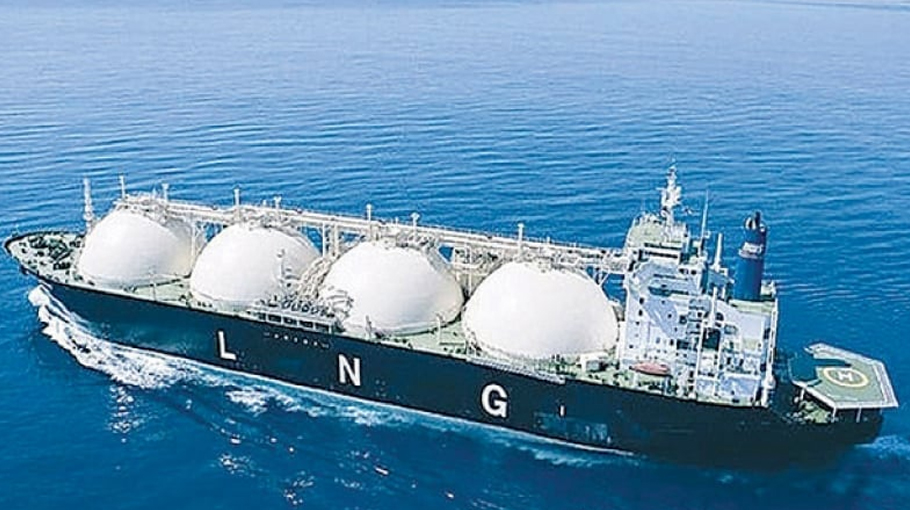
Planning and Education Advisor Dr Wahiduddin Mahmud has criticized Bangladesh's growing reliance on liquefied natural gas (LNG) imports, suggesting that it undermines the country’s potential for domestic gas production.
His comments followed a meeting of the Executive Committee of the National Economic Council (ECNEC) on Wednesday.
Dr Mahmud pointed out that the government recently approved four projects totaling Tk 1,222,140,000, including a Tk 70 crore gas pipeline and Tk 588 crore allocated for drilling new gas wells. These initiatives aim to bolster domestic gas output amid a steady decline in local production.
An official from the Ministry of Power, Energy, and Mineral Resources highlighted a mounting financial concern: the outstanding amount owed to the government for LNG purchases stands at USD 607.35 million. This debt has resulted in a halt to new LNG imports, contributing to widespread power shortages and load shedding across the country. The energy crisis is not only impacting daily life but also posing significant risks to the national economy.
A report by the Institute for Energy Economics and Financial Analysis (IEEFA) suggests that Bangladesh could save up to USD 460 million annually by focusing on energy efficiency measures rather than importing more LNG. The report emphasizes that improving efficiency could reduce the country’s reliance on expensive imports.
In 2022, Bangladesh reduced its LNG imports by 14.4 per cent due to surging prices. However, a subsequent price drop in 2023 saw imports rebound by 17.9 per cent. This rise is primarily driven by a 4.6 per cent decrease in domestic gas production in the fiscal year 2023, following a 5.7 per cent drop in fiscal year 2022.
To address gas shortages, the previous government planned a third LNG terminal with a 4.6 MTPA capacity and an expansion of another terminal by 0.75 MTPA. New contracts with Oman and Qatar are set to begin in 2026, with current long-term contracts covering a total capacity of 4.75 MTPA.
However, financial constraints limit future import increases. The Bangladeshi taka has depreciated by 28.8 per cent since December 2021, raising LNG costs. To mitigate import reliance, the previous government invited bids for offshore gas exploration.
The power sector remains the largest consumer of gas, accounting for 41.8 per cent of demand in the fiscal year 2023. While the government is investing in renewable energy projects and planning to boost baseload power generation with new nuclear units.
The IEEFA recommends that Bangladesh prioritize increasing gas-fired peaking capacity over solely expanding baseload capacity, to better support the growth of renewable energy and enhance energy efficiency in the industrial sector.
Energy experts warn that excessive dependence on LNG imports carries economic, environmental, and health risks. They urge the government to prioritize renewable energy sources and domestic gas production for a sustainable energy future.
Dr Badrul Imam, Honorary Professor of the Department of Geology at Dhaka University, criticized policymakers for not heeding expert advice on avoiding LNG imports. He suggested that some officials may have vested interests in acquiring LNG, hinting at potential concerns over commissions and profits.
Dr. Imam emphasized the need for a long-term strategy focused on maximizing domestic gas resources. He stated, "We need a long-term plan because things are complicated right now, and stopping the import of LNG would be difficult." By adopting a more balanced energy strategy, experts believe Bangladesh can mitigate the risks associated with LNG dependence while securing its energy future.
Honorary Professor of Dhaka University's Department of Geology, Dr Badrul Imam, expressed to the Bangladesh Post that government policymakers often disregard expert advice, pointing to a lack of goodwill as a significant issue. “We should never have opted to purchase LNG; it could have been avoided,” he stated.
“It seems clear that some officials are keen on acquiring LNG worth billions of dollars, possibly due to concerns over commissions and profits.”
He added, “I have previously spoken out against procuring LNG from overseas using US dollars. We should have given more attention to our internal resources. While halting LNG imports now is challenging, we urgently need a long-term plan to address this complex situation.”