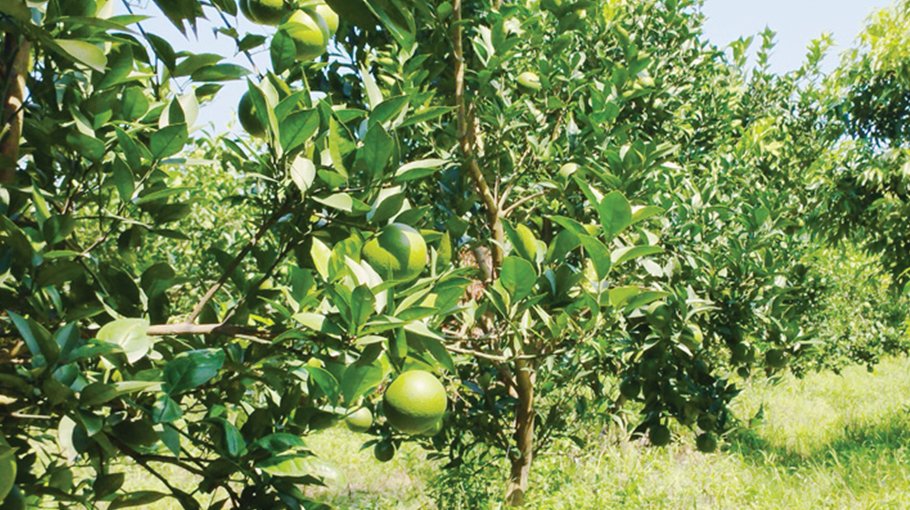
Educated young entrepreneurs in the northern riverine district of Kurigram, has embraced Malta cultivation as a means of achieving self-reliance and financial prosperity. Malta, a citrus fruit, has gained substantial market value, prompting youths to cultivate it on their own lands, rooftops, and through leased plots.
In a recent visit to the charming Horiram village, nestled within the Belgacha union in Kurigram Sadar upazila, uncovered a thriving agricultural scene. Habibur Rahman, the former vice chairman of Kurigram Sadar upazila Parishad, is at the forefront of this movement. He has combined Malta cultivation with a diverse array of other fruits and vegetables, including Grapes, Orange, Dragon, Apple, Mango, Burmese grapes (Latkon), betel-nut, and various vegetables like bottle gourd, pumpkin, Kodoa, Lalshakh, pui shakh, Kolmi Shakh, Lemon, and more, across a vast 7.50-acre expanse of his own land.
Rahman's journey began with the acquisition of high-quality Malta plants from Jashor, Bogura, and Rangpur. He has since cultivated and sold these plants, while employing 12 to 14 agricultural day laborers daily, each receiving a wage of Tk. 400. His Malta farm now boasts an impressive 2,800 trees.
The market prices for various fruit plants have surged, with Malta plants selling for Tk. 50-500 per piece, Orange at Tk. 50-200, Apple between Tk. 500-1000, Burmese grapes (Latkon) ranging from Tk. 40-1000, Grapes at Tk. 100-500, Mango priced at Tk. 50-100, betel Nut (supari) from Tk. 20-100, and papaya at Tk. 30-50 per plant.
Interestingly, Rahman defied initial skepticism when he established his Malta farm back in 2018, alongside 300 Litchi plants. The Deputy Director of the Kurigram Department of Agriculture Extension discouraged Malta cultivation in the region, citing unsuitable soil conditions. However, Rahman took a risk, planting 400 Malta trees as an experiment, and achieved remarkable success. To ensure the security of his farm, he even constructed a watchtower and designated two rooms for night guards.
A pivotal moment came during a visit by the Deputy Director of Kurigram's Department of Agriculture Extension. Rahman harvested a Malta and offered it for tasting. After consuming the fruit, the Deputy Director expressed satisfaction and admitted his earlier misconception. This endorsement prompted Rahman to expand his Malta cultivation on a larger scale. In his initial harvest, Rahman sold his planted Malta for Tk. 5.50 lakh, and he anticipates even greater profits in the future.