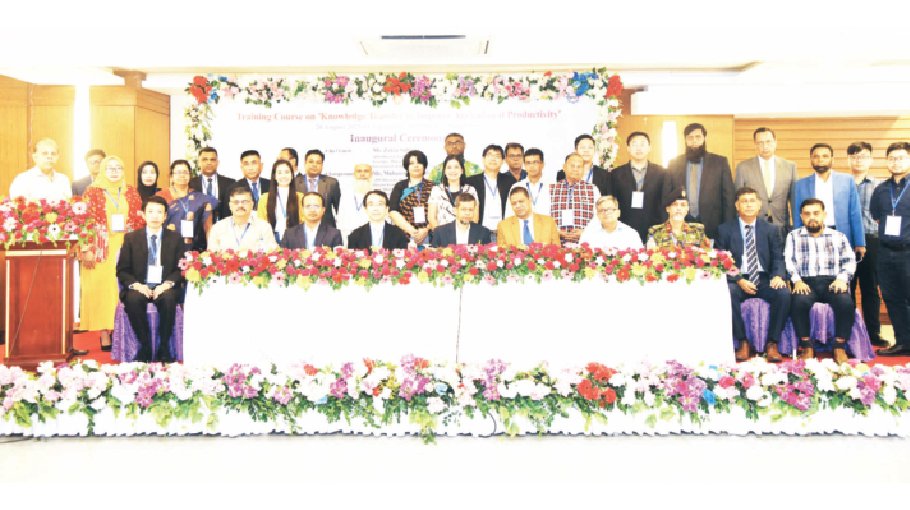
A significant initiative aimed at bolstering agricultural productivity, the 'Training Course on Knowledge Transfer to Improve Agricultural Productivity,' has commenced in Dhaka. The five-day program, running from August 28 to September 1, 2023, is being held at FARS Hotel and Resorts and is jointly organized by Bangladesh’s National Productivity Organisation (NPO) and the Asian Productivity Organization (APO).
The training course has attracted 24 participants from an array of countries, including Cambodia, Fiji, India, Indonesia, Malaysia, Nepal, Pakistan, Philippines, Republic of China, Sri Lanka, Thailand, Vietnam, and host country Bangladesh. Distinguished experts from both international and local domains are spearheading the program to facilitate learning and discussion.
The inauguration ceremony saw the presence of Sheikh Faezul Amin, Additional Secretary of the Ministry of Industries, Bangladesh, as the Chief Guest. Muhammad Mesbahul Alam, APO Alternate Director for Bangladesh and Director General (Additional Secretary) of NPO, Ministry of Industries, Bangladesh, presided over the session, delivering his welcoming address. Additionally, Toshinori Mitsunaga, Program Officer from the Multi-country Programme Division of APO Secretariat, Japan, conveyed the message on behalf of APO's Secretary-General.
With the agricultural sector’s value soaring to approximately USD 1 trillion in APO member countries, research and development efforts have played a pivotal role in maintaining continuous growth in production and efficiency.
Agricultural Knowledge and Information Systems (AKIS) have been pivotal in fostering knowledge exchange among stakeholders. However, the challenge persists that not all farmers possess the means to adopt and harness the evolving technologies and methodologies.
The training course’s primary objectives include comprehending the concept and management of knowledge transfer systems to farmers, elucidating the applicable methodologies and techniques, imbibing key success factors from exemplary knowledge transfer and innovation models, and exploring potential adoption prospects among APO members.