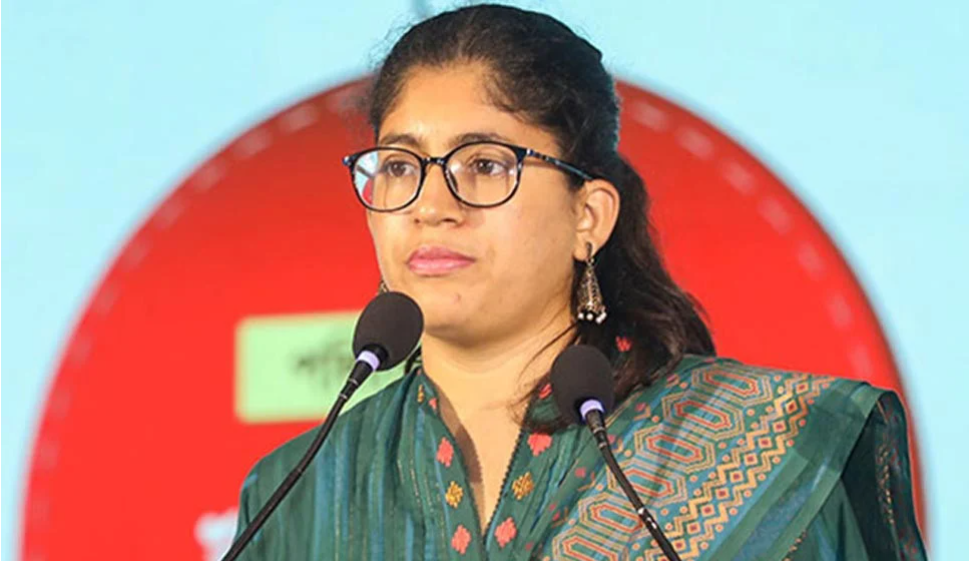
Former spokesperson of Students Against Discrimination (SAD) Umama Fatema has alleged that the SAD has turned into a "money-making machine".
While speaking in a Facebook Live programme on her verified account on Sunday night, Umama describing her involvement with the SAD as a "tragic" chapter in her life.
She also shared a detailed account of her journey with the movement — from joining it to stepping away.
"July was a significant experience. But after becoming the spokesperson, I began to notice troubling activities around me. I never imagined that people could be using the movement for financial gain.
"I had no intention of turning it into a money-making machine. Yet, sadly, that's exactly what happened — routinely and quite openly," Umama said.
Umama claimed that misuse of the "coordinator" identity of the SAD began immediately after the July uprising.
She said, "The very next day morning of 5 August, I noticed people suddenly identifying themselves as coordinators and occupying various positions. I was shocked. Just the day before, there was resistance to giving out the coordinator title — and now, I was hearing that people were using it to extort and take control. I began to wonder: is this turning into some kind of coordination force like the Rakkhi Bahini?"
At that point, Umama said she felt the platform had lost its original purpose.
"I thought, what's the point of the SAD anymore? We should now focus on creating an inclusive, decentralised platform. I still don't think that idea was wrong. But for expressing it back then, I made many enemies," she added.
Reflecting on her time with the platform, Umama said, "All major decisions were made at Hare Road (the advisers' residence) and simply handed down to us. I felt sidelined from the whole process."
Speaking emotionally, she said, "Everything became blurry. I was under constant stress for months. There was no clear direction."
She also alleged widespread irregularities, saying, "I was well aware of the extortion, nepotism, and the shelter (protection) rackets surrounding certain individuals. When I tried to address the situation in Chattogram, people panicked. There were similar issues in many districts. When I started looking into them, I realised how deeply it had all spread."
Describing July as a traumatic experience, she said, "It was intense — people were constantly clashing in the streets. It was unimaginable.
"I never thought people could use the platform to make money. But after becoming spokesperson, I began to see what was really happening—tender manipulation, lobbying, lobbying for DC appointments, and all sorts of backdoor dealings. I had no idea about any of this before stepping into that role."