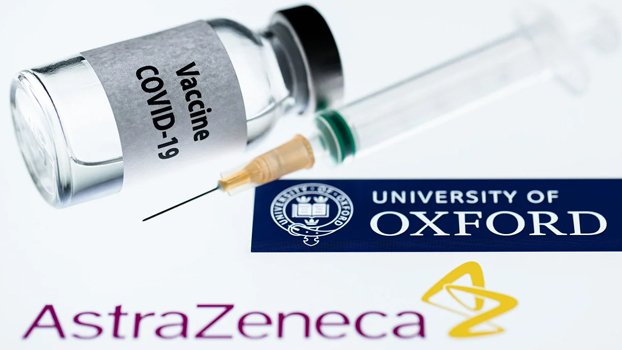
The country’s economic activity that was almost near standstill has started getting a fresh life with the launching of the nationwide Covid-19 vaccination campaign.
The government will start country-wide vaccination activities on February 7. There is a growing interest for the much-awaited vaccine.
The vaccination activities have also given life to the economy. While many countries around the world are deeply concerned about the economy in the wake of the coronavirus disaster, Bangladesh has done well on most indices.
In the midst of the crisis, country’s economy has got some relief. Many are expecting high growth in gross domestic product (GDP) this year as the country's trade has returned to its track.
However, economists are concerned about the impact of the second wave of coronavirus around the world on the battered economy.
Prime Minister Sheikh Hasina inaugurated the virtual coronavirus vaccination programme at Kurmitola General Hospital on January 27. On the first day, 28 people were vaccinated another 541 people were vaccinated at five hospitals in Dhaka on the next day.
State Minister for Information and Communication Technology Junaid Ahmed Palak after taking coronavirus vaccine said, "A vested quarter was out to spread propaganda about vaccines. I did not experience any side effects after taking the vaccine."
Advising the people to be alert against propaganda about vaccines, the state minister said that no one should pay heed to such kind of propaganda on social media by conspirators. I took vaccine in front of the media to remove fear in people’s mind mass. The vaccine is safe. Vaccinate everyone without fear.
Meanwhile, there is growing enthusiasm among the general public for the coronavirus vaccine. A recently published study conducted by the Institute of Health Economics, Dhaka University, titled 'People's Perspectives on the Covid-19 Vaccine in Bangladesh' found that about 84 percent of people are interested in getting vaccinated. But most people were not ready to get vaccinated at the beginning of the immunisation programme. Some 32 percent of people want to be vaccinated as soon as vaccination is launched, and the remaining 52 percent want to wait for a few weeks to months.
In this regard, the head of the research team and Professor Syed Abdul Hamid of the Institute of Health Economics told Bangladesh Post, "According to the agreement, we are getting 30 million doses of vaccine in six months. And with these three crore doses, around two crore people can be vaccinated. Because those who get vaccinated will have to take the second dose again within eight weeks. We carried out our research voluntarily. Now if the government calls us, we will do the modeling. We have that kind of intellectual capacity".
International relations analyst Dr Imtiaz Ahmed thinks the economy cannot be taken forward without vaccines during the covid-19 pandemic. He said, "Once the vaccine is given, people will have confidence. Activities on economic issues will gain momentum.”
While the world's largest economies are not growing at the time of the pandemic, Bangladesh hopes that gross domestic product (GDP) to grow by more than 8 percent. Bangladesh economy has grown by 5.24 percent in the last fiscal year, despite everything being shut down due to a three-month lockdown.
Bangladesh will step down from the list of Least Developed Countries (LDCs) as a developing country in 2024. According to the International Monetary Fund (IMF), Bangladesh will overtake India in terms of gross domestic product (GDP) per capita in 2020.
According to a recent report of the United Nations Department of Economic and Social Affairs (UNESDA), which deals with economic and social issues, Bangladesh's gross domestic product (GDP) has increased in 2020, among countries in the South Asian region.