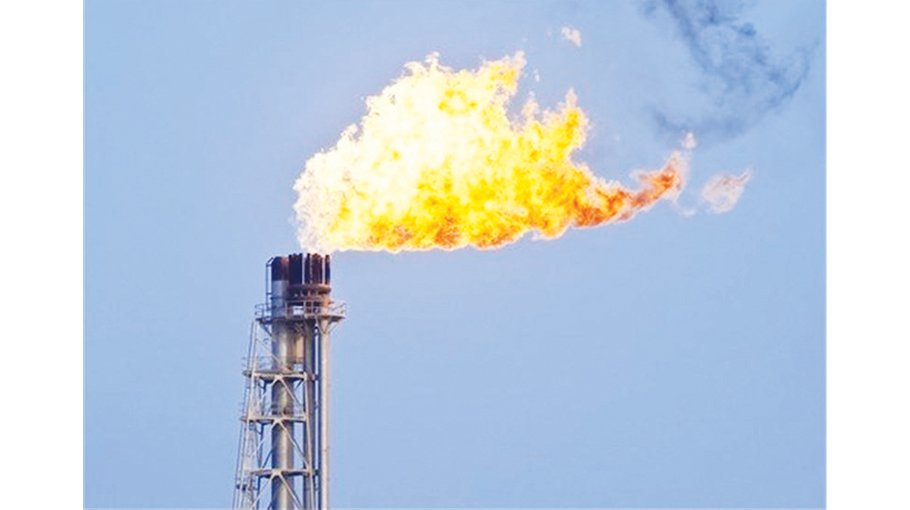
The country is grappling with an acute gas shortage, sending shockwaves across industries and households alike.
Given that gas supplies account for 56% of domestic energy demand and that Bangladesh is the sixteenth-largest producer of natural gas in Asia, the crisis is evident.
Petrobangla data reveals that the current gas supply, standing at its lowest since April 2020, is distressingly inadequate, clocking in at approximately 2,500 million standard cubic feet per day (mmcfd) against a demand of 3,800 mmcfd.
Industrial sector takes a hit:
Industries, the backbone of the nation's economy, are bearing the brunt of this energy crisis. BSRM Group, a major steel manufacturer, faces skyrocketing production costs as it resorts to using diesel due to the gas shortage, potentially leading to future price hikes.
One of the top producers of textiles for export, Total Fashion,
claims that it can only get enough gas on Fridays, which has a negative effect on its ability to produce.
Sources said, the ceramics and fertilizer industries are in dire straits, with insufficient gas pressure causing production halts and compromising product quality.
FARR Ceramics Managing Director, Irfan Uddin, laments the impact on his factory, stating that the inadequate pressure leads to ruined batches and increased production costs.
According to the Bangladesh Textile Mills Association (BTMA), there are more than 1,500 textile mills, including spinning, weaving, dyeing, and finishing units that are dependent on gas.
Anaf Aziz, vice chairman of Amber Denim Mills Limited and one of the BTMA directors, told Bangladesh Post that their production line has been hampered by a gas shortage for several months, making it difficult to complete orders on time.
To get the problem resolved as quickly as possible, they are writing to the authorities on a regular basis.
Households count the costs:
Households are not spared from the crisis, with unreliable gas supply causing inconveniences and additional expenses. Grocery shop owner Shahed Alam in Mohammadpur showed frustration about the gas pressure in the morning time, highlighting the struggle despite monthly bill payments.
Tenants in the Dhanmondi area are reverting to LPG bottles which are also costly, cooking with LP Gas due to the unavailability of gas at decent hours.
Belal Uddin Khan, a Swamibag resident, found it extremely unsettling that there was no gas in the line between five and twelve in the morning. Journalist Mahbubur Rashid, who lives in the Shantinagar area, describes his unpleasant experience: for the past three to four days, gas has been scarce; for the past month, it has been happening every day. Gas arrives at midnight after the line was empty until 12 a.m.
Alam Bhuyian, a private worker in old Dhaka, is a prime example of the personal toll the crisis has taken on daily life. He is forced to eat out because the low gas pressure prevents him from cooking in the morning or evening.
It is obvious that the gas pressure is unstable across the country.
LP gas price surge:
Meanwhile, the Bangladesh Energy Regulatory Commission implemented the new rates on January 2. At the consumer level, the price of 12 kg of LPG gas increased from Tk 1,404 to Tk 1,433, which is expensive for all consumers.
A month earlier, as of November 2023, the Commission fixed the price of one kilogram of liquefied petroleum gas (LPG) at Tk 117.02 on December 3. This was an increase from Tk 115.09 the previous month. For consumers, who already have to deal with the increase in gas prices, this is not good news.
Root causes unveiled:
The gas shortage is not a sudden occurrence but rather a result of prolonged issues in gas exploration. Bangladesh, touted as a gas-rich deltaic country, has lagged in exploration, sparking debates about vested interests hindering tapping into abundant natural gas resources. International studies indicate vast untapped gas reserves, with estimates from the US Geological Survey and Norwegian Petroleum Directorate pointing to significant potential.
Government response and future prospects:
Petrobangla officials cautiously predict a marginal improvement in gas supply by the latter half of February as one of the floating storage and regasification units (FSRU) resumes operations. However, challenges persist, with local gas production declining, including in the prolific Bibiyana gas field.
Petrobangla Chairman Zanendra Nath Sarker acknowledges the need for increased LNG imports to mitigate the crisis, emphasizing the importance of ramping up exploration. The government's plan to import 24 LNG cargoes from the spot market in 2024 is underway, yet concerns linger over foreign currency reserves.
Petrobangla’s Director of Operations & Mines, Eng Md Kamruzzaman Khan said to Bangladesh Post that the gas supply to the residential sector will increase to satisfactory level from March this year. The overall situation will improve gradually. He acknowledged that there is a gap between supply and demand. He further said, second floating storage and regasification units (FSRU) have been activated, from there the LNG supply will double and the power and industry sector will get sufficient gas, so that from the 18th of January the gas shortage issue will not be major in the household usage.
Global recognition of crisis:
The World Economic Forum's Global Risks Report 2024 underscores the severity of Bangladesh's energy crisis. Seventy Bangladeshi businesses participating in the study identify the energy supply shortage as the top threat to both the economy and their businesses.
Challenges and concerns:
According to sources, production from the country’s two major natural gas fields, Bibiyana and Titas, has considerably come down over the recent past years. Bibiyana, with the original reserve of 5,755 billion cubic feet (Bcf), is left with only 250 Bcf. 70.0 per cent of the extractable natural gas has already been taken out from the Titas gas field. It is indeed highly disquieting that natural gas production from the remaining fields will likely decline from the current 2,100 mmcfd to 1,300 mmcfd by 2030 and to 580 mmcfd by 2040. At the same time, system loss remains a persistent concern in the natural gas sector: according to official figures, this is to the tune of 10.0 per cent in Bangladesh whereas the global average is only about 2.0 per cent.
Industry insiders argue that instead of putting emphasis on natural gas exploration, the government in recent years (more precisely in late 2018) has given higher priority to the import of LNG and LNG-based electricity generation with a view to closing the demand and supply gap concerning primary fuel.
As is known, the price of LNG in the global market is quite volatile, as also the prices of other primary fuels. This has added many new concerns, not to mention putting the country on the path of a vicious cycle of subsidy regime.
Given the recent geo-political scenario and the ongoing domestic natural gas shortage, the LNG import bill is likely to increase sharply in the coming years, resulting in a rising and unsustainable fiscal burden. Distribution is also becoming an issue, given that the existing pipelines are too narrow for LNG distribution. No visible actions were taken by the government to develop the gas grid or other infrastructures. Consequently, efficiency concerns also persist.
Recommendations from the experts:
According to the 8th Five Year Plan (FYP) data, there is a large number of unexplored gas blocks (17 onshore and 22 offshore) from which a considerable amount of natural gas can be extracted for purposes of generating electricity and use in other priority sectors.
Wide-ranging inefficiencies in areas of natural gas exploration, policy implementation and administrative activities associated with gas sector governance will need to be reduced systematically.
Accordingly, the government should prioritise investing in strengthening the human and technical capacities of BAPEX so that it can meet the long-term needs of the country in the areas of gas and mineral exploration.
Hope from the Government:
State Minister for Power, Energy, and Mineral Resources Nasrul Hamid has revealed a groundbreaking discovery at the Bibiyana gas field in Bangladesh recently, indicating a potential one trillion cubic feet (Tcf) of natural gas reserves. Chevron Bangladesh's successful completion of its 27th well at the field is deemed a significant turning point for the nation's energy landscape. Additionally, the newly identified Ilisha-1 gas field in Bhola district, recognized as the country's 29th gas field, is estimated to hold around 200 billion cubic feet (bcf) of gas, contributing substantially to the diversification of Bangladesh's gas portfolio.
As the nation stands at a critical juncture, with industries and households shaking on the edge, the collective hope rests on decisive actions and strategies to avert a looming catastrophe in Bangladesh's energy landscape. The clock is ticking, and the nation anxiously awaits a sustainable solution to the pressing gas crisis.
Nasrul Hamid, the Minister of State for Power, Energy, and Mineral Resources, said to the media that the Bhola gas pipeline, the gas master plan, and deep drilling urgently, adding, "Dynamic pricing will come, so quick decisions are needed to transform the situation." Nasrul Hamid asked both of the divisions of the ministry to prepare a 100-day plan as soon as possible.