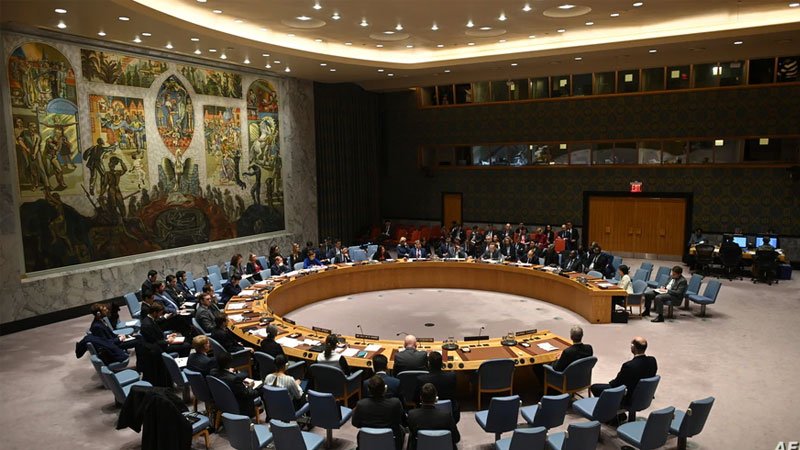
India has won a non-permanent seat to the United Nations Security Council (UNSC) for the 2021-2022 biennium.
With that, India’s presence on the international stage got a boost at a time when the world is grappling with a pandemic and multilateralism is under stress.
“Deeply grateful for the overwhelming support shown by the global community for India’s membership of the @UN Security Council. India will work with all member countries to promote global peace, security, resilience and equity,” Prime Minister Narendra Modi said on Twitter.
India’s U.N. Ambassador T.S. Tirumurti announcing the results in a video message said: “India will become a member of the Security Council at a critical juncture and we are confident that in the COVID, and the post-COVID world, India will continue to provide leadership and a new orientation for a reformed multilateral system”.
India won 184 votes in the 193-strong General Assembly, well above the qualifying 2/3rds majority of 128 votes in Wednesday’s election.
India’s term on the 15-member Council, which begins on January 1, will be its eighth.
Though the victory was expected with India seeking an uncontested seat allocated to the Asia Pacific group, the government had left nothing to chance in terms of lobbying and outreach, including via its embassies abroad, according to Indian media.
Prime Minister Modi had reached out to the heads of government in more than 60 countries and at multilateral forums like SAARC and External Affairs Minister S Jaishankar had also lobbied other governments, The Hindu had reported.
Earlier on June 6, Jaishankar gave India’s overall objective during its forthcoming UNSC tenure an acronym — ‘NORMS’ for New Orientation for a Reformed Multilateral System.
India has for long sought a permanent seat at the Security Council.
In addition to reforming multilateral systems, the agenda includes an “effective response” to terror, a comprehensive approach to international security and peace and promoting technology-based solutions to global challenges.
A number of countries including the US, UK, Russia and France — all four permanent members of the UN Security Council (China is the fifth) — sent messages of congratulations to India after the results were announced.
Jaishankar earlier said India would emphasise on its long-standing role as a voice of moderation, an advocate of dialogue, and a proponent of international law.
The five key priorites for India in the UNSC would be:
i. New Opportunities for progress
ii. An Effective response to international terrorism
iii. Reforming the multilateral system
iv. A comprehensive approach to international peace and security
v. Promoting technology with a human touch as a driver of solutions
Those approaches will be guided by "Five S’s”, as set out by Prime Minister Modi:
• Samman (Respect),
• Samvad (Dialogue),
• Sahyog (Cooperation), and
• Shanti (Peace), to create conditions for universal
• Samriddhi (Prosperity)