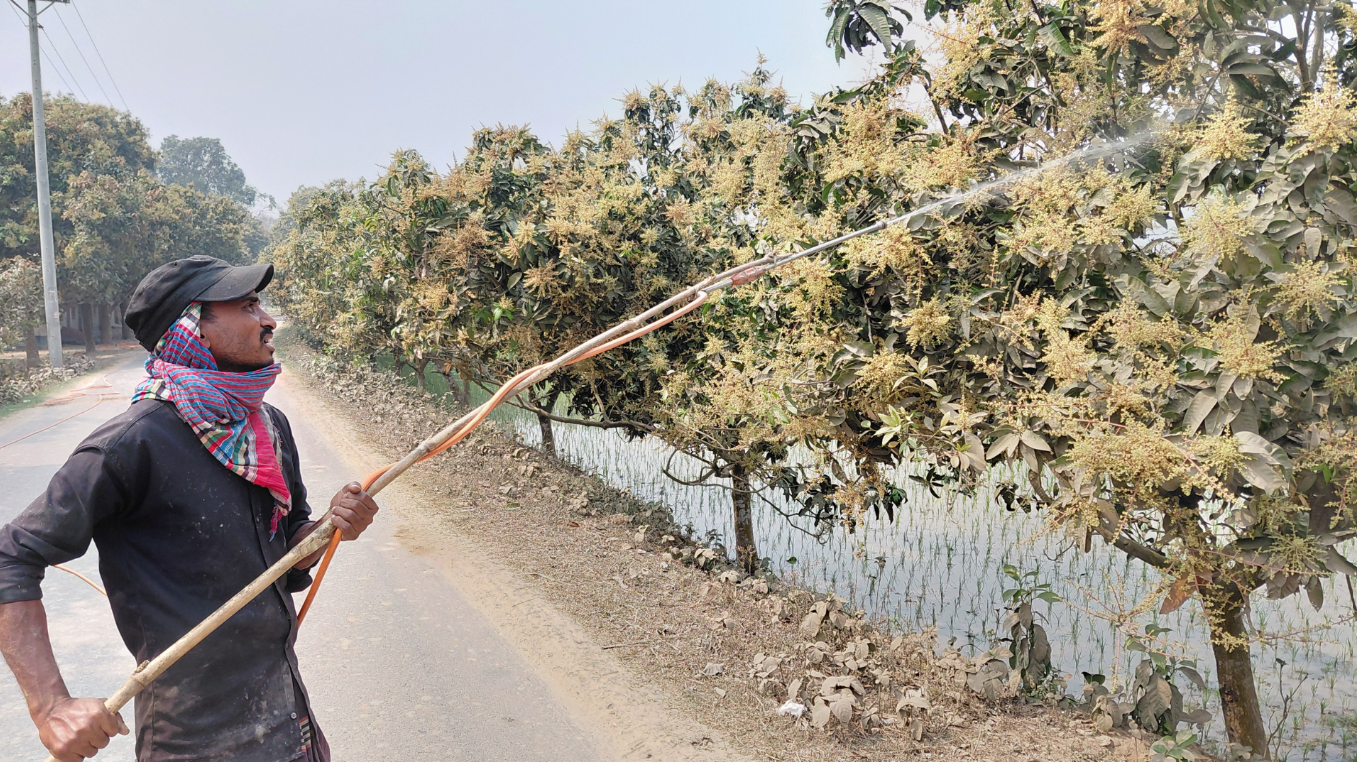
UNB, Rangpur:: Excessive use of pesticides and hormones in mango cultivation in Rangpur is raising serious health concerns for farmers and undermining fruit quality, posing a potential threat to the region’s export prospects.
As mango orchards across Rangpur bear newly formed fruits following the blooming season, growers and traders are already weighing expected gains.
But in a push for higher yields, many farmers are increasingly relying on frequent chemical spraying and hormone use – the practice now drawing growing concern.
According to the Department of Agricultural Extension (DAE), mangoes, including the popular Haribhanga variety, were cultivated on 6,049.5 hectares of land in the district in the 2024-25 fiscal year, producing around 82,662 tonnes.
In the current fiscal year, around 6,910 hectares of land have been brought under cultivation, with an expected production of around 72,300 tonnes.
Experts say the problem begins soon after harvesting, when farmers apply hormones at the base of trees to boost future yields, which may harm long-term productivity.
Growers note a sharp rise in pesticide use over the years. While mango orchards previously required only two to three spray rounds in a season, many farmers now apply chemicals as many as 30 to 35 times, often alongside hormones. They say such intensive use is driven by the need to ensure fruits remain on trees, though it is ultimately affecting taste and quality.
Saddam Hossain, a former student of Begum Rokeya University, Rangpur and entrepreneur from Badarganj, said excessive pesticide use is reducing the shelf life and taste of mangoes. “The unique flavour of Haribhanga mango is no longer the same, which is reducing its demand in wider markets,” he said.
Farmers themselves are also experiencing health issues due to prolonged exposure to pesticides.
Abdul Baten, a grower with 15 years of experience, said he now suffers from blurred vision at times. “Constant exposure to sprays and chemicals seems to be affecting my body,” he said.
Another farmer, Yakub Ali from Padaganj, echoed similar concerns, saying the sharp increase in pesticide use has become unavoidable for many growers, despite its negative impact on fruit quality.
Medical experts warn that long-term exposure to pesticides can cause serious health complications, including respiratory issues, eye problems and skin damage.
Dr Sultana Ashrafi, an assistant professor at Rangpur Medical College Hospital, said excessive hormone use could lead to toxicity, affecting kidneys and blood cells.
“Farmers must use personal protective equipment while spraying to reduce risks,” she said.
Nutritionists also highlight the impact on consumers. Fatema Tuz Zohra, a clinical nutritionist at Rangpur Ideal Health City, said excessive pesticide use diminishes both the taste and nutritional value of mangoes.
However, agriculture officials maintain that controlled use of pesticides and hormones is safe.
DAE Deputy Director Sirajul Islam advised farmers to apply fungicides before flowering and follow recommended intervals, stopping sprays 15-20 days before harvest.
Officials also warned that overuse of chemicals could hinder export opportunities.
Shahin Ahmed, assistant information officer at the Agricultural Marketing in Rangpur, said compliance with international safety standards is essential for exporting mangoes. “If pesticide levels exceed acceptable limits, exports will face setbacks,” he said.
With both health and economic implications at stake, experts stress the need for balanced practices to ensure safe consumption and sustain the reputation of Rangpur’s mangoes.